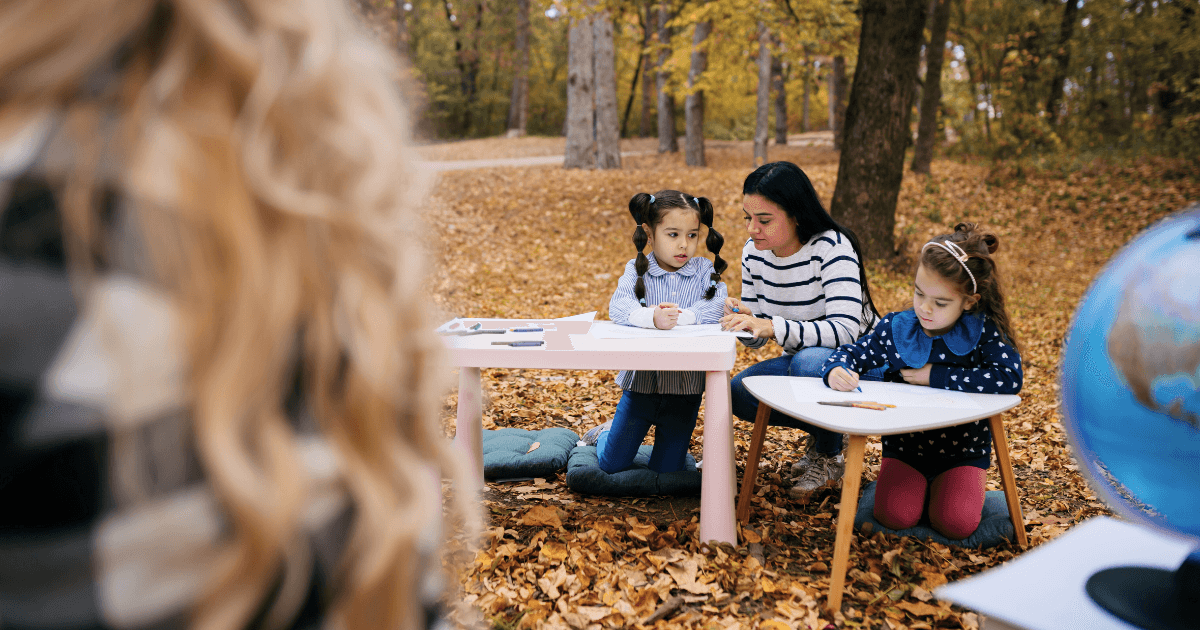
The gentle rustle of leaves overhead. The warmth of sunlight filtering through tree branches. The natural curiosity that blooms when children encounter a beetle crossing a log. These simple experiences form the foundation of outdoor learning—an approach to education that research consistently shows improves academic outcomes, enhances student engagement, and supports overall well-being.
According to Thrive With Outdoor Learning, students in outdoor settings require 50% fewer redirections for off-task behavior compared to traditional indoor classrooms. Additionally, garden-based learning programs have been shown to improve science achievement and foster positive environmental attitudes.
The good news? Creating an effective outdoor classroom doesn’t require an extensive budget or elaborate facilities. Whether you’re working with a generous grant or piecing together a space with donated materials, the natural world offers abundant opportunities for meaningful learning. Let’s explore how to create functional, engaging outdoor classrooms that work with any budget.
Planning Your Outdoor Classroom: First Steps
Before purchasing materials or rearranging your outdoor space, take time to plan your approach thoughtfully:
Even small concrete areas with planters can become vibrant learning spaces
“Our school’s outdoor classroom started as just a neglected corner of the playground with a few trees,” shares elementary teacher Michael Chen. “We began with simply bringing clipboards and sitting under the trees. Over three years, we’ve gradually transformed it into a thriving garden and learning space—but the learning started day one, with almost no budget.”
2. Consider Your Climate and Seasons
Your location will influence your outdoor classroom design:
Hot climates need ample shade and water access
Cold climates benefit from windbreaks and sunny areas
Rainy regions need covered spaces and good drainage
All climates can support year-round learning with proper planning
3. Identify Your Learning Goals
Clarify what you hope to accomplish in your outdoor classroom:
According to Geneva Point, effective outdoor classrooms integrate natural elements with educational infrastructure. Here are the core components to consider, with options for every budget:
1. Seating and Gathering Areas
No-Cost Options:
Logs from fallen trees (check with local tree services)
Blankets or tarps for ground seating
Repurposed crates or buckets
Natural features like large rocks or grassy berms
Low-Cost Options:
Carpet squares or sit-upons ($1-2 each)
Stumps from tree services (often free or minimal cost)
DIY benches from reclaimed wood
Hay bales (seasonal, $5-10 each)
Higher-Budget Options:
Weather-resistant benches ($100-300)
Picnic tables ($200-500)
Amphitheater-style seating ($500+)
Custom-built outdoor classroom furniture
2. Teaching Station
No-Cost Options:
Repurposed chalkboard or whiteboard mounted on a fence
Large piece of plywood painted with chalkboard paint
Reach out to local nature centers for educational resources and support
Partner with Eagle Scouts or community service groups looking for projects
2. Repurpose and Upcycle
Pallets can become vertical gardens, tables, or benches
Tires can be durable planters or seating
Fallen branches create natural borders and building materials
Plastic containers from school cafeterias become seed starters
3. Focus on Transportable Elements
Create mobile kits that can be brought outside:
Nature exploration backpacks with magnifying glasses, field guides, and collection containers
Outdoor math kits with measuring tools, counters, and recording sheets
Literacy kits with clipboards, pencils, and nature journals
Art supplies suitable for outdoor use
“When we had zero budget, we created what we called ‘Grab and Go’ bags,” explains elementary teacher Jamie Rodriguez. “Each themed bag contained everything needed for an outdoor lesson. Teachers could grab a bag and head outside, making outdoor learning accessible even without a dedicated space.”
4. Leverage Natural Features
Trees provide natural shade and gathering spots
Rocks and logs offer seating and exploration opportunities
Open grassy areas become flexible learning spaces
Seasonal changes provide endless curriculum connections
Building Your Outdoor Classroom: A Step-by-Step Approach
Whether you’re starting with nothing or enhancing an existing space, this phased approach from Fantastic Fun and Learning can help you create a sustainable outdoor classroom:
Phase 1: Establish the Basics (0-3 months)
Identify and prepare your space
Clear debris and address safety concerns
Establish boundaries for the outdoor classroom
Create simple, movable seating options
Develop essential routines
Practice transitions to and from the space
Establish expectations for outdoor learning
Create systems for materials management
Start with simple activities
Nature observation and journaling
Read-alouds and discussions
Basic science investigations
Phase 2: Enhance and Expand (3-6 months)
Add learning zones
Designate areas for different types of activities
Create simple signage and boundaries
Incorporate more permanent seating options
Introduce plantings
Start small with container gardens or simple beds
Choose hardy, native plants for easy maintenance
Involve students in planting and care
Develop more structured lessons
Align outdoor activities with curriculum standards
Create outdoor extensions for indoor learning
Develop assessment strategies for outdoor work
Phase 3: Deepen and Sustain (6+ months)
Add specialized features
Weather station or rain gauge
Bird feeding area
Habitat enhancements (butterfly garden, etc.)
Expand curriculum connections
Develop year-round outdoor learning plans
Create cross-curricular projects
Build connections with community experts
Document and share success
Collect data on student engagement and learning
Share outcomes with stakeholders
Seek additional funding or support based on results
Curriculum Integration: Making the Most of Your Outdoor Classroom
An outdoor classroom supports learning across all subject areas. Here are practical ideas for curriculum integration:
Literacy and Language Arts
Nature journaling to develop observation and writing skills
Outdoor reading nooks for independent reading
Nature-inspired poetry writing and performance
Storytelling circles using natural elements as props
Letter and word hunts, finding shapes in nature
Mathematics
Measurement activities using natural materials
Data collection and graphing of weather patterns
Geometry exploration, finding shapes and patterns in nature
According to Green Schoolyards America, outdoor learning can and should happen year-round. Here’s how to maximize your outdoor classroom in every season:
Spring
Focus on: Plant growth, insect life, weather changes
“In Minnesota, we embrace outdoor learning even in winter,” shares teacher Sofia Patel. “We have a saying: ‘There’s no bad weather, only bad clothing.’ With proper preparation, our students enjoy outdoor math and science activities year-round, and we’ve seen remarkable improvements in focus and engagement.”
Final Thoughts: Starting Where You Are
Creating an outdoor classroom is a journey, not a destination. The most successful outdoor learning spaces evolve through ongoing collaboration, experimentation, and adaptation. The key is to begin with what you have—whether that’s a vast school property or simply a concrete pad with a few planters.
As environmental educator David Sobel reminds us: “Give children a chance to love the earth before we ask them to save it.” By creating outdoor classrooms—even with the most modest resources—we provide children with opportunities to develop meaningful connections to the natural world while enhancing their academic learning and overall well-being.
Your outdoor classroom doesn’t need to be perfect or complete to be effective. It simply needs to exist, with a committed educator ready to open the door to the natural laboratory that awaits outside.
What is the first step you will take toward creating your outdoor classroom? Share your ideas or experiences in the comments below!