Preschool vs. Pre-K: Understanding the Differences and Making the Right Choice
As parents, we want to give our children the best possible start in their educational journey. Early childhood education plays a crucial role in setting the foundation for future academic success, social skills development, and emotional well-being. But when it comes to choosing between preschool and pre-kindergarten (pre-K), many parents find themselves confused about the differences and which option might be best for their child.
In this comprehensive guide, we’ll break down the key differences between preschool and pre-K programs, help you understand which might be the right fit for your child’s unique needs, and provide practical advice for making this important decision.
What’s the Difference Between Preschool and Pre-K?
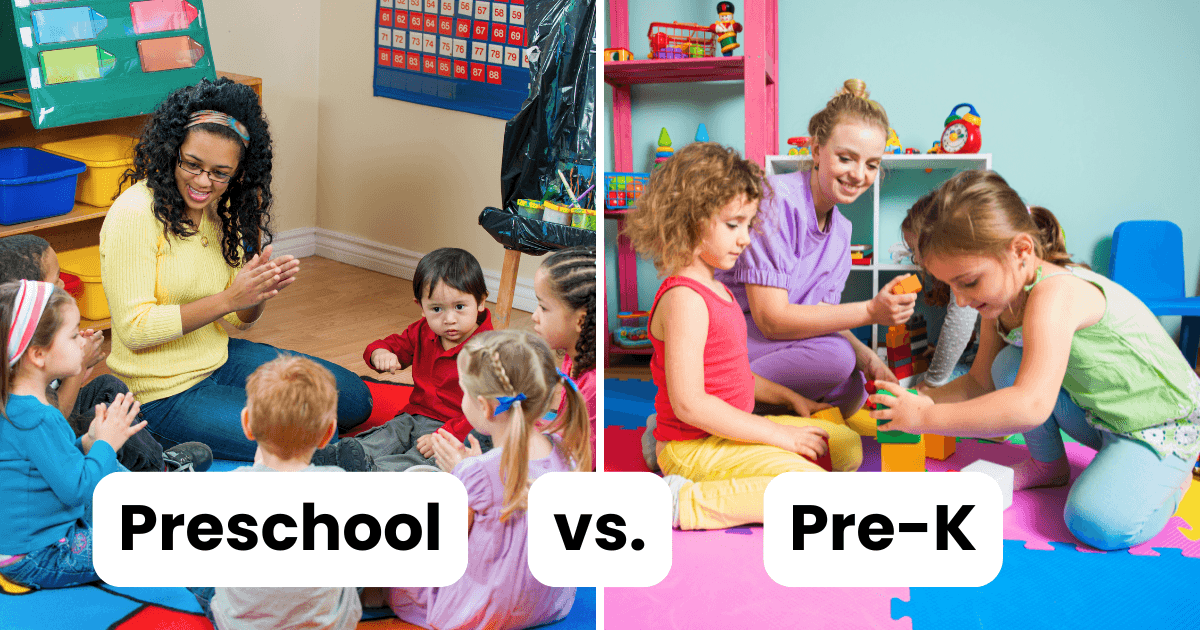
While the terms “preschool” and “pre-K” are sometimes used interchangeably, they actually refer to distinct educational experiences designed for different developmental stages.
Age Range
Preschool:
Typically serves children aged 2 to 4 years old
Most programs require children to be at least 3 years old by September 1st
Often requires basic potty training
Pre-K:
Designed for children aged 4 to 5 years old
Specifically targets the year immediately before kindergarten
Children are usually required to be 4 years old by September 1st
According to the Center for Family Services, these age distinctions help programs tailor their curriculum to meet children’s developmental needs at different stages.
Educational Approach and Curriculum
Preschool:
Primarily play-based and exploratory learning
Focus on social skills development and basic concepts
Emphasis on learning through sensory experiences
Introduction to colors, shapes, letters, and numbers through play
More flexible, child-directed activities
Pre-K:
More structured learning environment
Direct preparation for kindergarten expectations
Balance of play-based activities with academic foundations
Focused development of pre-literacy and pre-math skills
More teacher-guided instruction
KLAS Schools explains that while preschool introduces learning concepts through play, pre-K builds on this foundation with more intentional academic preparation.
According to Imagine Child Development Center, pre-K programs typically follow a more structured daily routine that helps children prepare for the expectations of elementary school.
Children’s Corner Group notes that pre-K programs are increasingly focused on developing the specific skills needed for kindergarten success, while still honoring developmentally appropriate practices.
How to Determine Which Option Is Right for Your Child
Choosing between preschool and pre-K isn’t just about your child’s age—it’s about their individual development, temperament, and needs. Here are some factors to consider:
Is working on potty training or other self-help skills
Has a shorter attention span
Consider pre-K if your child:
Demonstrates comfort in group settings
Shows interest in letters, numbers, and books
Can follow multi-step directions
Has developed basic self-regulation skills
Can focus on activities for longer periods
Previous Experience
If your child has already attended preschool or has had significant social experiences through playgroups or daycare, they may be ready for the more structured environment of pre-K. Children without prior group experience might benefit from starting with preschool, even if they’re age-eligible for pre-K.
Individual Learning Style
Some children thrive in more structured environments, while others need more time for exploratory play. Consider your child’s natural learning preferences when making your decision.
According to The N Zone, parents should observe their child’s developmental milestones to determine readiness for either preschool or pre-K.
Kindergarten Timeline
Consider when your child will be eligible for kindergarten. If they’ll miss the kindergarten cutoff date due to a late birthday, they might benefit from a year of preschool followed by pre-K before starting kindergarten.
Questions to Ask When Evaluating Programs
Whether you’re looking at preschool or pre-K options, here are some essential questions to ask during your search:
Program Structure and Philosophy
What is your educational philosophy?
How much time is dedicated to free play versus structured learning?
How do you approach social-emotional development?
What does a typical day look like?
How do you handle transitions between activities?
Staff Qualifications
What are the qualifications of your teachers?
What is the teacher-to-student ratio?
How long have teachers been with the program?
What ongoing professional development do teachers receive?
How do teachers communicate with parents about a child’s progress?
Environment and Safety
How is the classroom organized to support learning?
What safety measures are in place?
How do you handle conflicts between children?
What are your health and illness policies?
How do you accommodate children with special needs or different learning styles?
Preschools Near Me suggests that parents should also consider practical factors like cost (preschool typically ranges from $500-$1,500 monthly, while pre-K can be free in public programs or up to $2,500 in private settings), location, and schedule compatibility with family needs.
The Benefits of the Preschool to Pre-K Progression
Many early childhood education experts recommend a sequential approach where children attend preschool first, then progress to pre-K before kindergarten. This stepped approach offers several advantages:
Gradual transition: Children can adjust to being away from home in a more nurturing preschool environment before facing the academic expectations of pre-K.
Developmental alignment: The progression aligns with children’s natural development, from play-based exploration to more structured learning.
Relationship building: Children develop social skills and confidence in preschool that help them thrive in the more academic pre-K environment.
Foundational skills: Skills learned in preschool become the building blocks for the more advanced concepts introduced in pre-K.
According to KLAS Schools, “Many families choose to have their children attend preschool first and then transition to pre-K for a step-by-step learning journey that builds confidence and skills progressively.”
Public vs. Private Options
When considering pre-K, especially, parents often have a choice between public and private programs:
Public Pre-K Programs:
Often free or low-cost
Typically follow state educational standards
May have income eligibility requirements
Usually aligned with the local school district curriculum
May have limited availability
Private Pre-K Programs:
Tuition-based
May offer more specialized approaches (Montessori, Reggio Emilia, etc.)
Often have smaller class sizes
May provide more flexible scheduling options
Can be more selective in admissions
The Center for Family Services notes that both public and private options can provide quality early education experiences. Still, the right choice depends on your family’s specific needs, values, and resources.
Making Your Final Decision
After researching your options, visiting programs, and considering your child’s unique needs, here are some final tips for making your decision:
Trust your instincts: How did you feel when visiting the program? Could you picture your child thriving there?
Consider your child’s temperament: Does your child need more nurturing and play, or are they ready for more structure and academic challenges?
Think long-term: How will this choice set your child up for kindergarten and beyond?
Be practical: Consider logistics such as location, cost, and scheduling compatibility with your family’s needs.
Remain flexible: Remember that you can always reassess if your initial choice isn’t working out as expected.
As one parent shared on Reddit, making a list of pros and cons for each option and discussing your thoughts with others can help clarify your preferences and make a decision you feel confident about.
Conclusion
The choice between preschool and pre-K is important, but remember that both options provide valuable early learning experiences. The “right” choice is the one that aligns with your child’s developmental needs, your family’s values, and practical considerations.
By understanding the key differences between preschool and pre-K programs and thoughtfully evaluating your child’s readiness, you can make an informed decision that sets your little one up for educational success and a lifelong love of learning.
What factors are most important to you when choosing between preschool and pre-K? Share your thoughts and experiences in the comments below!