Montessori Schools Near Me: What Makes Them Different from Traditional Preschools?
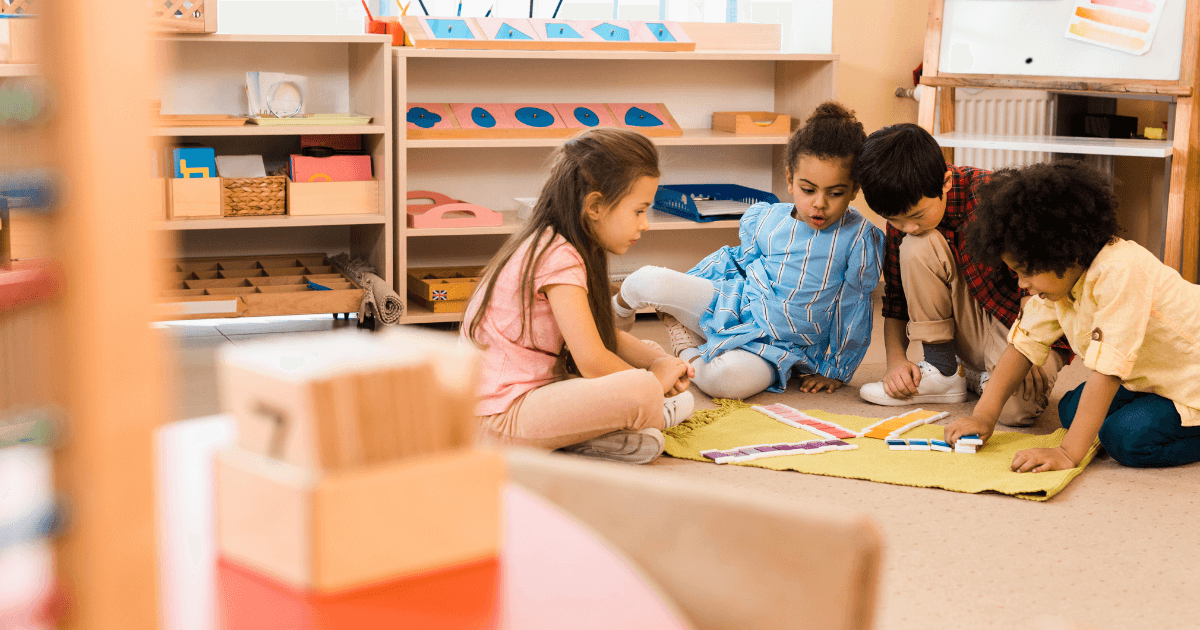
When I first toured a Montessori classroom, I was struck by how different it felt from the preschool I’d attended as a child. Instead of a teacher directing a group of children through the same activity, I observed children of different ages working independently or in small groups. Some were pouring water between containers, others were tracing letters on sandpaper, and a few were working with colorful beads for math. The teacher moved quietly around the room, occasionally kneeling beside a child to offer guidance but mostly observing. The atmosphere was peaceful yet purposeful—nothing like the chaotic energy I’d expected from a room full of preschoolers.
If you’re researching “Montessori schools near me,” you’ve likely heard about this alternative educational approach but may wonder what truly sets it apart from traditional preschools. As early education options continue to evolve, understanding these differences can help you make an informed decision about the best environment for your child.
The Philosophical Foundation: Different Views of the Child
At its core, the distinction between Montessori and traditional preschools begins with fundamentally different views of how children learn and develop.
Montessori Approach:
The Montessori method, developed by Dr. Maria Montessori in the early 1900s, is built on the belief that children are naturally curious and capable learners who thrive when given freedom within appropriate boundaries. Dr. Montessori observed that children have an innate desire to learn and develop themselves—what she called “the absorbent mind.”
Key philosophical principles include:
Respect for each child as a unique individual
Trust in children’s natural desire to learn
Recognition of sensitive periods for learning different skills
Belief in children’s capacity for concentration and self-discipline
As Dr. Maria Montessori herself wrote, “The greatest sign of success for a teacher is to be able to say, ‘The children are now working as if I did not exist.'”
Traditional Preschool Approach:
Traditional preschools typically operate from a more adult-centered perspective, where teachers direct learning and all children follow the same curriculum at the same pace. The underlying assumption is that children need significant guidance and structure to learn effectively.
The Classroom Environment: Prepared vs. Conventional
Walk into a Montessori classroom and a traditional preschool, and the differences are immediately apparent.
Montessori Environment:
Montessori classrooms are meticulously designed “prepared environments” that foster independence and exploration:
Child-sized everything: Furniture, tools, and materials scaled to children’s proportions
Natural materials: Wood, glass, and other natural elements, rather than plastic
Order and beauty: Materials arranged on open shelves in a logical, attractive manner
Freedom of movement: Children choose where to work—at tables, on floor mats, or in quiet corners
Minimal decoration: Calm, uncluttered spaces with natural light and plants
Mixed-age groupings: Typically spans of three years (e.g., 3-6 years old together)
As early childhood researcher Dr. Angeline Lillard notes in her book Montessori: The Science Behind the Genius, “The prepared environment is designed to facilitate maximum independent learning and exploration by the child.”
Traditional Preschool Environment:
Traditional preschool classrooms typically feature:
Designated areas: Separate spaces for different activities (reading corner, block area, dramatic play)
Colorful decorations: Bright colors, alphabet posters, and themed decorations
Teacher’s space: Often includes a “circle time” area where children gather for group instruction
Age-segregated: Children grouped by single-year age brackets
Shared materials: Communal supplies rather than individual sets
Structured layout: Space organized for group activities and teacher supervision
Early childhood educator Jessica Thompson explains, “Traditional preschool environments are designed to create engaging, stimulating spaces where teachers can effectively manage group activities and transitions.”
Teaching Methods: Guide vs. Instructor
The role of the adult differs significantly between these educational approaches.
Montessori Teachers:
In Montessori education, teachers are referred to as “guides” or “directresses” and serve as facilitators of learning rather than the source of knowledge:
Observe children to understand their developmental needs
Introduce materials individually or in small groups when children are ready
Step back to allow children to work independently
Avoid interrupting concentrated work
Limit praise to encourage intrinsic motivation
Undergo specialized Montessori training (typically 1-2 years) beyond traditional teaching credentials
“The teacher’s task is not to talk, but to prepare and arrange a series of motives for cultural activity in a special environment made for the child,” wrote Dr. Montessori.
Self-care skills (dressing, food preparation) are part of the curriculum
Children set their own work pace and make meaningful choices
Intrinsic motivation is cultivated through meaningful work
A 2022 study from the University of Virginia found that Montessori students demonstrated significantly higher levels of self-regulation compared to peers in conventional programs.
Traditional Approach to Independence:
In traditional settings, independence is developed more gradually:
Teacher direction provides structure and guidance
Routines help children learn classroom expectations
Independent activities are introduced within a structured framework
Choice is offered within predetermined options
Transition to independence is more teacher-scaffolded
Academic Outcomes: Different Paths to Learning
Parents often wonder about the academic impact of these different approaches.
Montessori Academic Outcomes:
Research on Montessori education shows several notable patterns:
Reading and writing: Often develop naturally through phonetic materials and movable alphabets
Mathematical understanding: Concrete materials build deep conceptual understanding
Scientific thinking: Hands-on exploration fosters natural curiosity and a scientific mindset
Long-term benefits: Some studies show advantages in executive function, creativity, and reading comprehension that persist beyond the preschool years
A landmark study published in Science found that Montessori students demonstrated stronger academic skills, particularly in math and literacy, compared to peers in traditional programs.
Traditional Preschool Academic Outcomes:
Traditional preschools typically show:
Kindergarten readiness: Direct preparation for conventional school expectations
Early academics: Explicit instruction in pre-reading and pre-math skills
Structured learning: Familiarity with teacher-directed learning formats
Consistent exposure: Systematic introduction to key concepts for all children
Making the Right Choice for Your Child
With these differences in mind, how do you decide which approach might better suit your child? Consider these factors:
Your Child’s Temperament and Learning Style:
Does your child thrive with independence or prefer more guidance?
How does your child respond to structure versus flexibility?
Does your child concentrate deeply or prefer frequent changes of activity?
Is your child self-motivated or responsive to external rewards?
Your Family’s Values and Educational Philosophy:
What skills and qualities do you most want to nurture in early childhood?
How important is an academic head start versus social-emotional development?
What type of learning environment matches your parenting approach?
What are your long-term educational plans (continuing Montessori or transitioning to traditional school)?
Teacher qualifications: Ask about specific Montessori training and credentials.
Observation opportunities: Visit during regular school hours to see the method in action.
Transition plans: If you’ll eventually move to a traditional school, ask how the program prepares children for this change.
Cost: Montessori programs often (though not always) have higher tuition than traditional preschools.
Questions to Ask When Touring Schools
When researching “Montessori schools near me,” prepare to ask these questions during tours:
For Montessori Schools:
Does a recognized Montessori organization accredit your school?
What Montessori training do your teachers have?
How do you support children in choosing work and developing concentration?
How do you handle a child who doesn’t choose work or seems unengaged?
How do you assess children’s progress without traditional testing?
How do you communicate with parents about their child’s development?
What is your approach to discipline and conflict resolution?
How do you support transitions to traditional schools if needed?
For Traditional Preschools:
What curriculum or educational philosophy do you follow?
How much of the day is teacher-directed versus free play?
How do you accommodate different learning styles and paces?
What is your approach to early academics?
How do you foster independence and problem-solving?
What qualifications do your teachers have?
How do you assess and communicate about children’s progress?
What makes your program unique compared to other traditional preschools?
Finding the Middle Ground
It’s worth noting that the landscape of early childhood education is evolving, with many programs incorporating elements from different approaches. Some traditional preschools now include more child-directed learning and practical life skills, while some Montessori-inspired programs adapt the method to include more group activities or thematic units.
Early childhood educator Dr. Rebecca Wilson observes, “The best programs, regardless of their philosophical label, share certain qualities: respectful interactions with children, engaging environments, well-trained teachers, and a balance of structure and freedom appropriate to children’s developmental needs.”
The Bottom Line: There’s No One-Size-Fits-All Answer
The “best” preschool approach depends entirely on your unique child and family. Some children flourish with the freedom and responsibility of Montessori, while others thrive with the structure and social dynamics of traditional preschools. Many children could be happy and successful in either environment, especially if the program is high-quality and the teachers are attentive and skilled.
As parent and education researcher Dr. Michael Thompson notes, “The single most important factor in your child’s early education is not the philosophy of the school but the quality of the relationships formed there—between teachers and children, among peers, and between school and family.”
When searching for “Montessori schools near me” or exploring traditional preschool options, look beyond the label to the substance: Is this a place where your child will feel respected, engaged, and supported in their natural development? That question matters more than any philosophical distinction.
Have you had experience with Montessori or traditional preschools? What factors influenced your decision? Share your thoughts and questions in the comments below!