Language Explosion: Supporting Your 3-4 Year Old’s Vocabulary Boom
If you’ve spent time with a 3-4-year-old recently, you’ve likely been amazed—and perhaps occasionally exhausted—by their seemingly endless stream of questions, stories, and observations. This period marks what language experts often call a “language explosion,” a fascinating developmental stage when children’s vocabulary and communication skills expand dramatically.
“The language growth between ages three and four is truly remarkable,” explains Dr. Maria Chen, a developmental psychologist specializing in early childhood language acquisition. “Children typically go from using simple sentences to expressing complex thoughts, asking insightful questions, and telling elaborate stories—often in the span of just a few months.”
This language explosion isn’t just delightful to witness—it’s also crucial for your child’s cognitive development, social skills, and future academic success. Let’s explore what’s happening during this exciting period and discover practical ways to support your preschooler’s blossoming communication skills.
What to Expect: Language Milestones at Ages 3-4
Understanding typical language development can help you recognize your child’s progress and identify areas where they might benefit from additional support.
Vocabulary Growth
According to Child Development Australia, the average 4-year-old uses nearly 1,500 words—a dramatic increase from the few hundred words typical of 2-year-olds. This vocabulary expansion includes:
Your 3-4-year-old’s sentences become increasingly complex:
3-year-olds typically use 3-4 word sentences like “I want cookie” or “Me go outside now.”
4-year-olds often construct sentences of 4-6 words and begin using connecting words such as “and,” “because,” and “if.”
As noted by Raising Children Network, children at this age start using more complex sentences that express ideas like “I don’t like that because it’s yucky” and begin using possessives and demonstrating an understanding of basic language rules.
Grammar Development
During this period, children make significant strides in grammar:
Using articles like “a” and “the”
Adding -ing to verbs (“I am running”)
Beginning to use past tense (“I played”)
Using pronouns like “he,” “she,” and “they”
Starting to use plurals
While grammatical errors remain common (like saying “I runned” instead of “I ran”), these mistakes actually demonstrate your child’s growing understanding of language rules.
Conversation Skills
Your preschooler’s ability to engage in back-and-forth exchanges improves dramatically:
3-year-olds can typically engage in conversations with at least two back-and-forth exchanges
4-year-olds can maintain longer conversations and discuss events from their day
By age 4, most children can answer simple questions and recite words from familiar songs or stories
According to the Children’s Hospital at Montefiore, 4-year-olds can typically discuss at least one event from their day and answer simple questions about their experiences.
Pronunciation
While pronunciation continues to develop during the preschool years:
By age 3, most children are understandable to familiar adults most of the time
By age 4, children should be generally understandable to unfamiliar listeners
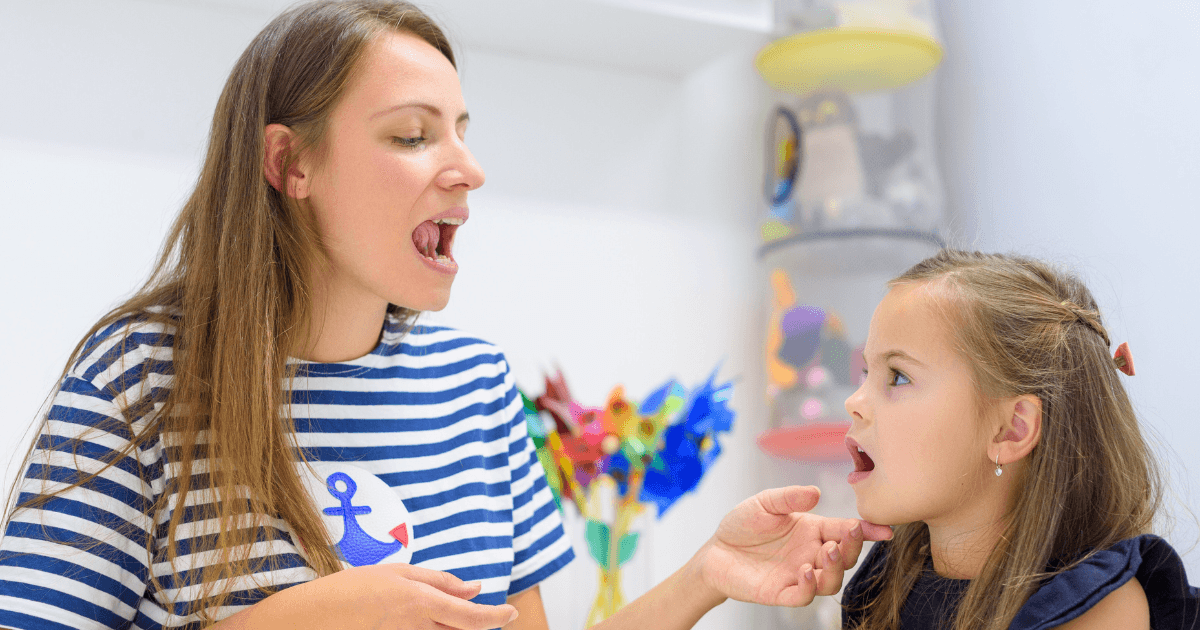
Some sounds may still be challenging, particularly l, r, s, z, th, ch, j, and v
According to the American Speech-Language-Hearing Association, by age 4, children typically speak smoothly without frequent repetition of sounds, words, or phrases. They are clear enough for most listeners to understand what they’re saying.
The Science Behind the Language Explosion
Several key factors support this remarkable period of language development:
Growing reasoning skills help children understand more complex language concepts
Developing a theory of mind helps them understand others’ perspectives
Social Motivation
As preschoolers become more social, their desire to communicate drives language growth:
Increased interest in peers creates motivation to communicate effectively
Growing independence fuels the need to express wants, needs, and ideas
Curiosity about the world generates endless questions
10 Effective Ways to Support Your Child’s Language Explosion
The good news is that you don’t need special equipment or formal lessons to support your child’s language development. Here are practical strategies you can incorporate into your daily routines:
1. Engage in Rich Conversations
Quality conversations are perhaps the most powerful tool for language development:
Follow your child’s lead by talking about what interests them
Ask open-ended questions that can’t be answered with a simple “yes” or “no”
Wait for your child to respond rather than filling the silence
Take turns in conversation, modeling the back-and-forth nature of communication
According to The Little Country Preschool, engaging in simple, everyday conversations with preschoolers significantly boosts their language development.
2. Expand and Extend
When your child speaks, acknowledge what they’ve said and then add a bit more:
Child: “Big truck!”
You: “Yes, that’s a big red fire truck with a ladder. I wonder where it’s going?”
This technique, known as “expansion and extension,” introduces new vocabulary and models more complex sentence structures without directly correcting your child.
3. Read, Read, Read
Daily reading remains one of the most powerful ways to support language development:
Read a variety of books, including stories, information books, and poetry
Discuss the story by asking questions about characters, events, and predictions
Connect books to your child’s experiences: “Remember when we saw a butterfly like that?”
Turn everyday routines into language-learning opportunities by describing what you’re doing:
During meal preparation: “I’m slicing these carrots into thin orange circles for our soup.”
While getting dressed: “Let’s put on your striped shirt. First your head, then your arms.”
During bath time: “The water feels warm. Look at the bubbles floating on top!”
This running commentary exposes your child to rich vocabulary in meaningful contexts.
5. Play Word Games
Make language learning playful with simple word games:
I Spy: “I spy with my little eye something round and red.”
Categories: “Let’s think of all the animals we can name.”
Silly rhymes: “Can you think of a word that rhymes with ‘cat’?”
Would You Rather: “Would you rather be able to fly or swim underwater?”
According to Expressable, playing “I Spy” with everyday items helps children learn speech sounds and expand their vocabulary through sound-word associations.
6. Sing Songs and Recite Rhymes
Music and rhymes support language development in multiple ways:
The rhythm and repetition make words easier to remember
Songs often contain rich vocabulary and complex sentence structures
According to COPA Kids, using gestures and expressions alongside words helps toddlers understand language through visual cues.
10. Limit Screen Time
While some high-quality educational programs can support language development, excessive screen time can limit opportunities for conversation:
Follow the American Academy of Pediatrics guidelines, which recommend limiting screen time to 1 hour per day of high-quality programming for preschoolers
Watch together when possible and discuss what you’re viewing
Choose slow-paced, educational content without advertising
Face-to-face interactions remain the gold standard for language development.
Supporting Bilingual Development
If your family speaks multiple languages, you might wonder how best to support your child’s bilingual development. Research consistently shows that learning multiple languages is beneficial for children and does not cause language delays or confusion.
According to Healthy Children, more than 20% of children in the United States speak a language other than English at home, and multilingualism can improve a child’s overall communication, literacy, and math skills.
Here are some strategies for supporting bilingual development:
Provide rich exposure to both languages through conversations, books, songs, and videos
Create opportunities for meaningful interaction in each language
Don’t worry about mixing languages—code-switching is a normal part of bilingual development
Read books in both languages to build vocabulary across languages
Connect with other speakers of your home language through playgroups or community events
Research from the National Institutes of Health indicates that bilingual children are no more likely to have language difficulties or disorders than monolingual children, and that they typically require exposure to each language for successful bilingualism.
When to Seek Additional Support
While all children develop at their own pace, certain signs might indicate a need for professional evaluation:
Potential Red Flags at Age 3
Not speaking in sentences
Not engaging in simple conversations
Not being understood by familiar adults most of the time
Not following simple directions
Loss of previously acquired language skills
Potential Red Flags at Age 4
Not speaking in 4+ word sentences
Not being understood by unfamiliar listeners
Persistent difficulty with pronouns (saying “me go” instead of “I go”)
Limited vocabulary compared to peers
Frustration when trying to communicate
According to Johns Hopkins Medicine, by age 3, children should have about 1,000 words and use three- to five-word sentences; by age 4, they should speak in sentences with a vocabulary of over 1,000 words.
If you have concerns about your child’s language development:
Start with your pediatrician, who can conduct an initial screening
Consider a speech-language evaluation with a certified speech-language pathologist
Look into early intervention services in your community, which may be available at reduced or no cost
Remember that early intervention is key—don’t wait to seek help if you have concerns
Conclusion: Embracing the Language Journey
The language explosion of ages 3-4 is a magical time that sets the stage for your child’s future learning and communication. By engaging in rich conversations, reading regularly, playing with language, and providing diverse experiences, you’re giving your child the gift of strong language skills that will serve them throughout life.
Remember that your daily interactions—from breakfast conversations to bedtime stories—are powerful opportunities to support your child’s developing language. These moments not only build vocabulary and grammar but also strengthen your connection with your child and foster their love of communication.
As you navigate this exciting stage, celebrate your child’s growing abilities, be patient with the inevitable mistakes, and most importantly, have fun with language together. The words you share today are building the foundation for a lifetime of effective communication.
What language milestones have you observed in your preschooler? Share your experiences in the comments below!