Reggio Emilia vs Montessori: Which Approach Is Right for Your Child?
As parents, we want to provide our children with the best possible start in life. When it comes to early education, two approaches have gained significant popularity in recent years: Reggio Emilia and Montessori. According to recent market research, Montessori remains the largest curriculum segment in early childhood education, while Reggio Emilia is the fastest-growing approach, with enrollment increasing by approximately 15% annually.
But which one is right for your child? Let’s explore these two child-centered educational philosophies to help you make an informed decision that aligns with your child’s unique personality and learning style.
Origins and Philosophy: Different Paths to Child-Centered Learning
Montessori Education
Developed by Dr. Maria Montessori in the early 1900s in Rome, Italy, the Montessori method emerged from scientific observations of children’s natural learning processes. Dr. Montessori, a physician and educator, initially worked with children with special needs before expanding her approach to all children.
At its core, Montessori education emphasizes:
Independence and self-directed learning
Hands-on exploration with specially designed materials
The Reggio Emilia approach was founded by Loris Malaguzzi in the aftermath of World War II in the Reggio Emilia region of northern Italy. This approach developed as a community response to the need for educational reform, with parents, educators, and community members collaborating to create a new vision for childhood education.
The Reggio Emilia approach emphasizes:
Collaborative learning and social interaction
Project-based exploration driven by children’s interests
Creative expression through multiple “languages” (art, music, movement)
Documentation of learning processes
Strong community and parental involvement
Flexible, adaptable learning environments
While both approaches value the child as a capable, curious learner, they differ significantly in their implementation and structure.
Classroom Environment: Structure vs. Flexibility
Montessori Classroom
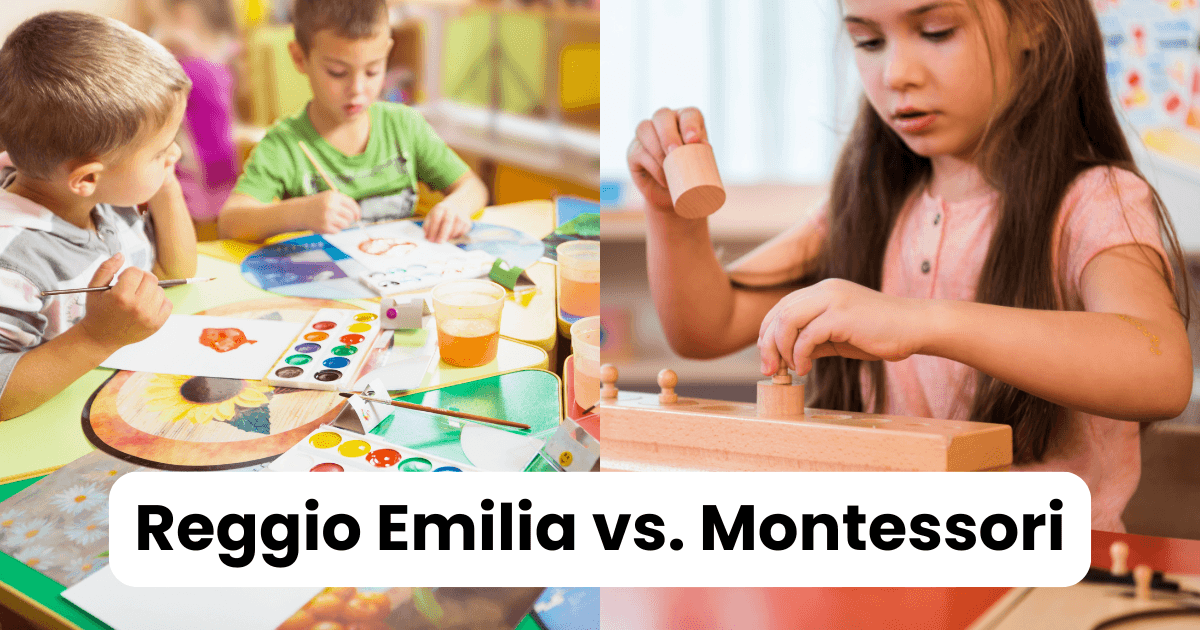
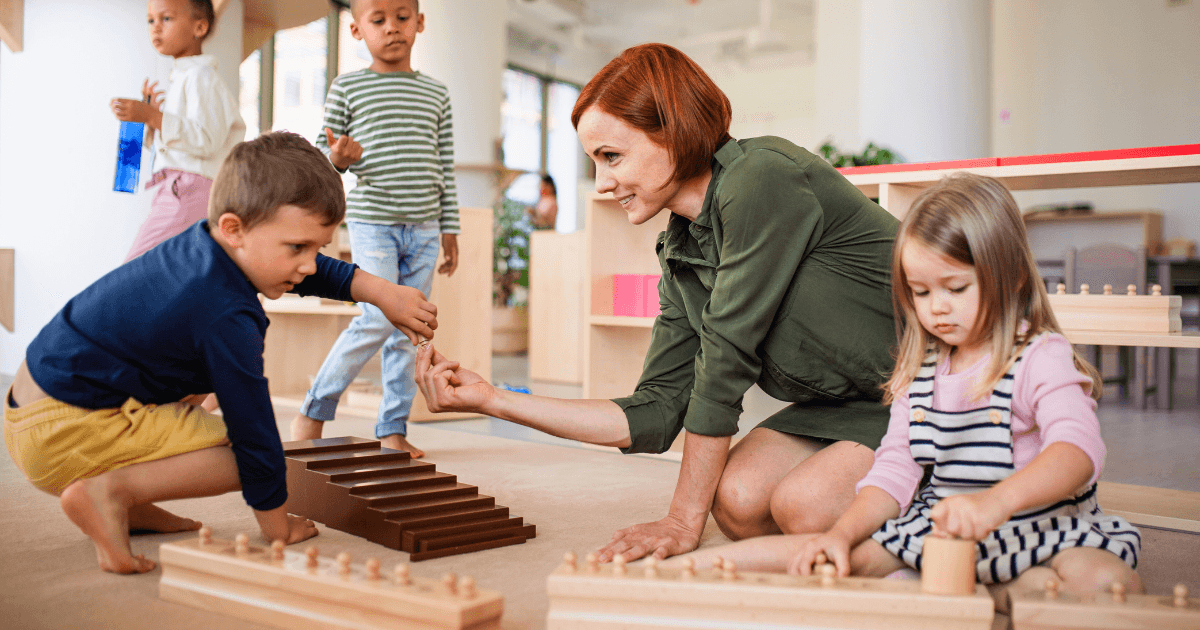
Walk into a Montessori classroom, and you’ll immediately notice its orderly arrangement. The environment is carefully prepared with specific areas dedicated to different subjects:
Mathematics: Concrete materials that introduce mathematical concepts
Language: Tools for developing reading and writing skills
Cultural Studies: Resources for exploring geography, science, and culture
Materials are arranged on low, accessible shelves, allowing children to choose their activities independently. Each material has a specific purpose and is designed to isolate one skill or concept at a time. The classroom maintains a calm, focused atmosphere where children work individually or in small, self-formed groups.
As Top Montessoris explains, “The Montessori environment is meticulously organized to promote independence, with each material having a specific place and purpose.”
Reggio Emilia Classroom
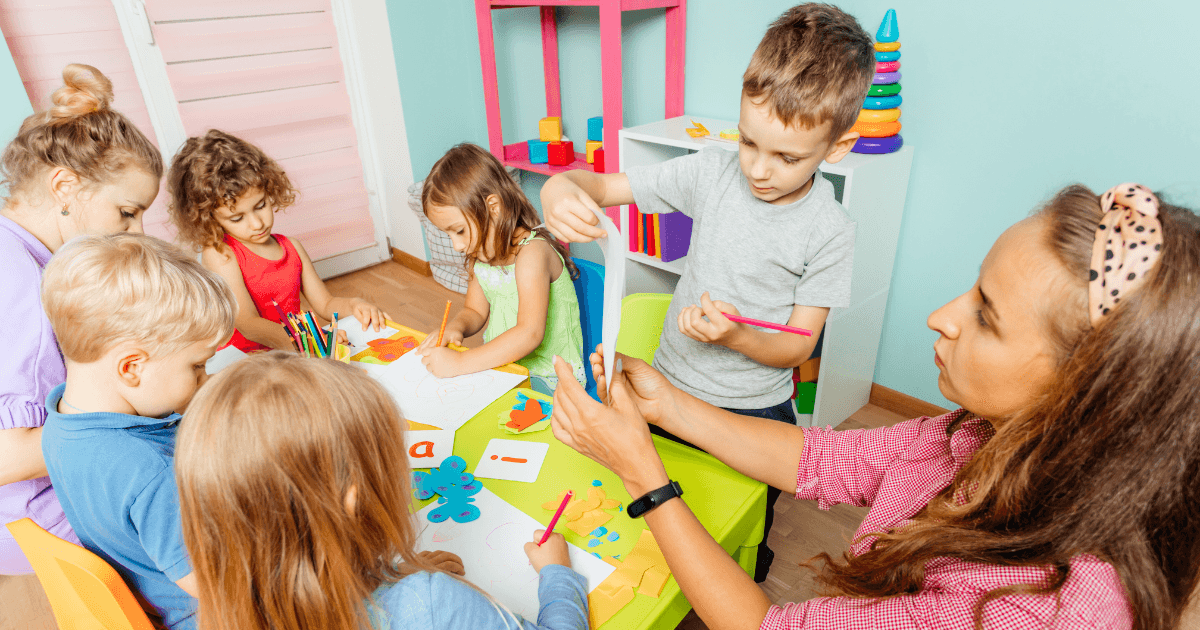
In contrast, a Reggio Emilia classroom feels more fluid and dynamic. Often described as the “third teacher” (alongside the actual teacher and peers), the environment evolves in response to children’s interests and ongoing projects.
These classrooms feature:
Flexible spaces that can be reconfigured for different activities
Natural materials and elements that connect children to the world around them
Art studios (ateliers) equipped with various materials for creative expression
Comfortable, home-like elements that create a welcoming atmosphere
According to Klas Schools, “Reggio Emilia environments are designed to inspire wonder and curiosity, with materials and spaces that evolve alongside children’s interests.”
Teaching Approach: Guide vs. Co-Learner
Montessori Teacher as Guide
In Montessori education, teachers (often called “guides”) take a less prominent role in the classroom. Their primary responsibilities include:
Observing children to understand their developmental needs
Introducing materials at appropriate times through individual or small group lessons
Stepping back to allow children to explore independently
Maintaining the prepared environment
Supporting children’s natural development without interference
Teachers in Montessori classrooms rarely lead whole-group activities, instead trusting children to follow their interests and learn through hands-on exploration of carefully designed materials.
Reggio Emilia Teacher as Co-Learner
Reggio Emilia teachers take on a more collaborative role, positioning themselves as partners in the learning process. They:
Observe and document children’s ideas and theories
Collaborate with colleagues to reflect on children’s learning
Adapt the curriculum based on children’s emerging interests
As Trillium Montessori notes, “In Reggio Emilia, teachers are seen as researchers alongside the children, documenting their discoveries and helping to make their learning visible.”
Curriculum Approach: Structured vs. Emergent
Montessori’s Structured Curriculum
Montessori education follows a structured curriculum with clear sequences of materials and activities. While children choose their work freely, the materials themselves guide learning progressively:
Children master one concept before moving to more complex ideas
Materials are self-correcting, allowing children to identify and fix their own mistakes
Learning follows a prescribed sequence in each subject area
Practical life activities develop skills needed for academic work
Academic concepts are introduced through concrete, hands-on experiences before moving to abstract understanding
This approach provides a clear framework for learning while still allowing for individual pacing and interests.
Reggio Emilia’s Emergent Curriculum
Reggio Emilia takes a dramatically different approach, with no fixed curriculum. Instead:
Learning emerges from children’s questions, theories, and interests
Long-term projects develop organically, often lasting weeks or months
Teachers document children’s ideas and use them to plan next steps
Multiple subjects are integrated through project work
The curriculum is co-constructed by children, teachers, and parents
This approach values the process of learning over predetermined outcomes, allowing for deep exploration of topics that capture children’s imagination.
According to Nido Education, “The Reggio Emilia approach has an emergent curriculum that follows the interests of the children, while Montessori is more structured with specific learning materials and activities.”
Which Approach Might Suit Your Child Better?
When deciding between these approaches, consider your child’s unique personality, learning style, and needs. Here are some factors to consider:
Your child might thrive in Montessori if they:
Enjoy working independently
Prefer a calm, ordered environment
Like to complete tasks from start to finish
Benefit from clear structure and routines
Are self-motivated and can focus for extended periods
Appreciate hands-on, concrete learning materials
Enjoy mastering skills through repetition and practice
Your child might thrive in Reggio Emilia if:
They flourish in collaborative settings
They have strong verbal skills and enjoy group discussions
They express themselves creatively through art, music, or movement
They are naturally curious and ask lots of questions
They enjoy open-ended projects with multiple solutions
They thrive with variety and changing activities
They benefit from strong social connections with peers
Recent research from Embodied Learning suggests that children’s natural learning styles often align with one approach or the other, though many children can adapt to either environment with proper support.
Practical Considerations for Parents
Beyond philosophical alignment, consider these practical factors when making your decision:
Availability and Authenticity
True Montessori schools should be accredited by organizations like the American Montessori Society (AMS) or the Association Montessori Internationale (AMI).
Reggio Emilia is not a trademarked approach so that schools may interpret it differently.
“Reggio-inspired” programs are more common in the US than pure Reggio Emilia schools.
Age Range and Continuity
Montessori serves children from infancy through adolescence (0-18 years)
Reggio Emilia typically focuses on early childhood (0-6 years)
Consider your long-term educational plans and potential transitions
Parental Involvement
Montessori encourages home-school consistency, but may have less direct parent participation in the classroom.
Reggio Emilia views parents as essential partners and active participants in the educational process.
Consider your availability and desire to be involved.
Educational Goals
Montessori emphasizes independence, concentration, and academic skill development
Reggio Emilia focuses on creative expression, social skills, and collaborative problem-solving
Reflect on what skills and values you prioritize for your child’s education
The Latest Trends in Montessori and Reggio Emilia Education
According to Future Data Stats, both approaches are evolving to meet contemporary needs:
Technology Integration: Both approaches carefully incorporate technology while maintaining their core philosophies
Outdoor Learning: Natural environments are increasingly emphasized in both Montessori and Reggio Emilia settings
Accessibility: Schools are working to make these approaches available to more diverse populations
Social-Emotional Focus: Both approaches are strengthening their emphasis on emotional intelligence and social skills
The global EdTech market for early childhood is projected to grow significantly, with Montessori-based digital resources accounting for over 32.5% of the market, while Reggio Emilia-inspired tools are gaining popularity, especially in project documentation and parent communication.
Making Your Decision
After considering all these factors, how do you make your final decision? Here are some practical steps:
Visit schools of both types: Observe the environment, teacher interactions, and children’s engagement
Talk to parents: Connect with families whose children attend each type of school
Consider a trial period: Some schools offer short trial experiences
Reflect on your family values: Which approach aligns best with your parenting philosophy?
Consult with educators: Discuss your child’s specific needs with professionals.
Remember that neither approach is universally “better” – the right choice depends entirely on your unique child and family circumstances.
Conclusion: Honoring Your Child’s Individual Path
Both Montessori and Reggio Emilia offer rich, child-centered alternatives to traditional education. They share a profound respect for children as capable, curious learners while differing in their implementation.
As Dr. Maria Montessori herself said, “Follow the child.” This wisdom applies not only to these educational approaches but also to choosing among them. By observing your child’s natural tendencies, interests, and learning style, you can make an informed decision that supports their unique developmental journey.
Have you had experience with either Montessori or Reggio Emilia education? Share your thoughts and questions in the comments below!