
The Sleep-Learning Connection: How Proper Rest Fuels Preschool Success
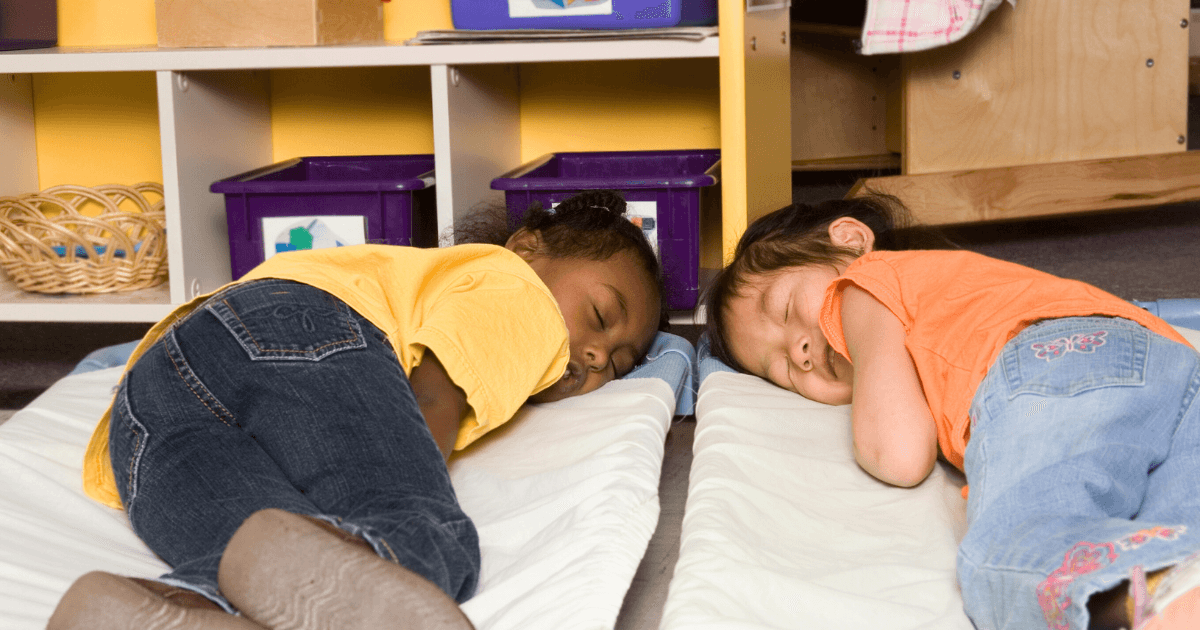
It was circle time in my preschool classroom, and four-year-old Elijah was struggling. Usually engaged and eager to participate, today he was irritable, unfocused, and on the verge of tears. When I gently asked what was happening, his response was illuminating: “I’m just so tired. My baby sister cried all night long.”
As early childhood educators, we’ve all witnessed similar scenarios—children whose learning and behavior are profoundly affected by their sleep quality. What we may not fully appreciate, however, is just how deeply sleep and learning are interconnected in the developing brain.
Recent research has revealed that sleep isn’t just a time of rest; it’s an active period of brain development that directly impacts learning, memory consolidation, emotional regulation, and cognitive growth. Understanding this connection can transform how we support children’s learning and development both in the classroom and through parent education.
The Science of Sleep and Learning in Early Childhood
The preschool years represent a critical period for brain development. According to a 2025 study from the University of Colorado at Boulder, brain connections strengthen during sleep, increasing by as much as 20% overnight in young children. This remarkable finding helps explain why well-rested children learn more effectively than their sleep-deprived peers.
How Sleep Enhances Learning
Sleep benefits learning through several key mechanisms:
1. Memory Consolidation
During sleep, the brain processes and stores information acquired during waking hours. This process, known as memory consolidation, is particularly active in young children.
Research published in Sleep Medicine Reviews in 2025 found that naps have a significant positive effect on declarative memory (facts and knowledge) in preschoolers, with a moderate effect size of 0.60. This means that children who nap after learning new information are substantially more likely to remember it later.
2. Neural Network Development
In the first years of life, more than a million new neural connections form every second, and sleep strengthens many of those connections. As noted by Nova Nannies, these connections form the foundation for all future learning and development.
3. Emotional Regulation
Sleep directly impacts a child’s ability to regulate emotions—a critical skill for classroom learning. According to Pennsylvania Keys, napping processes emotions ten times more efficiently than wakefulness in young children. This explains why sleep-deprived children often struggle with emotional outbursts and frustration tolerance.
4. Attention and Focus
Well-rested children demonstrate longer attention spans and better focus—essential prerequisites for learning. BBM Academy notes that children with adequate sleep show enhanced problem-solving abilities and improved attention spans compared to their sleep-deprived peers.
Sleep Needs for Preschool-Aged Children
Understanding how much sleep children need is the first step in supporting optimal learning:
Recommended Sleep Duration
According to current guidelines, preschoolers (ages 3-5) require 10-13 hours of total sleep daily. This may include:
- For children who still nap: 10-11 hours of nighttime sleep plus a 1-2 hour nap
- For children who have outgrown naps: 11-13 hours of consolidated nighttime sleep
Signs of Inadequate Sleep
Children don’t always show tiredness in the same ways adults do. Watch for these indicators that a child may not be getting enough sleep:
- Increased irritability or emotional reactivity
- Difficulty transitioning between activities
- Reduced attention span
- Hyperactive behavior (which can paradoxically increase with tiredness)
- Frequent yawning or rubbing eyes
- Falling asleep during daytime activities
- Difficulty waking in the morning
- Decreased interest in previously enjoyed activities
As Maria, a preschool teacher in Boston, shared with me: “I’ve learned to recognize sleep deprivation before parents sometimes do. When a typically easygoing child becomes easily frustrated or a focused child can’t sit still, my first question is always about their sleep.”
The Critical Role of Naps in Preschool Learning
While some early childhood programs have reduced or eliminated nap times to accommodate more academic content, research strongly suggests this approach may be counterproductive for learning.
Naps and Memory Processing
The 2025 meta-analysis published in Sleep Medicine Reviews examined 32 studies on napping and found compelling evidence that naps facilitate the acquisition of new information in preschool-aged children.
One particularly striking finding from a University of Massachusetts Amherst study showed that preschoolers who napped performed significantly better on visual-spatial learning tasks compared to those who stayed awake—and importantly, missing naps could not be compensated for by overnight sleep alone.
Emotional Benefits of Napping
Beyond cognitive benefits, naps also help regulate emotions. Research indicates that naps reduce afternoon emotional reactivity in young children, creating a more positive learning environment in the second half of the day.
Supporting Children Who No Longer Nap
By age 3-5, some children naturally outgrow napping. For these children, a quiet rest period still offers benefits:
- Provides a break from sensory stimulation
- Allows for mental processing of morning learning
- Offers practice in self-regulation and mindfulness
- Accommodates different developmental needs within the group
As one experienced preschool director noted: “Even children who don’t sleep benefit from a period of calm. We see better afternoon learning across the board when we maintain a consistent rest period.”
Sleep-Supportive Classroom Practices
As educators, we can implement several strategies to support healthy sleep-learning connections:
1. Create a Restful Nap Environment
- Maintain a comfortable room temperature (68-72°F is optimal)
- Dim lights or use blackout curtains
- Provide white noise to mask distracting sounds
- Ensure comfortable rest surfaces
- Establish consistent nap routines
2. Recognize and Respond to Sleep Cues
- Be attentive to signs of tiredness, especially in children who resist rest
- Adjust activities when children show signs of fatigue
- Consider flexible scheduling for children with different sleep needs when possible
3. Schedule Learning Strategically
- Introduce new concepts earlier in the day when children are most alert
- Plan more active, engaging activities for times when energy typicallydips
- Follow nap times with activities that build on morning learning to leverage sleep-enhanced memory consolidation
4. Incorporate Sleep Education into Curriculum
- Read children’s books about sleep and rest
- Discuss the importance of sleep for growing bodies and brains
- Create simple charts showing healthy sleep habits
5. Communicate with Families About Sleep
- Share current research on sleep and learning with families
- Provide updates about children’s rest patterns at school
- Offer suggestions for supporting consistent sleep routines at home
Supporting Families with Sleep Challenges
Many families struggle with establishing healthy sleep routines. As trusted early childhood professionals, we can offer valuable guidance:
Effective Bedtime Routines
Research consistently shows that consistent bedtime routines improve sleep quality and cognitive development. Recommend these elements of an effective routine:
- Consistent timing: Going to bed and waking up at approximately the same times each day
- Calming activities: Reading books, gentle stretching, or quiet conversation
- Limited screens: Avoiding electronic devices at least one hour before bedtime
- Comfortable sleep environment: Cool, dark, and quiet room with minimal stimulation
- Transitional objects: A special stuffed animal or blanket that provides comfort
Environmental Considerations
According to Pennsylvania Keys, environmental factors significantly impact sleep quality. Share these recommendations with families:
- Light exposure: Dimming lights before bedtime helps trigger natural melatonin production
- Temperature: Maintaining a cool room temperature (68-72°F) promotes deeper sleep
- Screen time: Limiting exposure to electronic screens, especially before bedtime
- Noise control: Using white noise machines if environmental noise is an issue
- Consistent sleep space: Creating a designated area for sleep that feels safe and comfortable
Addressing Common Sleep Challenges
Offer supportive guidance for families facing these common preschool sleep issues:
Bedtime Resistance
Suggest:
- Earlier bedtimes (counterintuitively, this often reduces resistance)
- Clear, consistent bedtime routines
- Limited options within boundaries (“You can choose which pajamas to wear, but bedtime is at 7:30”)
- Positive reinforcement for cooperation with bedtime routines
Night Wakings
Recommend:
- Checking for physical discomfort (hunger, temperature, etc.)
- Reassurance without creating sleep associations that require adult presence
- Consistent responses to wakings
- A security object that stays with the child all night
Early Morning Wakings
Advise:
- Room-darkening curtains to prevent early light exposure
- White noise to mask morning sounds
- Consistent wake times, even on weekends
- Appropriate bedtimes (overtired children often wake earlier)
Special Considerations for Diverse Families
Cultural perspectives on sleep vary widely, and it’s important to respect these differences while providing evidence-based information:
Cultural Sleep Practices
- Some cultures practice co-sleeping or family beds
- Bedtimes and sleep schedules may vary based on family work patterns or cultural norms
- Napping practices differ across cultures
When discussing sleep with families, acknowledge these differences while focusing on the universal need for adequate total sleep, regardless of how it’s achieved.
Socioeconomic Factors
Families facing economic challenges may experience barriers to optimal sleep environments:
- Overcrowded housing conditions
- Noise pollution in urban environments
- Irregular work schedules requiring variable childcare arrangements
- Limited resources for creating ideal sleep environments
Offer practical, low-cost suggestions and connect families with community resources when appropriate.
Case Study: A Classroom Sleep-Learning Initiative
To illustrate how these principles can be applied, consider this example from a preschool program that implemented a comprehensive sleep-learning initiative:
The teaching team at Sunshine Preschool noticed that many children were struggling with attention and emotional regulation in the afternoon, even after rest time. After researching the sleep-learning connection, they implemented several changes:
- Enhanced the nap environment by adding white noise machines, better room-darkening capabilities, and more comfortable rest mats
- Adjusted the daily schedule to place more cognitively demanding activities in the morning and after nap, with more movement-based activities during typical energydips
- Created a parent education campaign including a workshop on sleep and learning, take-home tip sheets, and regular communication about children’s rest patterns
- Incorporated sleep education into the curriculum through books, discussions, and activities about how sleep helps our bodies and brains
The results were significant:
- Increased percentage of children who slept during nap time
- Improved afternoon behavior and engagement
- Positive feedback from families about improved bedtime routines at home
- Teachers reported less stress managing afternoon activities
As the program director shared: “We saw improvements not just in behavior but in learning outcomes. Children retained information better and showed more curiosity and engagement in activities. The investment in better sleep paid dividends in every area of our program.”
Looking Forward: Sleep as a Learning Priority
As our understanding of the sleep-learning connection deepens, early childhood programs must recognize sleep as a learning priority rather than just a scheduling necessity.
According to a 2025 survey cited by Pennsylvania Keys, nearly 32% of children aged 4months to 14 years in Pennsylvania were not getting enough sleep—a statistic likely mirrored in many other regions. This represents a significant barrier to learning that early childhood educators are uniquely positioned to address.
By implementing sleep-supportive practices in our classrooms and educating families about the critical role of sleep in learning, we can help ensure that children have the neurological foundation needed for optimal development and school success.
Conclusion: Rest for Success
The evidence is clear: sleep is not a luxury or a negotiable aspect of child development—it’s a biological necessity that directly impacts learning outcomes. When we prioritize healthy sleep habits, we’re not just helping children feel better; we’re optimizing their brain development and learning potential.
As early childhood educators, we have both an opportunity and a responsibility to champion the sleep-learning connection. By creating rest-friendly environments, educating families, and advocating for sleep-supportive policies, we can help ensure that all children have the foundation they need for lifelong learning success.
What sleep-supportive practices have you found most effective in your early childhood setting? Share your experiences in the comments below!