Scrub, Sing, and Learn: Making Hand Washing Fun and Effective for Young Children
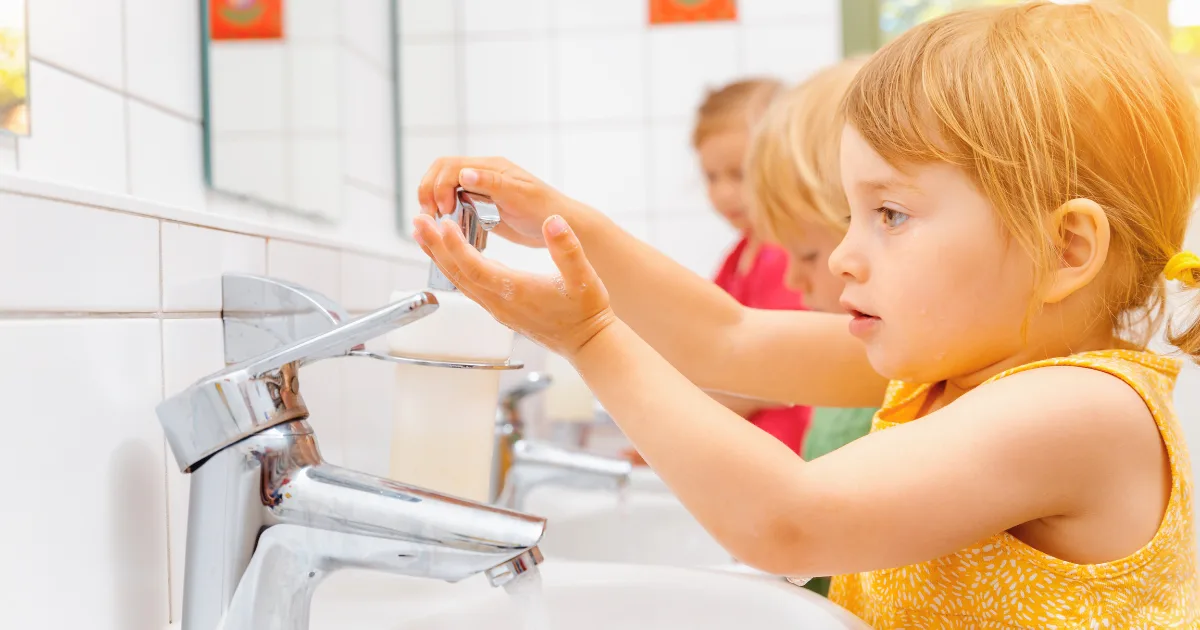
“Look, Ms. Jamie! I can see the germs going down the drain!” four-year-old Zoe exclaimed, watching the glitter swirl away as she rinsed her hands. What had begun as a simple hand washing lesson had transformed into a moment of genuine discovery and excitement.
As early childhood educators, we know that teaching hygiene skills is essential—but it doesn’t have to be boring. In fact, when we infuse hand washing routines with creativity and playfulness, we not only improve compliance but also deepen children’s understanding of why this simple habit matters so much.
The importance of effective hand washing has never been clearer. According to the American Academy of Pediatrics, hand washing is “the single most important act for disease prevention.” Research shows that proper hand hygiene can reduce respiratory infections by up to 21% and gastrointestinal illnesses by about 30% in young children. That translates to fewer sick days, better learning outcomes, and healthier communities.
But how do we transform this essential health practice from a mundane routine into an engaging learning experience? Let’s explore creative, evidence-based strategies to make handwashing both fun and effective for our youngest learners.
Understanding the Basics: What Children Need to Know
Before diving into creative approaches, let’s review what constitutes proper hand-washing technique for young children:
The Five Essential Steps
Wet: Use clean, running water (warm or cold)
Lather: Apply soap and create bubbles on all hand surfaces
Scrub: Rub hands together for at least 20 seconds
Rinse: Wash away all soap under clean, running water
Dry: Use a clean towel or air dry
Key Times for Hand Washing
Children should wash their hands:
Before eating or handling food
After using the bathroom
After playing outside
After coughing, sneezing, or blowing their nose
After touching pets or animals
When hands are visibly dirty
After being in public places
Now, let’s explore how to make these basics engaging and memorable for young children.
Setting the Stage: Creating a Hand-Washing-Friendly Environment
The physical environment plays a crucial role in supporting effective hand-washing routines.
Sinks are at children’s height or have sturdy, slip-resistant step stools
Soap dispensers are easy for small hands to operate
Paper towels are within reach
Trash cans are conveniently located
Visual cues are posted at children’s eye level
Visual Supports
Create simple, colorful visual guides showing the handwashing steps. These can include:
Photographs of children in your class demonstrating each step
Simple drawings with minimal text
Sequenced picture cards that children can arrange in order
Footprints on the floor showing where to stand
Timing Tools
Help children understand the 20-second duration with:
Visual timers that show time elapsing
Sand timers specifically for hand washing
Colorful clock faces with moving hands
Digital timers with fun sounds
One preschool teacher shared: “We installed a simple light timer that changes from red to green after 20 seconds. The children love watching for the ‘go’ light that tells them they’ve washed long enough!”
12 Engaging Activities to Make Hand Washing Fun and Memorable
1. The Glitter Germ Demonstration
Materials needed: Hand lotion, glitter in various colors, soap, water
How it works: Apply a small amount of lotion to children’s hands, then sprinkle glitter over them. Explain that the glitter represents germs that we can’t usually see. Have children try to remove the “germs” first with just water, then with proper hand washing using soap. This visually demonstrates how soap is necessary to remove germs effectively.
Extension: Use different glitter colors to represent different “types” of germs, or to show how germs can spread when we touch objects or shake hands.
2. Hand Washing Songs and Rhymes
Materials needed: Printed lyrics or picture cues (optional)
How it works: Teach children songs that last approximately 20 seconds to help them scrub for the right amount of time. Popular options include:
“Happy Birthday” sung twice
“Twinkle, Twinkle, Little Star”
“The Alphabet Song”
Or create a hand washing-specific song, like this one (to the tune of “Row, Row, Row Your Boat”):
Wash, wash, wash your hands. Make them nice and clean. Scrub the tops and in betweento get those germs unseen!
Extension: Create picture cards that illustrate the song lyrics, or record children singing the songs to play during hand-washing time.
3. Germ Detective
Materials needed: Washable stamp or non-toxic ink pad
How it works: Place a small stamp on children’s hands in the morning. Explain that their mission for the day is to make the “germ” disappear by properly washing their hands. Check periodically to see if the stamp is fading, which shows effective washing.
Extension: Use UV-reactive lotion and a blacklight to show missed spots after washing (appropriate for older preschoolers).
4. Hand Washing Sequence Cards
Materials needed: Laminated cards showing each hand washing step
How it works: Create a set of 5-6 cards that show each step of handwashing. Mix them up and have children put them in the correct order. Place a permanent set by each sink as a visual reminder.
Extension: For younger children, use just 3cards showing the main steps. For older children, add more detailed steps or create a class book on handwashing.
5. Bubble Glove Challenge
Materials needed: Liquid soap, water
How it works: Challenge children to create a “soap glove” by making enough bubbles to cover their entire hands, including the spaces between fingers and around the wrists. This encourages thorough coverage with soap.
Extension: Have children describe how the bubbles feel, introducing vocabulary like “slippery,” “foamy,” and “sudsy.”
6. Germ Story Books and Discussions
Materials needed: Age-appropriate books about germs and hand washing
How it works: Read books that explain germs and hygiene in child-friendly ways. Some excellent options include:
“Germs Are Not for Sharing” by Elizabeth Verdick
“Those Mean Nasty Dirty Downright Disgusting but…Invisible Germs” by Judith Anne Rice
“Wash Your Hands!” by Tony Ross
Extension: After reading, have children draw pictures of germs as they imagine them, or create a class “Germ Busters” book with hand-washing tips.
7. Hand Washing Relay Race
Materials needed: Two buckets of water, soap, and towels
How it works: Divide children into teams. Each child runs to the washing station, washes hands correctly (supervised by a teacher), dries them, and runs back to tag the next teammate. This combines physical activity with hand washing practice.
Extension: Add fun elements like wearing oversized gloves that must be removed before washing, or carrying a rubber duck that needs to be “bathed” during hand washing.
8. Dramatic Play: Health Clinic or Restaurant
Materials needed: Dramatic play props, toy sinks, pretend soap
How it works: Set up dramatic play areas that naturally incorporate handwashing, such as a health clinic where “doctors” wash their hands before examining “patients” or a restaurant where “chefs” wash their hands before preparing food.
Extension: Create hand-washing posters for the dramatic play area that mirror real-world hygiene signage.
9. Paint Stamp Hand Prints
Materials needed: Washable paint, paper, sink with soap
How it works: Children make painted handprints on paper, then immediately practice proper hand washing to remove all the paint. This makes the washing process visibly effective and results in art to take home.
Extension: Use the handprints to create a classroom display about “Hands that help keep germs away.”
10. Hand Washing Puppet Show
Materials needed: Simple hand puppets, mini sink setup (optional)
How it works: Use puppets to demonstrate proper hand washing and discuss why it’s important. Children can then practice teaching the puppets how to wash their hands.
Extension: Have children create their own “germ” and “soap” puppets from paper bags and act out a hand-washing story.
How it works: Sprinkle pepper on the surface of water in a bowl to represent germs. When children dip a finger with soap on it into the water, the pepper rapidly moves away, demonstrating how soap repels germs.
Extension: Try the experiment with different types of soap to see which works best, introducing simple scientific inquiry.
12. Hand Washing Reward System
Materials needed: Sticker chart, hand-shaped cutouts, or other tracking system
How it works: Create a visual system to detect consistent handwashing. Children can add a sticker to a chart, move a clothespin along a progress board, or add their handprint to a classroom display after washing hands at key times.
Extension: Celebrate collective achievements, such as “Our class washed hands 100 times today!” rather than individual competition.
Integrating Hand Washing Across the Curriculum
Handwashing education doesn’t have to be limited to health and hygiene discussions. It can be woven throughout your curriculum:
Math Connections
Count to 20 during hand washing
Graph how many times the class washes its hands each day
Measure and compare soap bubbles
Create patterns with handprints
Literacy Connections
Write and illustrate class books about hand washing
Create hand-washing procedure signs using inventive spelling
Learn vocabulary related to hygiene and health
Practice sequencing with hand washing steps
Science Connections
Discuss how soap works to remove germs
Explore properties of water and soap
Grow cultures from unwashed vs. washed hands (with proper safety precautions)
Learn about how illnesses spread
Social Studies Connections
Discuss community helpers who wash their hands as part of their jobs
Learn about hand washing practices around the world
Explore how hand washing helps us care for our classroom community
Art Connections
Create soap bubble prints
Design colorful hand-washing posters
Make hand-shaped art with proper washing afterward
Design “germ” sculptures from recycled materials
Supporting Diverse Learners
Children come to hand washing with different abilities, sensory preferences, and prior experiences. Here’s how to ensure your approach is inclusive:
For Children with Sensory Sensitivities
Offer different types of soap (unscented, foam, etc.)
Provide water temperature options when possible
Introduce hand sanitizer as an occasional alternative when soap and water aren’t available
Use social stories to prepare children for the sensory experience
For Children with Motor Challenges
Install easy-to-use lever faucets or faucet extenders
Provide soap in pump dispensers that require less strength
Consider adaptive equipment like soap on a rope
Break down the process into smaller steps
For Children Learning English
Use visual cues that transcend language
Teach hand washing vocabulary in multiple languages
Pair verbal instructions with demonstrations
Create picture dictionaries for hygiene terms
Partnering with Families
Consistency between school and home reinforces hand-washing habits. Merlin Day Academy emphasizes that early hygiene habits set the stage for lifelong health. Support this home-school connection by:
Sharing Resources
Send home the same visual cues used in the classroom
Share hand-washing songs that families can use at home
Provide simple, inexpensive ideas for making hand washing fun
Create a lending library of children’s books about germs and hygiene
Communicating Progress
Include hand washing achievements in regular family updates
Share photos of engaging hand washing activities (with appropriate permissions)
Celebrate improvements in independence and technique
Addressing Challenges Together
Problem-solve with families when children resist hand washing
Offer suggestions for adapting routines for different home environments
Be sensitive to cultural differences in hygiene practices
One teacher shared: “We created simple hand washing kits for families, with a picture sequence card, a small bottle of liquid soap, and the lyrics to our classroom hand washing song. Parents told us their children became the ‘hand washing experts’ at home!”
Addressing Common Challenges
Even with fun activities, you may encounter some challenges in teaching hand washing:
Challenge: “I already washed!”
Solution: Use visual tracking systems so children can see their progress, or implement the stamp method described earlier to provide a visible cue for when to wash.
Challenge: Rushing through the process
Solution: Use timers, songs, or physical cues (such as a special handwashing dance) to ensure adequate duration.
Challenge: Water play distraction
Solution: Distinguish between “washing time” and “water play time” and set clear expectations for each. Offer scheduled water play activities to satisfy this interest separately.
Challenge: Resistance to hand washing
Solution: Investigate the reason for resistance (sensory issues, fear of germs, dislike of particular products) and address the specific concern. Offer choices within boundaries to create a sense of control.
Challenge: Long lines at the sink
Solution: Implement a rotating schedule, use multiple sinks when available, or create engaging activities for children waiting their turn, as suggested by Edutopia.
Measuring Success: Beyond Compliance
How do we know if our hand washing instructions are truly effective? Look beyond simple compliance to these indicators:
Knowledge Transfer
Children understand and can explain:
Why hand washing is important
When hand washing is necessary
How to wash hands effectively
Independence
Children initiate hand washing:
Without prompting at key times
Using proper technique
For the appropriate duration
Peer Education
Children begin to:
Remind each other about hand washing
Demonstrate techniques to friends
Connect hand washing to health concepts
Health Outcomes
The classroom experiences:
Reduced illness transmission
Fewer absences due to sickness
Increased awareness of other healthy habits
Conclusion: Creating a Culture of Healthy Habits
Teaching hand washing effectively goes beyond demonstrations and reminders—it’s about creating a classroom culture where hygiene is valued, understood, and even celebrated. When we approach hand washing with creativity and enthusiasm, we transform a simple health practice into an opportunity for multifaceted learning.
As COPA Kids notes, consistent hand washing is one of the easiest and most effective ways to protect children from illness. By making this practice engaging and meaningful, we’re not just preventing disease—we’re empowering children with health knowledge and habits that will serve them throughout their lives.
The next time you gather children around the sink, remember: those 20 seconds of scrubbing are rich with opportunities for learning, connection, and joy. With a little creativity, hand washing can become a highlight of the day rather than a hurried transition.
What creative hand-washing activities have worked in your classroom? Share your ideas and experiences in the comments below!