Self-Regulation in Preschoolers: Signs of Progress and How to Help
As parents, we’ve all witnessed those meltdowns in the grocery store or the struggle to share toys during playdates. These moments aren’t just challenging—they’re actually important developmental opportunities. Your preschooler is learning one of life’s most crucial skills: self-regulation.
But how do you know if your child is on track? And more importantly, how can you help them develop these essential skills? Let’s dive into the world of preschooler self-regulation—what it looks like, how it develops, and practical ways to nurture it.
What Exactly Is Self-Regulation?
Self-regulation is your child’s ability to understand and manage their own behavior, including emotions like frustration, excitement, or disappointment. It’s essentially how children learn to control their reactions, focus their attention, and adapt their behavior to different situations.
According to the Center on the Developing Child at Harvard University, self-regulation is closely tied to executive function skills—the mental processes that enable us to plan, focus, remember instructions, and juggle multiple tasks successfully.
Developmental Milestones: What to Expect
Self-regulation develops gradually throughout childhood, with significant progress during the preschool years (ages 3-5). Understanding typical milestones can help you recognize your child’s progress:
Ages 3-4:
- Beginning to use words to express feelings (“I’m mad”)
- Can follow simple rules with reminders
- Starting to wait their turn, though often with difficulty
- May use simple strategies to calm down (like hugging a stuffed animal)
- Can delay gratification for short periods
Ages 4-5:
- Recognizes a wider range of emotions in themselves and others
- Can follow rules more consistently
- Better at handling transitions between activities
- Developing more effective calming strategies
- Can wait longer for desired objects or activities
- Beginning to use self-talk to guide behavior
The CDC’s Developmental Milestones resource provides comprehensive checklists for tracking various aspects of your child’s development, including emotional regulation skills.
Signs Your Preschooler Is Making Progress
Every child develops at their own pace, but here are positive indicators that your preschooler’s self-regulation skills are developing:
- Decreased frequency and intensity of tantrums When your child moves from daily meltdowns to occasional outbursts, that’s progress!
- Using words instead of physical reactions Hearing “I’m frustrated” instead of seeing a toy thrown across the room is a big win.
- Waiting their turn Whether it’s during board games or conversations, the ability to wait shows developing impulse control.
- Recovering more quickly from disappointment The transition from inconsolable crying to expressing disappointment and moving on indicates emotional growth.
- Following multi-step directions Being able to remember and follow a sequence of instructions shows developing executive function.
- Self-soothing when upset When your child begins using strategies like deep breathing or seeking a quiet space without prompting.
- Adjusting behavior to different settings Understanding that indoor voices are for libraries and outdoor voices are for playgrounds shows situational awareness.
How to Support Your Preschooler’s Self-Regulation Development
Research from Kids First Services shows that caregivers play a crucial role in helping children develop self-regulation. Here are effective strategies to help your preschooler:
1. Name and validate emotions
Help your child build emotional vocabulary by naming feelings: “You seem frustrated that the blocks fell down.” This validation helps them understand their emotions rather than being overwhelmed by them.
2. Create a calm-down corner
Designate a cozy space with pillows, books, and calming items like stress balls or sensory bottles. Teach your child this is a place to go when they need to regulate big feelings—not as punishment, but as a helpful tool.
3. Use visual supports
Many preschoolers respond well to visual cues. Create a feelings chart with faces showing different emotions, or a visual schedule to help with transitions between activities.
4. Play self-regulation games
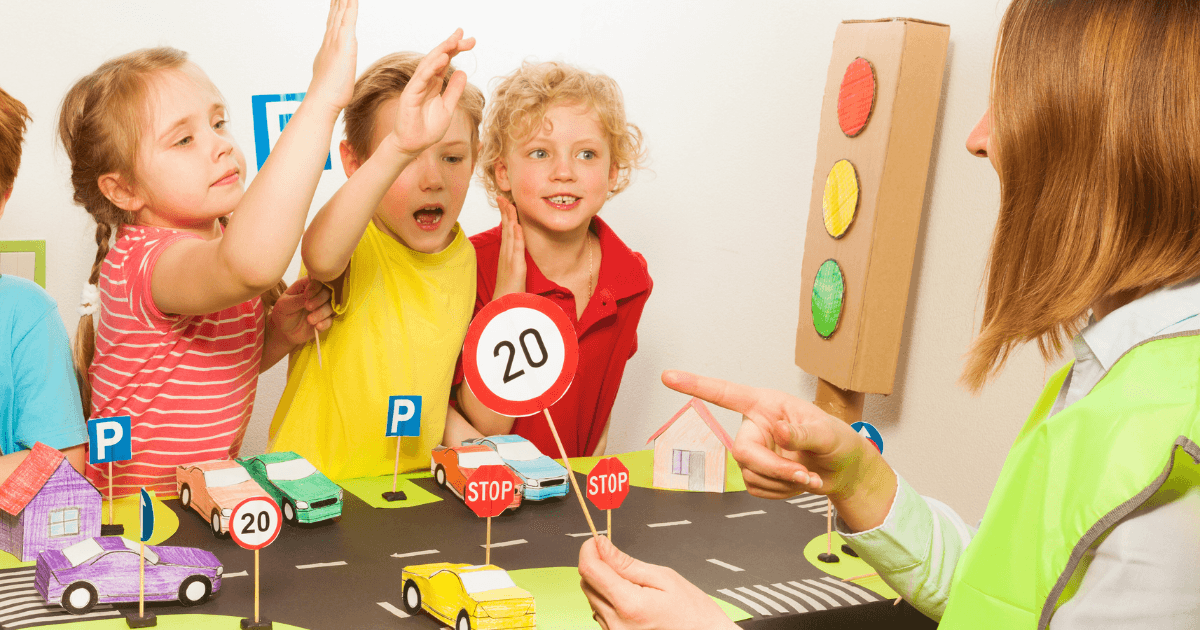
Games like “Red Light, Green Light,” “Freeze Dance,” and “Simon Says” are fun ways to practice impulse control and following directions.
According to Emora Health, physical activities like yoga and balance challenges also enhance emotional regulation and focus.
5. Model healthy regulation
Children learn by watching us. Narrate your own self-regulation: “I’m feeling frustrated right now, so I’m going to take three deep breaths to calm my body.”
6. Establish consistent routines
Predictable routines help children feel secure and develop self-control. When children know what to expect, they’re better able to regulate their behavior.
7. Teach specific calming techniques
Simple strategies like “smell the flower, blow out the candle” (deep breathing), counting to ten, or using a “calm-down jar” give children concrete tools for emotional regulation.
8. Use storytelling and role-play
Books about characters managing emotions can be powerful teaching tools. After reading, role-play scenarios to practice regulation strategies.
The National Association for the Education of Young Children recommends using dramatization to intentionally build self-regulation and literacy skills simultaneously.
When to Seek Additional Support
While all children develop at different rates, certain signs might indicate your child needs extra help with self-regulation:
- Frequent, intense tantrums that persist beyond age 5
- Extreme difficulty with transitions, even with preparation
- Consistent problems in social relationships due to emotional outbursts
- Inability to adapt to new situations
- Self-regulation difficulties that significantly impact daily functioning
If you notice these patterns, consider consulting your pediatrician or a child development specialist. Early intervention can make a significant difference.
The Long-Term Benefits of Self-Regulation
The effort you put into helping your child develop self-regulation skills now pays dividends far into the future. According to Mother Goose Time, children with strong self-regulation skills:
- Form more positive relationships
- Perform better academically
- Show greater resilience when facing challenges
- Demonstrate better problem-solving abilities
- Are more likely to achieve long-term goals
Remember: Progress, Not Perfection
Even adults struggle with self-regulation sometimes! The goal isn’t perfect behavior but gradual improvement. Celebrate small wins, be patient with setbacks, and remember that your consistent support makes all the difference.
By understanding the developmental journey of self-regulation and providing supportive guidance, you’re giving your preschooler tools they’ll use throughout their lifetime.
What strategies have worked for helping your preschooler develop self-regulation skills? Share your experiences in the comments below!