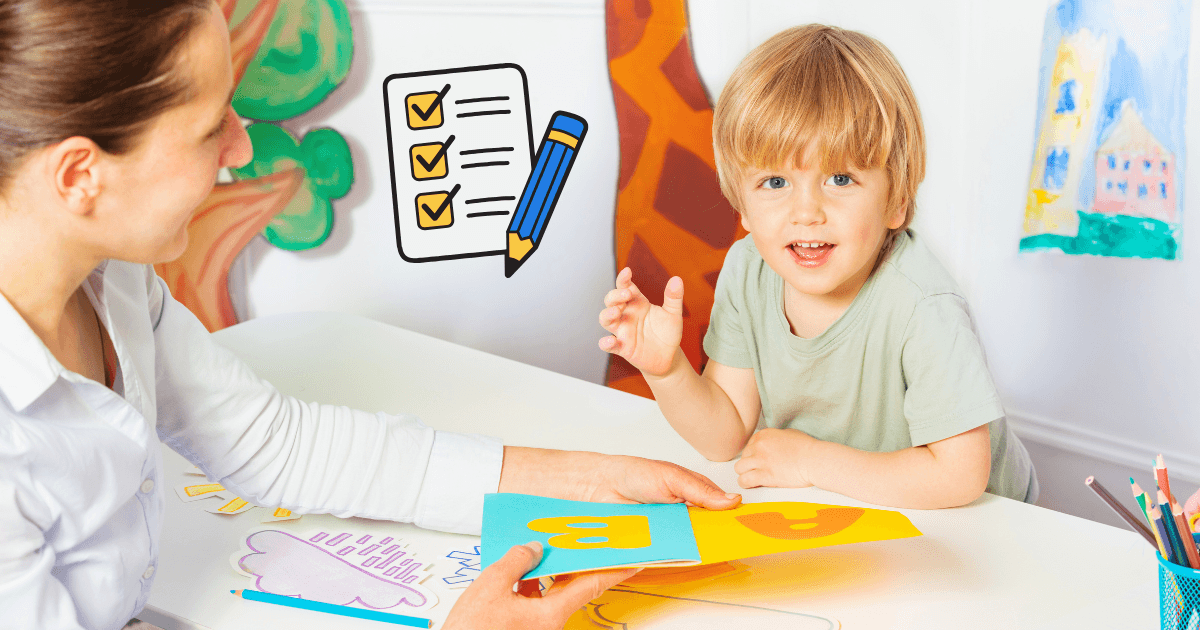
Preschool Assessment: Understanding Developmental Screening vs. Academic Testing
“Your child needs to be assessed.”
Few phrases trigger more anxiety for parents of preschoolers. Immediately, questions flood your mind: Is something wrong with my child? Are they behind? Will this label them before they even start kindergarten?
I remember feeling that exact knot in my stomach when my daughter’s preschool teacher suggested an assessment. What I didn’t understand then—but wish I had—was the critical difference between developmental screening and academic testing, and how the former actually supports rather than judges young children.
As early childhood education evolves, the conversation around assessment has become increasingly nuanced. Understanding the different types of assessments, their purposes, and how to interpret their results can empower you to be a better advocate for your child.
The Two Worlds of Preschool Assessment
When we talk about “assessment” in early childhood, we’re actually referring to two fundamentally different approaches:
Developmental Screening
Developmental screening is a process that helps identify whether children are meeting age-appropriate milestones across various domains of development. According to the Centers for Disease Control and Prevention, developmental screening is a formal process using validated tools to assess a child’s development in areas such as:
These screenings are typically brief, play-based, and designed to flag potential areas where a child might benefit from additional support or evaluation.
Academic Testing
Academic testing, by contrast, focuses specifically on measuring a child’s knowledge of academic content and skills, such as:
Letter and number recognition
Early literacy skills
Basic math concepts
Content knowledge
This type of assessment tends to be more structured and is designed to measure specific learning outcomes rather than developmental progress.
Why the Distinction Matters
The difference between these assessment types isn’t merely semantic—it reflects fundamentally different philosophies about early childhood development and education.
Developmental screening aligns with what research tells us about how young children grow and learn: that development follows predictable but highly individual patterns, with significant variation in timing that is completely normal.
Academic testing, when applied inappropriately to very young children, can impose expectations that may not align with natural developmental trajectories. As the Northwest Evaluation Association (NWEA) notes, “Young children develop at different rates, leading to variability in assessment outcomes,” and “scores from assessments for very young children tend to be unstable due to rapid and unpredictable growth.”
The Purpose and Value of Developmental Screening
Developmental screening serves several important functions:
Early Identification of Potential Concerns
The American Academy of Pediatrics (AAP) recommends developmental screening at specific ages because early identification of developmental delays allows for timely intervention, which can significantly improve outcomes.
A 2024 study published in Pediatrics found that comprehensive screening identified a substantial number of children who could benefit from additional support that might otherwise have been missed.
Individualized Support
When educators understand a child’s developmental profile, they can tailor learning experiences to build on strengths and support areas of need. This individualized approach benefits all children, not just those with identified delays.
Communication with Families
Quality developmental screening creates opportunities for meaningful conversations between educators and families about a child’s unique developmental journey.
Several evidence-based tools are commonly used for developmental screening in preschool settings:
Ages and Stages Questionnaire (ASQ-3)
The ASQ-3 is one of the most widely used developmental screening tools. According to the New York City Department of Education, it’s the required developmental screening tool for all Infant/Toddler, 3K, and Pre-K programs as of September 2023.
Parents typically complete this questionnaire, which covers five developmental areas: communication, gross motor, fine motor, problem-solving, and personal-social skills.
Brigance Early Childhood Screen
The Brigance screens key developmental skills and behaviors across multiple domains and helps identify children who may need further assessment or intervention.
Developmental Indicators for the Assessment of Learning (DIAL-4)
DIAL-4 assesses motor, language, concepts, self-help, and social-emotional skills in young children.
The Controversy Around Academic Testing in Preschool
While developmental screening is widely supported by early childhood experts, academic testing for preschoolers has generated significant concern:
Developmentally Inappropriate Expectations
Young children’s brains are still developing the capacity for many of the skills that academic tests measure. Expecting all four-year-olds to demonstrate the same academic skills fails to account for the wide range of normal development.
Narrow Focus
Academic tests often measure a limited set of skills, potentially overlooking the many other important areas of development that contribute to long-term success.
Potential Negative Consequences
Inappropriate academic testing can lead to:
Increased stress for young children
Labeling children as “behind” during a period of rapid and uneven development
Curriculum narrowing as programs focus on tested skills at the expense of play-based learning
Misallocation of resources toward academic drilling rather than developmentally appropriate practices
The New York State Education Department explicitly prohibits traditional standardized tests in prekindergarten programs, requiring assessments to focus instead on real-world tasks and developmental progress.
What Quality Assessment Looks Like in Preschool
Appropriate assessment in preschool settings typically includes:
Authentic Assessment
Authentic assessment involves observing children in natural settings as they engage in everyday activities and play. Rather than creating artificial testing situations, teachers gather information through:
Observations during play and routine activities
Work samples and documentation of children’s creations
Photos and videos of children engaged in learning
Conversations with children about their thinking and learning
According to the NYC Department of Education, the approved authentic assessment system is Teaching Strategies GOLD (TSG), which captures children’s skills and behaviors through various media.
Ongoing, Not One-Time
Quality assessment is continuous rather than episodic. As the NWEA notes, “One-time assessments are less meaningful for younger students,” and ongoing observation provides a much more accurate picture of a child’s development.
Multi-Method Approach
The most effective assessment systems use multiple methods to gather information, potentially including:
Teacher observations
Parent input
Child self-reflection (for older preschoolers)
Structured activities that feel like play to the child
Purposeful and Action-Oriented
Good assessment isn’t conducted to collect data—it directly informs teaching practices and support strategies. The information gathered should be used to enhance the learning environment and experiences for each child.
Questions to Ask About Your Child’s Preschool Assessment
If your child’s preschool mentions assessment, consider asking:
What type of assessment will be used? Is it a developmental screening or an academic assessment?
What is the purpose of this assessment? How will the information be used to support my child?
How is the assessment conducted? Is it play-based and developmentally appropriate?
How will results be shared? Will there be an opportunity to discuss the findings?
What happens if the assessment identifies concerns? What support systems are in place?
Supporting Your Child Through Assessment
If your child will be participating in a developmental screening or other assessment:
Prepare Appropriately
For developmental screenings, no special preparation is needed—the goal is to see your child’s typical abilities and behaviors. For other assessments, ensure your child is well-rested and comfortable.
Maintain Perspective
Remember that developmental variation is normal, and screenings are designed to identify areas where support might be helpful, not to label or judge your child.
Partner with Educators
Share your observations about your child’s development with teachers. Parents often notice skills or challenges that may not be apparent in the classroom setting.
Follow Through on Recommendations
If screening suggests further evaluation or specific supports, follow through promptly. Early intervention, when needed, can make a significant difference.
When to Seek Additional Evaluation
Developmental screening may indicate the need for a more comprehensive evaluation if:
Your child shows significant delays in one or more developmental areas
You or your child’s teacher has specific concerns about development
Your child has risk factors for developmental delays
If recommended, a comprehensive evaluation might involve specialists such as:
Speech-language pathologists
Occupational therapists
Developmental pediatricians
Early childhood special educators
Psychologists
Early intervention services are typically available for children from birth to 3 years of age, with preschool special education services available for older children who qualify.
The Future of Preschool Assessment
The field of early childhood assessment continues to evolve, with increasing emphasis on:
Culturally responsive assessment that accounts for children’s diverse backgrounds and experiences
Play-based assessment that gathers information while children engage in activities they enjoy
Technology-enhanced observation that helps teachers document and analyze children’s learning more efficiently
Strength-based approaches that highlight what children can do rather than focusing primarily on deficits
As our understanding of early childhood development deepens, assessment practices will likely continue to shift toward more holistic, play-based, and individualized approaches.
Advocating for Appropriate Assessment
As a parent, you play a crucial role in ensuring that your child experiences appropriate assessment practices:
Stay informed about best practices in early childhood assessment
Ask questions about your preschool’s assessment approach
Voice concerns if you believe assessment practices are developmentally inappropriate
Remember that you are your child’s first and most important teacher, and your insights about their development are invaluable to the assessment process.
Finding Balance: The Path Forward
The most effective approach to early childhood assessment strikes a balance—gathering useful information to support children’s development without imposing inappropriate expectations or creating undue stress.
When done well, assessment in preschool settings can:
Identify children who would benefit from additional support
Help teachers tailor learning experiences to individual needs
Provide families with meaningful information about their child’s development
Support program improvement efforts
The key is ensuring that assessment practices align with what we know about how young children develop and learn—through play, relationships, and exploration rather than formal testing.
What has been your experience with preschool assessment? Share your thoughts and questions in the comments below!