Montessori at Home: 10 Simple Activities for Parents to Try Today
Have you ever watched your child become completely absorbed in a simple task—like pouring water between cups or sorting objects by color—and wondered why such basic activities captivate them? That’s the magic of the Montessori approach in action!
As parents, we’re always looking for meaningful ways to support our children’s development without expensive equipment or complicated setups. The good news? The Montessori method, developed by Dr. Maria Montessori over a century ago, emphasizes the use of everyday materials to create powerful learning experiences that children naturally gravitate toward.
According to recent research from The Montessori Children’s Academy, children have an innate drive toward independence—they want to do things for themselves. When we create opportunities for them to practice skills independently, we’re not just keeping them busy; we’re supporting crucial brain development and building confidence that will benefit them for years to come.
Let’s explore ten simple Montessori-inspired activities you can set up today using materials you likely already have at home.
1. Pouring Station
Materials needed:
Two small pitchers or cups
A tray
Water, dried beans, or rice
Small towel for spills
How to set up: Place both containers on a tray, with one partially filled with water or dry materials. Show your child how to pour slowly from one container to another, then let them practice.
Why it works: This activity develops fine motor control, concentration, and hand-eye coordination. It also introduces concepts of volume and builds confidence through mastery of a practical skill. As Montessori Kids Universe explains, completing tasks independently contributes directly to your child’s emotional core of confidence.
2. Sensory Mystery Bag
Materials needed:
Small cloth bag
5-6 familiar household objects (e.g., spoon, small toy, brush)
How to set up: Place objects in the bag. Have your child reach in without looking, feel an object, describe it, and guess what it is before pulling it out.
Why it works: This activity refines the sense of touch, builds vocabulary as children describe textures and shapes, and develops critical thinking skills as they make connections between tactile information and visual memory.
3. Practical Life: Table Washing
Materials needed:
Small spray bottle with water
Small cloth
Small table or surface
How to set up: Show your child how to spray the table, wipe in circular motions, and dry the surface completely. Break down each step clearly.
Why it works: Children gain satisfaction from real-world activities that serve a purpose. This builds coordination, focus, and a sense of contribution to the household. According to Times Montessori, practical life exercises are fundamental to developing independence and self-awareness.
4. Color Sorting
Materials needed:
Colored construction paper (4-5 colors)
Small objects in matching colors
How to set up: Lay out colored paper as “mats.” Have your child gather objects from around the house that match each color and place them on the corresponding mat.
Why it works: This activity develops visual discrimination, color recognition, categorization skills, and vocabulary. It also encourages movement and exploration of the environment.
5. Nature Collection Tray
Materials needed:
Small basket or tray
Items collected from nature (leaves, pinecones, rocks, etc.)
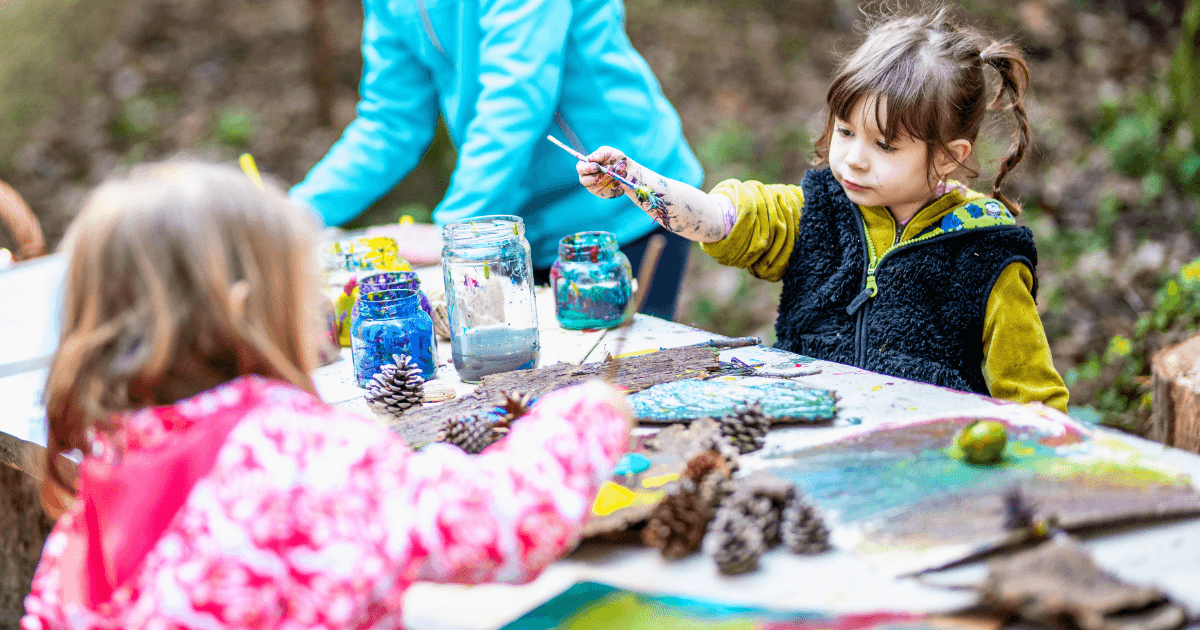
How to set up: Take a short nature walk with your child to collect interesting items. Back at home, arrange them on a tray for observation and exploration.
Why it works: This connects children with the natural world, develops observational skills, and provides rich sensory experiences and vocabulary-building opportunities. It also creates a foundation for scientific thinking.
6. Button Sorting by Size
Materials needed:
Collection of buttons in different sizes
Small bowls or a muffin tin
How to set up: Place buttons in a single container. Show your child how to sort them by size into separate bowls.
Why it works: This activity develops fine motor skills, visual discrimination, and introduces mathematical concepts of comparison and seriation (arranging objects in order). Research from Montessori-AMI shows that such activities help children develop self-regulation by balancing impulse and inhibition.
7. DIY Sound Matching
Materials needed:
6-8 identical small containers (film canisters or plastic eggs work well)
Different materials to create sounds (rice, beans, small bells, paper clips)
How to set up: Create matching pairs by filling two containers with the same material. Have your child shake them to find the matching sounds.
Why it works: This activity refines auditory discrimination, builds concentration, and introduces the concept of pairs and matching—foundations for later mathematical thinking.
8. Simple Food Preparation
Materials needed:
Banana
Child-safe knife or butter knife
Small cutting board
Plate
How to set up: Show your child how to peel and cut a banana into slices using a child-safe knife. Guide them through each step, then allow them to try independently.
Why it works:Food preparation activities combine fine motor skills, sequencing, and following directions, resulting in immediate, meaningful rewards. According to Brightwheel, practical life exercises develop independence and self-awareness while building essential skills.
9. Number Matching with Household Items
Materials needed:
Index cards with numbers 1-5 written on them
Small collection of matching objects (buttons, clothespins, etc.)
How to set up: Lay out the number cards. Show your child how to count out the corresponding number of objects to place beside each card.
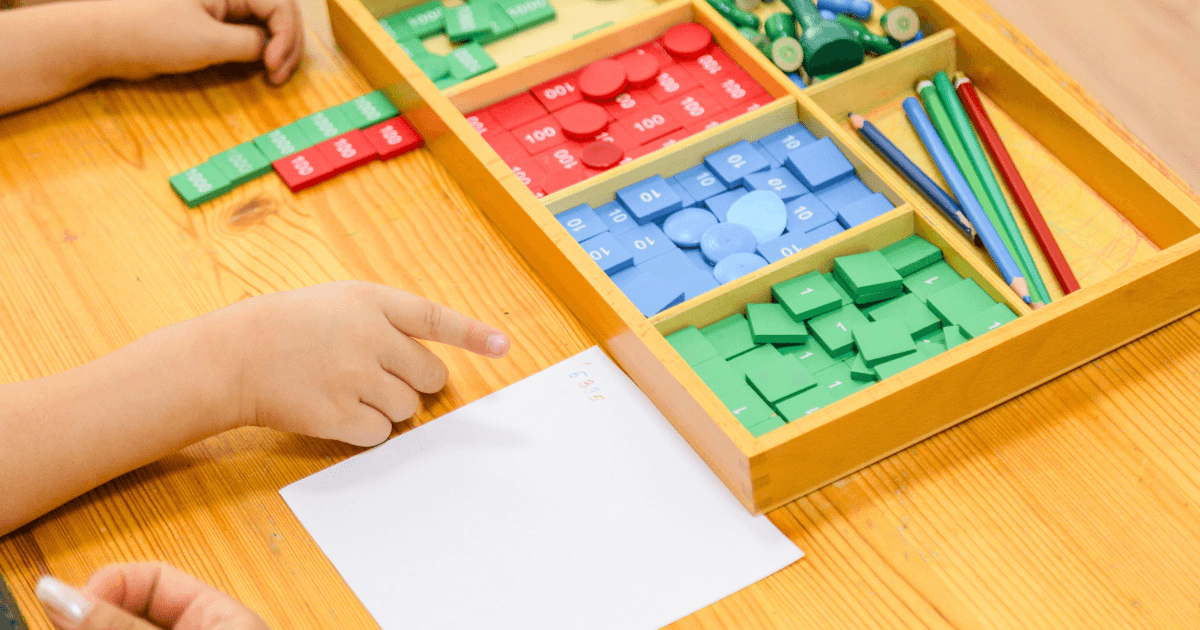
Why it works: This concrete approach to numbers helps children understand quantity and the association between numbers and quantities. It builds one-to-one correspondence—a fundamental math concept—and fine motor skills.
10. DIY Transferring Station
Materials needed:
Tweezers or tongs
Small pom-poms, cotton balls, or other small objects
Two small bowls
How to set up: Place objects in one bowl and an empty bowl beside it. Demonstrate how to use the tweezers to transfer items from one bowl to another.
Why it works: This activity develops fine motor control, hand strength, and pincer grip (essential for writing). It also builds concentration and hand-eye coordination in a focused, purposeful way.
Creating a Montessori-Friendly Space at Home
While these activities are wonderful starting points, the Montessori approach extends beyond individual activities to the overall environment. Consider these principles when setting up your home:
Accessibility: Place materials on low shelves where children can reach them independently
Order: Keep materials organized and complete
Simplicity: Offer fewer, carefully selected toys rather than overwhelming options
Beauty: Create an aesthetically pleasing environment with natural materials when possible
Freedom within limits: Allow choice within appropriate boundaries
Remember, the goal isn’t perfection but to provide opportunities for your child to develop independence and confidence through meaningful activities. As Dr. Montessori observed, children learn best when they can explore and discover at their own pace.
Have you tried Montessori activities at home? Which ones have engaged your child the most? Share your experiences in the comments below!