Yoga for Preschoolers: Simple Poses for Strength and Calm
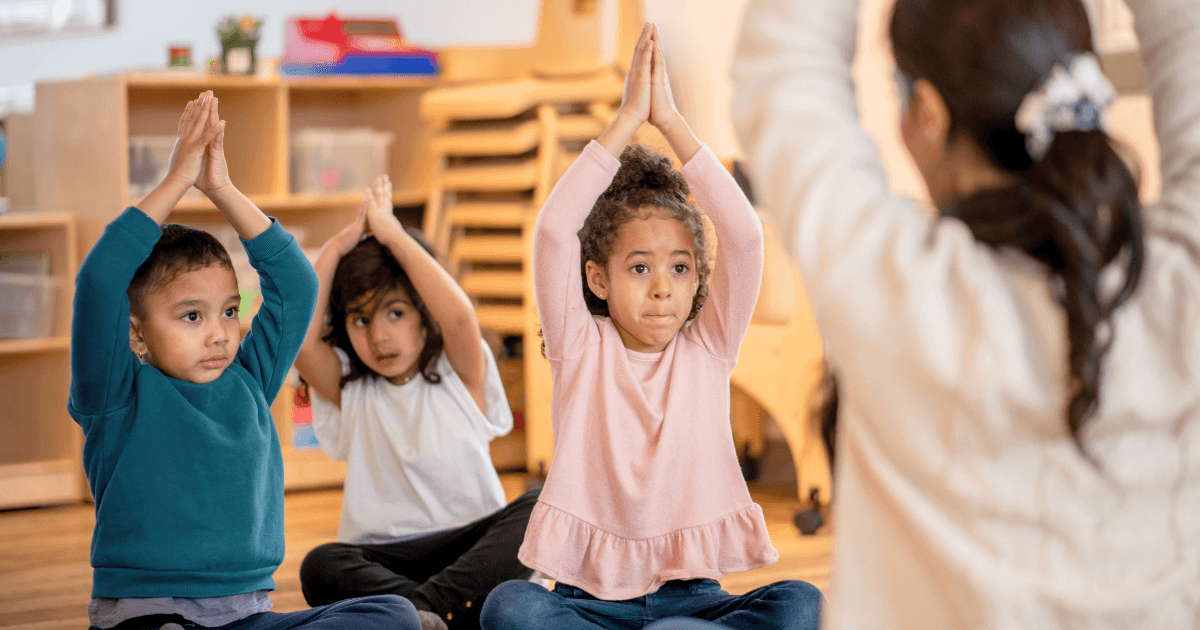
In a preschool classroom filled with boundless energy, constant movement, and occasional emotional storms, finding moments of calm might seem like an impossible dream. Yet, more educators are discovering that yoga—when adapted for young children—offers a perfect balance of playful movement and mindful stillness that preschoolers both need and enjoy.
“When I introduced yoga to my preschool class, I was amazed at how quickly they embraced it,” shares early childhood educator Maya Rodriguez. “Even my most active students look forward to our ‘yoga time’ and often request their favorite poses during transitions or when they need to calm down.”
Yoga for preschoolers isn’t about perfect alignment or holding poses for extended periods. Instead, it’s an invitation to explore movement, build body awareness, and develop self-regulation skills through playful practice. Let’s explore how to bring the benefits of yoga to your youngest students with age-appropriate poses and engaging approaches.
The Benefits of Yoga for Preschoolers
According to KLAY Schools, yoga offers numerous developmental benefits for young children:
Physical Benefits
- Develops gross and fine motor skills
- Improves balance and coordination
- Builds strength and flexibility
- Enhances body awareness and spatial understanding
- Promotes healthy posture from an early age
Emotional Benefits
- Provides tools for self-regulation
- Reduces stress and anxiety
- Builds confidence through mastering poses
- Offers healthy outlets for emotional expression
- Creates moments of calm in busy days
Cognitive Benefits
- Improves focus and attention span
- Enhances listening skills
- Supports memory development
- Encourages mind-body connection
- Introduces mindfulness concepts in accessible ways
Social Benefits
- Creates shared positive experiences
- Teaches respect for personal space
- Develops patience and turn-taking
- Builds empathy through partner poses
- Fosters a supportive classroom community
Research from LPE Ho Chi Minh indicates that regular yoga practice can help children settle more quickly into learning activities and improve their readiness for academic tasks.
Creating the Right Environment for Preschool Yoga
Before introducing poses, set the stage for successful yoga practice:
Physical Space
- Clear a safe, open area free of obstacles
- Provide individual spaces (carpet squares, tape outlines, or small mats)
- Reduce visual and auditory distractions when possible
- Consider dimming lights slightly for calming sessions
Timing Considerations
- Keep sessions brief (5-15 minutes) for young children
- Consider natural transition times for yoga breaks
- Use yoga to help children reset after high-energy activities
- Incorporate morning yoga to set a positive tone for the day
Setting Expectations
- Introduce yoga as “special movement time”
- Establish simple rules (stay on your mat, respect others’ space)
- Emphasize that yoga isn’t competitive
- Reassure children it’s okay to modify or rest
“I use a special ‘yoga chime’ to signal the beginning and end of our practice,” explains preschool teacher James Chen. “This sound cue helps my students transition into a calmer state of mind, almost like magic.”
10 Simple Yoga Poses Perfect for Preschoolers
According to Kids Yoga Fun, these poses are particularly effective for young children. I’ve adapted them with preschool-friendly language and modifications:
1. Mountain Pose (Tadasana) – For Grounding and Focus
Child-Friendly Name: “Strong Mountain”
How to Do It:
- Stand tall with feet hip-width apart
- Press feet into the ground like tree roots
- Reach arms down by sides with palms forward
- Take deep breaths while standing strong like a mountain
Teaching Tip: “Make your body as tall and strong as a mountain! Can you feel how steady and still you are?”
2. Tree Pose (Vrksasana) – For Balance and Concentration
Child-Friendly Name: “Flamingo Tree”
How to Do It:
- Stand on one foot
- Place the other foot on inner ankle, calf, or thigh (whatever is comfortable)
- Bring hands to heart center or reach up like branches
- Focus eyes on a non-moving spot
Preschool Modification: Hold a wall or chair for support, or do the pose sitting down.
Teaching Tip: “Grow your branches tall! If you wobble, that’s okay—trees sway in the wind too!”
3. Downward Dog (Adho Mukha Svanasana) – For Full-Body Stretching
Child-Friendly Name: “Puppy Dog Stretch”
How to Do It:
- Start on hands and knees
- Lift hips up and back to form an upside-down V
- Press palms into the floor
- Bend knees as needed
Teaching Tip: “Let’s stretch like a puppy dog! Can you wag your tail? Can you bark?”
4. Cat-Cow Pose (Marjaryasana-Bitilasana) – For Spinal Flexibility
Child-Friendly Name: “Kitty and Cow”
How to Do It:
- Start on hands and knees
- Arch back up like a cat while looking at belly
- Drop belly down and look up like a cow
- Move slowly between the two shapes
Teaching Tip: “Let’s be kitties saying ‘meow’ as we round our backs, then cows saying ‘moo’ as we look up!”
5. Butterfly Pose (Baddha Konasana) – For Hip Opening and Calm
Child-Friendly Name: “Butterfly Wings”
How to Do It:
- Sit with bottoms of feet touching
- Hold feet with hands
- Gently flap knees like butterfly wings
- Gradually slow down the flapping for calming effect
Teaching Tip: “Flutter your butterfly wings fast, then medium, then slow, then let your butterfly rest.”
6. Child’s Pose (Balasana) – For Relaxation and Security
Child-Friendly Name: “Turtle Shell”
How to Do It:
- Kneel on the floor with toes touching
- Sit back on heels
- Rest forehead on floor and arms alongside body
- Breathe deeply and rest
Teaching Tip: “Hide in your turtle shell where it’s quiet and safe. Take three slow turtle breaths.”
7. Cobra Pose (Bhujangasana) – For Back Strength
Child-Friendly Name: “Snake Pose”
How to Do It:
- Lie on belly with hands under shoulders
- Press gently into hands to lift chest
- Keep elbows slightly bent
- Hiss like a snake!
Teaching Tip: “Slither up like a snake looking for the sun! Can you make a gentle hissing sound?”
8. Star Pose – For Energy and Confidence
Child-Friendly Name: “Twinkling Star”
How to Do It:
- Stand with feet wide apart
- Stretch arms out to sides
- Spread fingers wide
- Breathe and “twinkle” by wiggling fingers and toes
Teaching Tip: “Make your star as big and bright as possible! Now let’s twinkle our fingers and toes!”
9. Happy Baby Pose (Ananda Balasana) – For Hip Release and Joy
Child-Friendly Name: “Rocking Baby”
How to Do It:
- Lie on back
- Bend knees to chest
- Grab outside of feet with hands
- Gently rock side to side
Teaching Tip: “Rock your baby self gently like in a cradle. Can you make happy baby sounds?”
10. Rag Doll Pose (Uttanasana variation) – For Releasing Tension
Child-Friendly Name: “Floppy Doll”
How to Do It:
- Stand with feet hip-width apart
- Bend forward with bent knees
- Let arms hang loose like a rag doll
- Gently shake head “yes” and “no”
Teaching Tip: “Let your body be completely floppy like a rag doll. Can you shake your arms like noodles?”
Engaging Preschoolers: Making Yoga Playful and Fun
According to Namaste Kid, keeping yoga playful is key to engaging young children. Try these approaches:
Storytelling Yoga
Create simple stories that incorporate different poses:
- “We’re going on a jungle adventure! Let’s be snakes slithering through the grass (Cobra Pose)…”
- “Let’s visit the farm! Can you be a cow? (Cow Pose) Now a cat? (Cat Pose)”
- “We’re growing a garden! Let’s be seeds (Child’s Pose), then sprout up (Mountain Pose), and grow into trees (Tree Pose)!”
Animal Adventures
Preschoolers love pretending to be animals:
- Lion Pose: Sit on knees, open mouth wide, stick out tongue, and roar!
- Frog Pose: Squat with feet wide, hands between knees, then jump forward
- Butterfly Pose: Sitting with soles of feet together, flap knees like wings
- Turtle Pose: Round back in Child’s Pose, tuck head in and out slowly
Yoga Games
Make yoga interactive with these simple games:
- Freeze Dance Yoga: Dance freely, then freeze in a specific pose when music stops
- Yoga Dice: Create or purchase dice with different poses on each side
- Mirror, Mirror: Children pair up and mirror each other’s movements
- Yoga Simon Says: “Simon says do Tree Pose!”
“I use a ‘yoga jar’ filled with cards showing different poses,” shares preschool teacher Sofia Patel. “Children take turns selecting a card, and we all do that pose together. They love the element of surprise!”
Breathing Exercises for Little Lungs
Simple breathing techniques help preschoolers develop self-regulation skills:
Balloon Breath
- Sit cross-legged with hands on belly
- Breathe in through nose, feeling belly expand like a balloon
- Exhale slowly through mouth, feeling balloon deflate
- Count “1, 2, 3” for inhale and “1, 2, 3” for exhale
Bumble Bee Breath
- Take a deep breath in through nose
- Exhale while making a gentle humming sound like a bee
- Feel the vibration in the face and head
- Continue for 3-5 breaths
Birthday Cake Breath
- Hold palms together in front of chest (the “cake”)
- Take a deep breath in through nose
- Blow out slowly as if blowing out birthday candles
- Repeat 3 times
Integrating Yoga Throughout the Preschool Day
According to Kids Yoga Stories, yoga can be effectively integrated into regular classroom routines:
Morning Meeting
- Begin with 3 mindful breaths to center attention
- Practice Mountain Pose while sharing daily intentions
- Use Sun Salutation variations to energize for the day
Transitions
- Use yoga poses between activities to help children reset
- Practice Tree Pose while waiting in line
- Do Butterfly Pose before story time to settle bodies
Brain Breaks
- Take 2-minute yoga breaks during longer activities
- Use energizing poses when energy is low
- Use calming poses when children are overstimulated
End of Day
- Create a closing ritual with a calming pose
- Practice gratitude in a seated pose
- End with three mindful breaths
“We have yoga picture cards posted around the classroom,” explains early childhood educator Michael Torres. “When I notice children getting fidgety or overwhelmed, I can point to a nearby card and guide them through a quick pose to help them reset.”
Common Challenges and Solutions
Introducing yoga to preschoolers may come with some challenges:
Challenge: Short Attention Spans
Solution: Keep sessions brief (5-10 minutes), use engaging themes, and incorporate movement between poses.
Challenge: Difficulty Following Instructions
Solution: Demonstrate poses visually, use simple language, and offer gentle physical guidance when appropriate.
Challenge: Comparing or Competing
Solution: Emphasize that everyone’s yoga practice looks different, and regularly remind children that yoga isn’t about being “better” than others.
Challenge: Reluctant Participants
Solution: Allow children to observe until they feel comfortable joining, offer modifications, and never force participation.
Challenge: Too Much Silliness
Solution: Establish clear expectations, use a special signal for listening, and balance playful approaches with moments of calm.
Creating a Yoga-Friendly Classroom Culture
To make yoga a valued part of your classroom:
- Model the practice yourself – Show children that you value yoga too
- Use consistent language – Develop yoga-specific terms and cues
- Display yoga visuals – Post pictures of poses around the classroom
- Celebrate effort, not perfection – Praise children for trying poses
- Share with families – Send home simple poses they can try together
Final Thoughts: The Gift of Mindful Movement
In our increasingly fast-paced world, teaching preschoolers to connect with their bodies and find moments of calm is perhaps one of the greatest gifts we can offer them. Yoga provides tools for self-regulation and emotional awareness that will serve children throughout their lives.
As early childhood educator Dr. Elena Martinez notes, “When we teach children yoga, we’re not just teaching them poses—we’re teaching them that they have the power to calm themselves, to feel strong in their bodies, and to find peace within. These are foundational skills for both academic success and emotional wellbeing.”
By introducing yoga in developmentally appropriate, playful ways, we help young children build strength, flexibility, and calm—creating a foundation for mindfulness that can grow with them through the years.
What yoga poses have you successfully introduced to preschoolers? Share your experiences and questions in the comments below!