What Is Play-Based Learning? The Science and Benefits Explained
As parents, we want to give our children the best possible start in life. We research car seats, obsess over nutrition, and carefully select pediatricians. But when it comes to early education, the choices can feel overwhelming—especially with conflicting messages about academic readiness versus play-based approaches.
If you’ve heard the term “play-based learning” but wondered if it’s just a fancy way of saying “letting kids play all day,” you’re not alone. Many parents worry that a play-centered approach might leave their child academically unprepared.
Today, we’re diving deep into what play-based learning actually means, the fascinating science behind it, and why researchers are increasingly convinced that it offers powerful advantages for children’s development.
What Is Play-Based Learning? A Clear Definition
Play-based learning is an educational approach that harnesses children’s natural curiosity and joy in play to facilitate meaningful learning experiences. It’s not simply “free play” (though that has its own benefits), but rather a thoughtful integration of purposeful play into the learning process.
According to the Harvard Graduate School of Education, effective play-based learning experiences share five key characteristics:
- Joyful: Children are engaged and enjoying the experience
- Meaningful: Activities connect to children’s lives and interests
- Actively engaging: Children are physically and mentally involved
- Iterative: There are opportunities to experiment, try again, and problem-solve
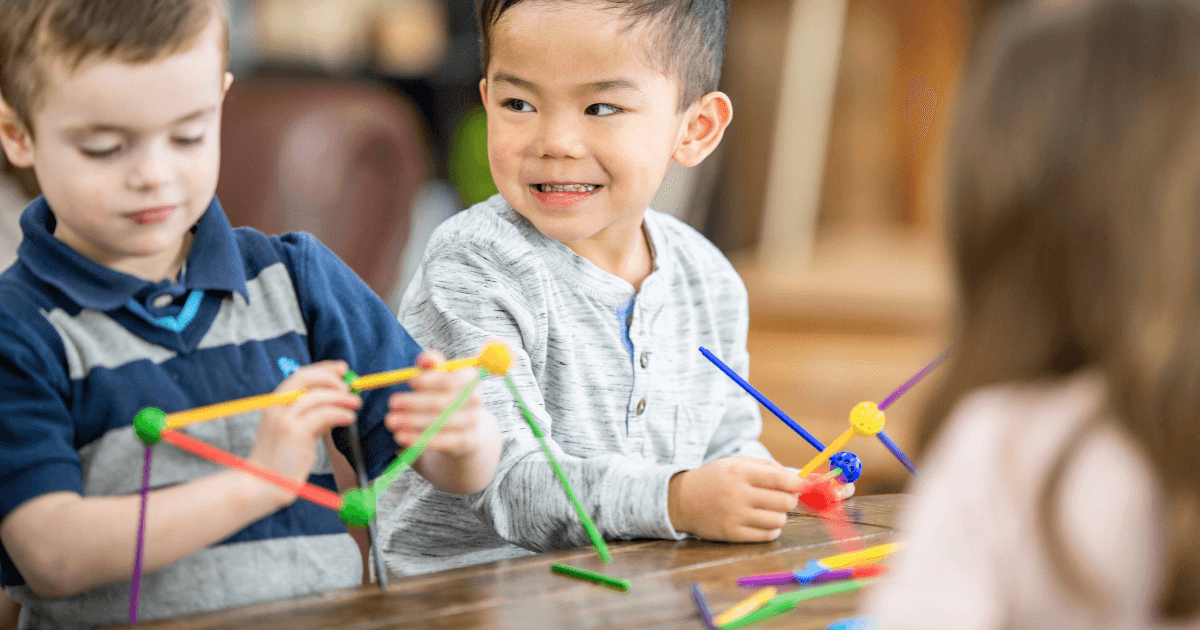
- Socially interactive: Children collaborate, share ideas, and learn from each other
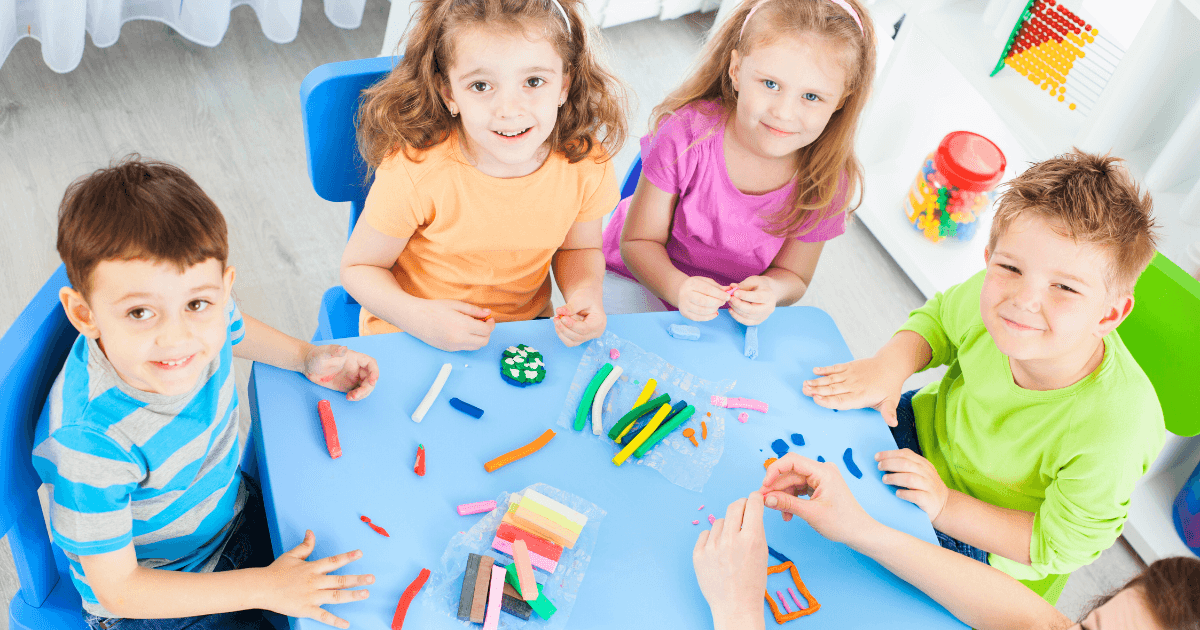
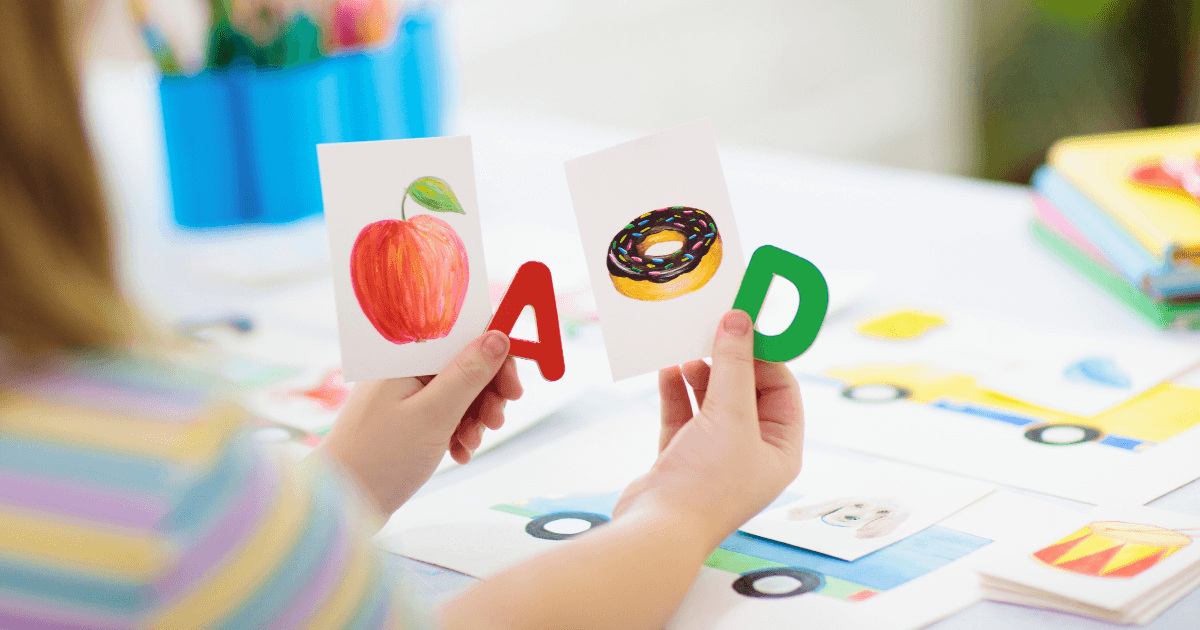
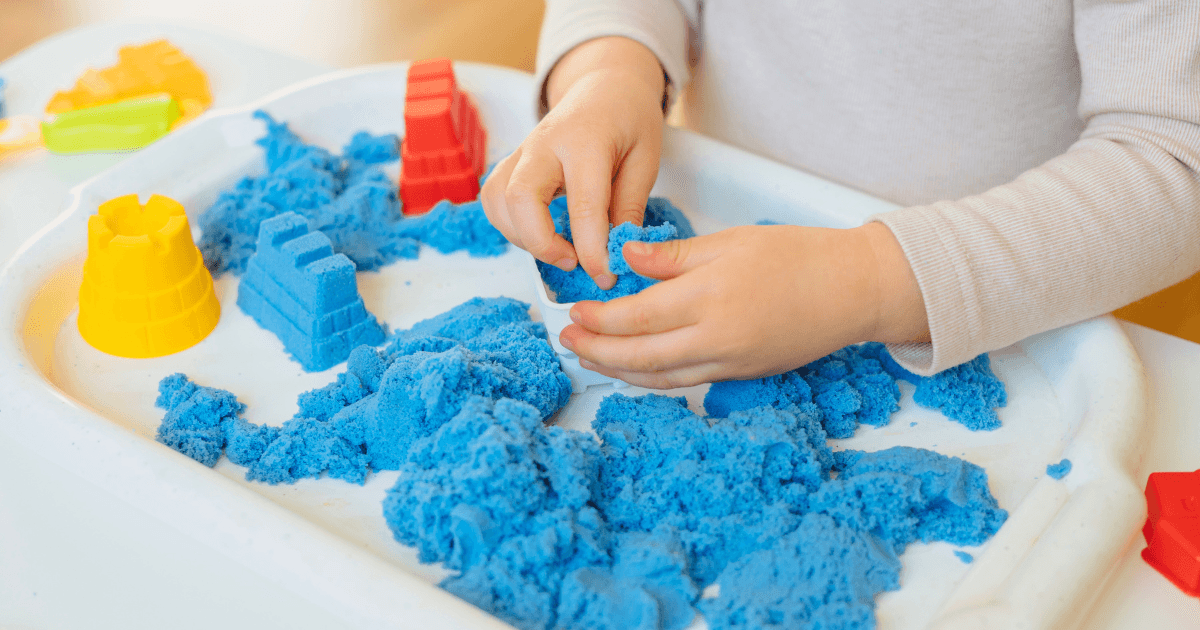
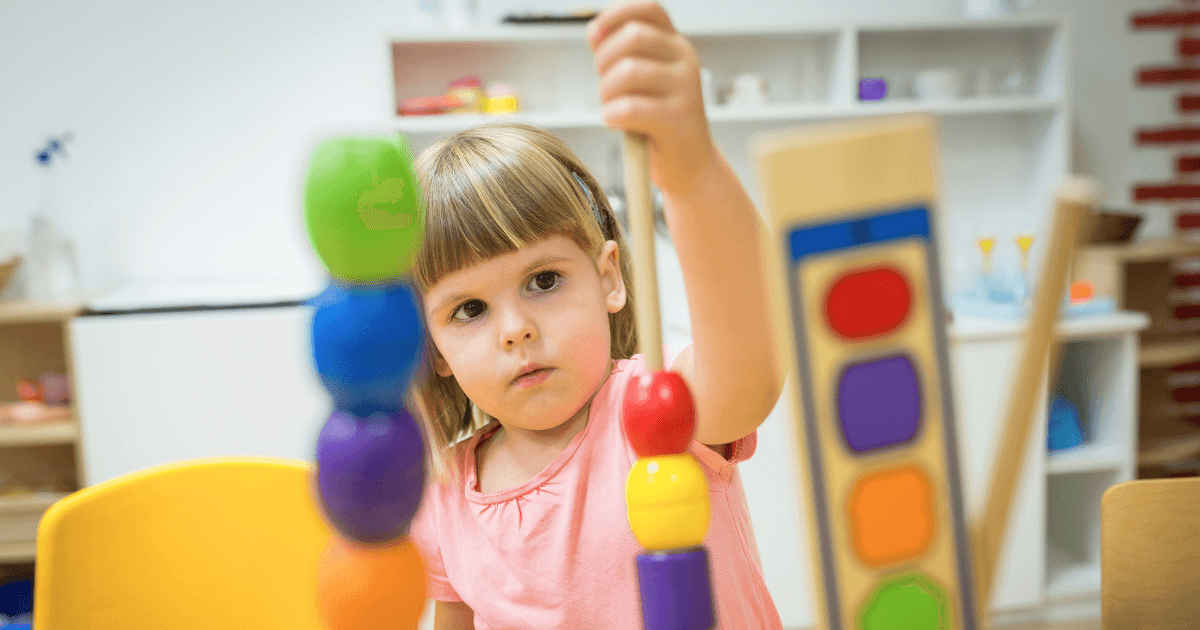
In a play-based classroom, you might see children building block towers (developing spatial reasoning and physics concepts), running a pretend store (practicing math and social skills), or examining bugs in the garden (exploring biology and classification).
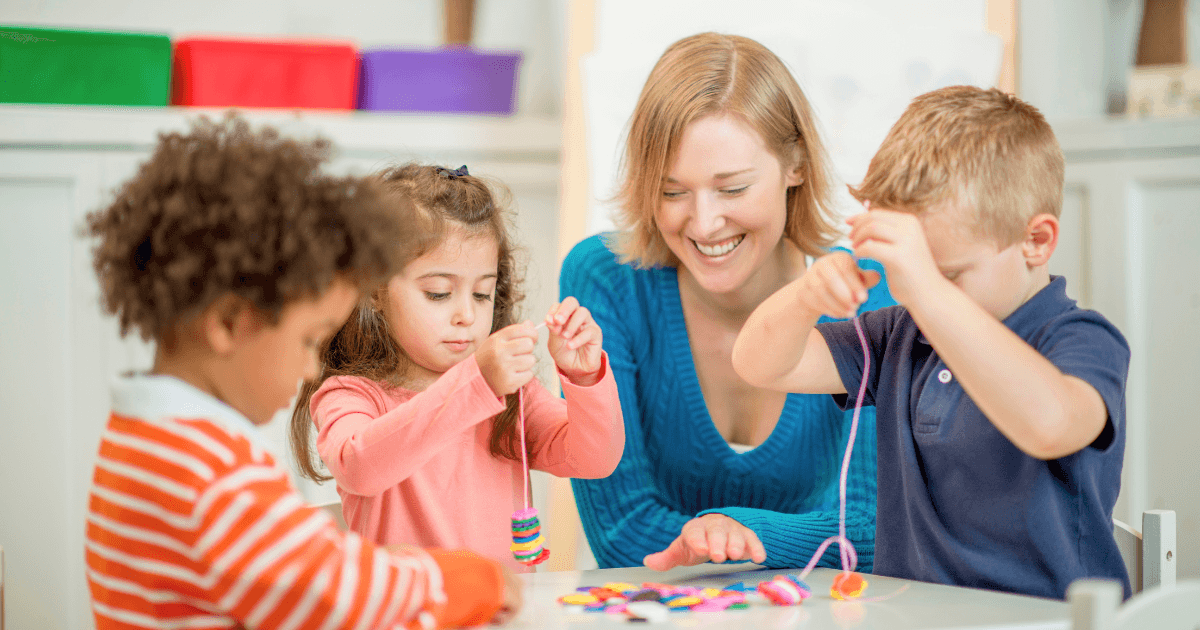
The teacher’s role is crucial—they’re not passive observers but active facilitators who thoughtfully design the environment, ask guiding questions, and introduce concepts within the context of play.
The Science Behind Play-Based Learning: How It Shapes the Brain
The growing scientific support for play-based approaches is compelling. Here’s what recent research tells us about how play affects children’s developing brains:
Neural Pathways and Brain Architecture
When children engage in play, their brains are literally being wired for learning. A 2025 systematic review published in the Journal of Intelligence analyzed 25 empirical studies on play and found that playful learning experiences strengthen neural connections in areas responsible for:
- Executive function (planning, problem-solving, self-control)
- Language processing
- Spatial reasoning
- Social cognition (understanding others’ perspectives)
These connections form the foundation for all future learning. Importantly, the research shows these neural pathways develop more robustly through play-based experiences than through direct instruction alone.
Stress Hormones vs. Learning Hormones
The brain’s biochemistry during play creates optimal conditions for learning:
- Reduced cortisol: Play reduces stress hormones that can inhibit learning
- Increased dopamine: The pleasure associated with play releases dopamine, which enhances attention, motivation, and memory
- Oxytocin production: Social play triggers oxytocin release, supporting emotional regulation and social bonding
Dr. Stuart Brown, founder of the National Institute for Play, explains that this neurochemical cocktail creates a state where “the brain is primed to build neural networks efficiently”—essentially making learning stick better.
Developing Executive Function
Perhaps most crucial for long-term academic success is how play builds executive function—the set of mental skills that include working memory, flexible thinking, and self-control.
A longitudinal Australian study cited in the Waldorf Education research found that children who engaged in 1-5 hours of active, unstructured play daily showed significantly stronger self-regulation from ages 2 to 7, regardless of earlier cognitive baselines.
These executive function skills predict academic success better than early reading or math abilities alone.
The Benefits: What Research Shows About Outcomes
The benefits of play-based learning extend across multiple developmental domains:
Cognitive Development
- Problem-solving abilities: Children in play-based programs show stronger critical thinking skills and approach problems more creatively
- Language development: Vocabulary, storytelling, and communication skills flourish through dramatic play and peer interactions
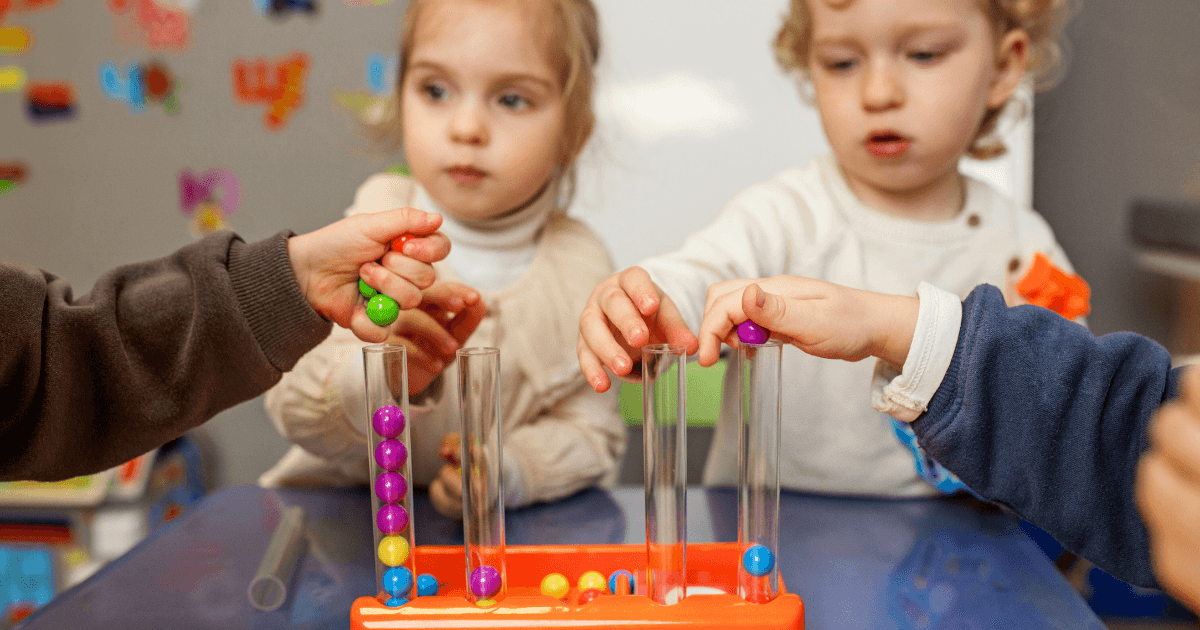
- Mathematical thinking: Spatial reasoning, pattern recognition, and numerical concepts develop naturally through block play, sorting activities, and games
- Scientific inquiry: Children develop hypothesis-testing skills and scientific thinking through exploratory play
A University of Cambridge study analyzing decades of research found that guided play had a greater positive effect on math skills, shape knowledge, and task switching compared to traditional direct instruction.
Social-Emotional Development
- Emotional regulation: Children learn to identify and manage their feelings
- Conflict resolution: Negotiating play scenarios builds skills for resolving disagreements
- Empathy: Role-playing helps children understand different perspectives
- Resilience: Overcoming challenges in play builds persistence and adaptability
According to SAIS Hong Kong, these social-emotional skills form the foundation for mental health and relationship success throughout life.
Physical Development
- Fine motor skills: Activities like drawing, cutting, and manipulating small objects prepare hands for writing
- Gross motor coordination: Active play develops balance, strength, and coordination
- Sensory integration: Multisensory play experiences help the brain process and respond to sensory information
Long-Term Academic Outcomes
This is where many parents express concern—will play-based learning prepare my child academically? The research is reassuring:
A meta-study from the U.S. Department of Education found that guided play is more effective than direct instruction for teaching basic math skills and executive function to children aged 3-8.
Even more telling is a 10-year study in Tennessee cited by the Collaborative Classroom that found children in academic-focused preschools initially scored higher on kindergarten readiness tests but had lower test scores and higher special education referral rates by third and sixth grade compared to peers in play-based programs.
The LEGO Foundation’s review of over 300 studies across 40 countries found that child-led play significantly enhances learning gains in literacy, motor skills, and social-emotional development for children aged 3-6.
Play-Based vs. Academic Approaches: A Comparison
To better understand the differences, let’s compare play-based learning with more traditional academic approaches:
| Aspect | Play-Based Learning | Traditional Academic Approach |
|---|---|---|
| Learning Environment | Open-ended materials, activity centers, outdoor spaces | Desks, worksheets, teacher-centered |
| Role of Teacher | Guide, facilitator, observer | Instructor, director |
| Child’s Role | Active participant, decision-maker | Follower of instructions |
| Approach to Literacy | Embedded in meaningful contexts (storytelling, dramatic play, environmental print) | Direct instruction of letters, sounds, sight words |
| Approach to Math | Concrete experiences with counting, measuring, patterns | Worksheets, memorization of facts |
| Assessment | Observation, documentation of process, portfolios | Tests, worksheets, product evaluation |
| Typical Day | Balance of child-initiated and teacher-guided activities | Structured lessons, limited free choice time |
According to U.S. News & World Report, the academic approach often focuses on “surface learning” (memorization of facts), while play-based approaches foster “deep learning” (applying knowledge through real-world experiences).
Common Misconceptions About Play-Based Learning
Let’s address some frequent concerns:
“It’s just free play with no structure or learning goals”
Reality: In quality play-based programs, teachers have clear learning objectives and intentionally design environments and activities to support these goals. The structure exists, but it’s flexible and responsive to children’s interests.
“Children won’t learn academic skills needed for kindergarten”
Reality: Research from PMC shows that children from play-based programs develop strong foundational skills that support later academic learning, including phonological awareness, number sense, and scientific thinking.
“It’s only appropriate for preschool, not older children”
Reality: Harvard’s Project Zero research demonstrates that playful learning can be effectively integrated throughout K-12 education, with benefits for engagement and deeper understanding.
“It’s not rigorous enough for ‘academic’ children”
Reality: Play-based learning can be adapted to challenge all children at their developmental level, providing rich opportunities for advanced learners to explore concepts in depth.
How to Recognize Quality Play-Based Learning
If you’re considering a play-based program for your child, look for these indicators of quality:
- Thoughtful environments with open-ended materials organized to invite exploration
- Engaged teachers who observe carefully and extend learning through questions and suggestions
- Documentation of children’s learning through photos, notes, and samples of work
- Balance between child-initiated and teacher-guided activities
- Outdoor time integrated as a learning environment, not just recess
- Respectful interactions between adults and children and among peers
- Visible learning through displays of projects and processes
Supporting Play-Based Learning at Home
You can extend the benefits of play-based learning at home:
- Provide open-ended materials: Blocks, art supplies, dress-up clothes, and natural objects offer endless possibilities
- Follow your child’s lead: Notice what interests them and build on it
- Ask open-ended questions: “What do you think would happen if…?” “How else could you solve that problem?”
- Limit structured activities: Ensure plenty of time for self-directed play
- Join in occasionally: Your participation can extend learning, but be careful not to take over
- Connect play to real-life experiences: Visit a construction site before building with blocks; go to a farmer’s market before playing store
The Future of Education: Where Play and Learning Converge
The growing body of research on play-based learning is reshaping our understanding of effective education. As noted by the LEGO Foundation’s research, the skills children need for the future—creativity, critical thinking, collaboration, and adaptability—are precisely those developed through playful learning.
States like New Hampshire and California are already amending education laws to require more play-based approaches in early education, recognizing that these methods better prepare children for long-term success.
Conclusion: The Powerful Case for Play
The science is clear: play-based learning isn’t just a trendy educational philosophy—it’s a powerful approach grounded in our understanding of how children’s brains develop and learn best.
When children engage in meaningful play, they’re not just having fun; they’re building the neural architecture that will support a lifetime of learning. They’re developing the executive function skills that predict academic success better than early academic knowledge. And they’re nurturing the social-emotional competencies essential for happiness and well-being.
As parents, we can feel confident that choosing a quality play-based program isn’t sacrificing academic readiness—it’s providing our children with the strongest possible foundation for future learning and development.
What questions do you have about play-based learning? Share in the comments below, and I’ll do my best to address them!