Traditional Academic Preschools: Balancing Structure and Creativity
In the landscape of early childhood education, traditional academic preschools have long held an important place. With their structured approach to learning and emphasis on kindergarten readiness, these programs appeal to many parents seeking a solid educational foundation for their children.
Yet, as our understanding of child development evolves, so too does the conversation around the optimal balance between academic structure and creative exploration in the preschool years. How can traditional academic preschools maintain their focus on essential skills while nurturing the creativity and joy that are fundamental to early childhood?
Let’s explore the world of traditional academic preschools, their benefits and challenges, and how the best programs are finding that crucial balance between structure and creativity.
What Defines a Traditional Academic Preschool?
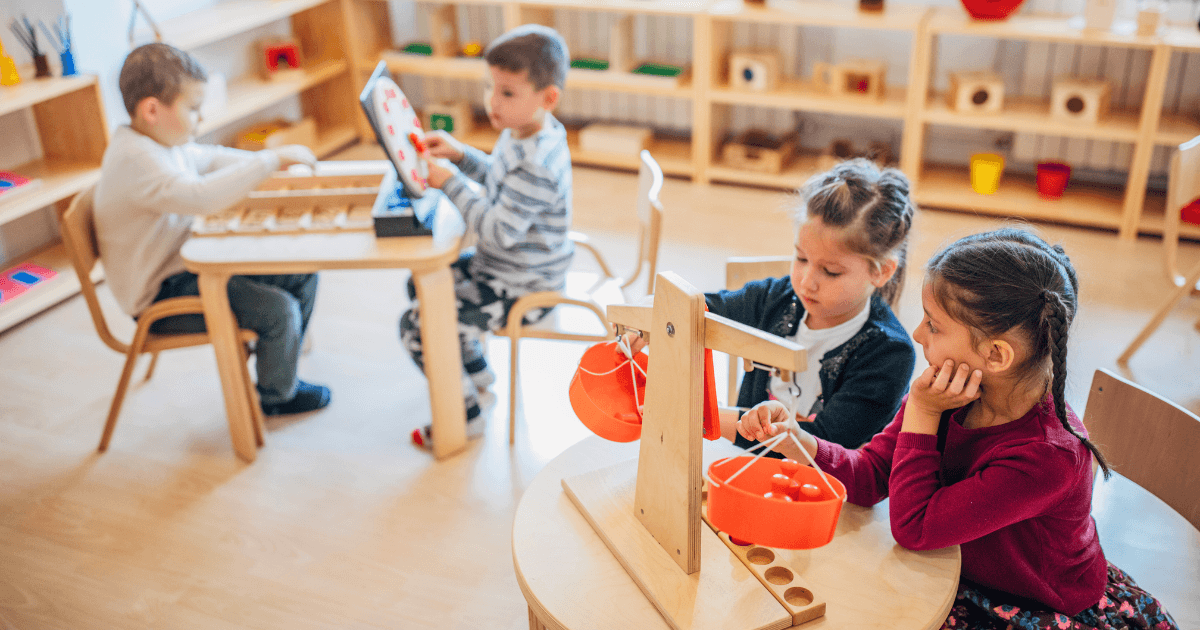
Traditional academic preschools focus on structured learning experiences designed to build specific skills and knowledge that prepare children for kindergarten and beyond. According to SPH Education, these programs emphasize:
- Teacher-led instruction in a structured classroom environment
- Early literacy and numeracy through direct teaching of letters, numbers, and basic concepts
- Skill-building exercises including worksheets and guided activities
- Scheduled learning periods with designated times for different subjects
- Regular assessment of children’s progress toward specific learning goals
Unlike play-based approaches where learning emerges primarily through child-directed play, traditional academic preschools intentionally introduce academic content through planned lessons and activities.
The Benefits of Structure and Academic Focus
Research and experience have shown that well-designed academic preschool programs offer several important benefits:
1. Kindergarten Readiness
Academic preschools explicitly prepare children for the expectations they’ll encounter in kindergarten. According to a 2023 study, 85% of children from traditional academic preschools met or exceeded kindergarten readiness benchmarks.
This readiness extends beyond academic skills to include familiarity with classroom routines, following directions, and transitioning between activities—all valuable for kindergarten success.
2. Foundational Academic Skills
Traditional academic preschools build essential skills in:
- Literacy: Letter recognition, phonemic awareness, print concepts, and early writing skills
- Mathematics: Number recognition, counting, basic operations, patterns, and shapes
- Science: Observation, prediction, and basic scientific concepts
- Language: Vocabulary development, listening comprehension, and verbal expression
These foundational skills create a strong platform for future learning. As Newport School notes, “Structured environments in academic-focused preschools help children develop foundational skills for kindergarten.”
3. Comfort with Routine and Structure
Many children thrive with predictable routines and clear expectations. Traditional academic preschools provide consistent schedules that help children develop:
- Time management skills
- Self-discipline
- Comfort with transitions
- Understanding of classroom norms
This structure can be particularly beneficial for children who need more guidance and support in their learning journey.
4. Measurable Progress
Academic preschools typically include regular assessment of children’s progress, allowing teachers and parents to:
- Identify areas where children excel or need additional support
- Track development over time
- Adjust teaching strategies to meet individual needs
- Provide targeted intervention when necessary
This focus on assessment helps ensure that no child falls through the cracks and that instruction meets children where they are developmentally.
The Creative Challenge: Potential Drawbacks of Strict Academic Focus
Despite these benefits, an overly rigid academic approach can present challenges for young learners:
1. Developmental Appropriateness Concerns
Young children learn differently than older students. Their developmental needs include:
- Movement and physical activity
- Hands-on, multisensory experiences
- Social interaction and play
- Emotional support and nurturing
A preschool program that doesn’t account for these needs may create frustration or disengagement. As Small Miracles Education cautions, “Academic-focused curriculums can be stressful for young children, leading to anxiety and making learning feel like a chore.”
2. Limited Creative Expression
Highly structured environments may inadvertently limit opportunities for:
- Imaginative play
- Creative problem-solving
- Self-directed exploration
- Divergent thinking
These creative skills are not just “nice to have”—they’re essential for innovation, adaptation, and higher-order thinking throughout life.
3. Potential Impact on Motivation
When the focus is primarily on performance and achievement, some children may:
- Develop anxiety around “getting it right”
- Lose intrinsic motivation for learning
- Miss opportunities to develop curiosity and wonder
- Associate learning with work rather than joy
This can impact their attitude toward school in the long term. Research from Brookings Institution found that only 26% of 10th graders in the U.S. report loving school, suggesting that early educational experiences may influence long-term engagement.
Finding the Balance: How Modern Academic Preschools Integrate Creativity
The good news is that traditional academic preschools are evolving. Many have found effective ways to maintain their academic focus while incorporating elements that support creativity, engagement, and joy in learning.
1. Structured Play with Purpose
Leading academic preschools recognize that play and learning aren’t opposing forces. They incorporate:
- Guided play experiences that target specific learning goals while allowing for exploration
- Learning centers where children can apply skills in meaningful contexts
- Educational games that reinforce concepts through enjoyable activities
- Project-based learning that integrates multiple skills around engaging themes
A 2022 review of 39 studies found that guided play significantly enhances early math skills and other cognitive abilities compared to direct instruction alone.
2. Creative Expression Within Structure
Balanced academic programs build in regular opportunities for creative expression:
- Arts integration across the curriculum
- Music and movement activities that reinforce concepts
- Storytelling and dramatic play with connections to literacy
- Open-ended materials available during choice time
These creative outlets not only make learning more enjoyable but also help children process and internalize academic content in meaningful ways.
3. Differentiated Instruction
Quality academic preschools recognize that children learn at different paces and in different ways:
- Small group instruction allows for targeted teaching
- Learning stations offer choices within structured parameters
- Varied approaches address different learning styles
- Individualized support helps all children succeed
This flexibility within structure helps maintain engagement while meeting academic goals. As Athena Careers explains, “Teacher-led activities can enhance learning objectives while still appearing playful.”
4. Social-Emotional Learning Integration
The best academic preschools recognize that cognitive development cannot be separated from social-emotional development:
- Explicit teaching of social skills and emotional regulation
- Cooperative learning opportunities
- Problem-solving in social contexts
- Character development integrated throughout the curriculum
According to NAEYC, “Emotional development includes understanding and expressing feelings, and developing self-regulation,” which are essential foundations for academic success.
Research Insights: What the Evidence Shows
Recent research provides valuable insights into the effectiveness of different preschool approaches:
- A 2024 field experiment in Norway found that a structured curriculum had positive effects on children’s skills in mathematics, language, and executive functioning that persisted one year after the intervention ended.
- The study also found that structured curriculum was especially effective in preschools identified as low quality at baseline, reducing inequality in early childhood learning environments.
- According to Overdeck Family Foundation, content-specific curricula that support targeted learning domains like math and literacy are most effective in Pre-K settings.
- A 2024 study in Michigan found that children who participated in the state’s Great Start Readiness Program performed better on kindergarten readiness assessments and had better attendance than waitlisted children.
These findings suggest that structured academic approaches can be effective when implemented thoughtfully and with attention to developmental appropriateness.
What to Look for in a Balanced Academic Preschool
If you’re considering a traditional academic preschool for your child, look for programs that successfully balance structure and creativity:
Curriculum Elements
- Comprehensive coverage of literacy, math, science, and social studies
- Integration of arts, music, and movement throughout the curriculum
- Balance of teacher-directed and child-initiated activities
- Meaningful connections between academic content and children’s interests
Classroom Environment
- Well-organized learning centers that encourage both structured and exploratory learning
- Rich print environment with books, labels, and children’s writing displayed
- Open-ended materials available alongside more structured resources
- Outdoor spaces that support both physical activity and nature exploration
Teaching Approaches
- Warm, responsive teachers who build relationships with each child
- Playful teaching methods that make learning engaging
- Differentiated instruction that meets diverse learning needs
- Thoughtful questioning that promotes critical thinking
Assessment Practices
- Developmentally appropriate assessment methods
- Focus on individual growth rather than comparison
- Multiple ways for children to demonstrate learning
- Meaningful communication with families about children’s progress
Making the Right Choice for Your Child
Every child is unique, with different temperaments, learning styles, and needs. When considering whether a traditional academic preschool is right for your child, reflect on:
Your Child’s Temperament
- Does your child thrive with routine and structure?
- How does your child respond to direction from adults?
- Does your child enjoy focused learning activities?
- How important is free exploration to your child’s happiness?
Your Family’s Values and Goals
- What skills do you prioritize for your child’s early education?
- How do you view the relationship between play and learning?
- What kind of kindergarten programdo you anticipate for your child?
- What are your long-term educational goals for your child?
Program Quality Indicators
- What is the teacher-to-child ratio?
- What are the teachers’ qualifications and experience?
- How does the program assess children’s progress?
- How does the program communicate with families?
Supporting Your Child’s Learning at Home
Whether your child attends a traditional academic preschool or another type of program, you can support their learning at home by:
1. Creating a Balance of Structure and Freedom
- Establish consistent routines that provide security
- Allow time for unstructured play and exploration
- Create a learning environment with both academic and creative materials
- Follow your child’s interests while introducing new concepts
2. Making Learning Playful and Meaningful
- Integrate learning into everyday activities like cooking, shopping, and outdoor play
- Use games to reinforce academic concepts
- Read a variety of books together daily
- Engage in conversations that build vocabulary and critical thinking
3. Supporting Social-Emotional Development
- Help your child identify and express emotions
- Model and teach problem-solving strategies
- Provide opportunities for social interaction
- Celebrate effort and persistence, not just achievement
4. Communicating with Teachers
- Share insights about your child’s interests and learning style
- Ask about ways to reinforce classroom learning at home
- Discuss any concerns about your child’s experience
- Participate in school activities when possible
The Future of Academic Preschools: Evolving Approaches
Traditional academic preschools continue to evolve as our understanding of early childhood development deepens. Current trends include:
Integration of Play-Based Elements
Many academic preschools are incorporating more play-based learning while maintaining their focus on kindergarten readiness. According to EdWeek, several states have recently passed legislation promoting play-based learning in early childhood settings, reflecting this shift.
Focus on Executive Function
There’s growing recognition that executive function skills—including working memory, inhibitory control, and cognitive flexibility—are crucial for academic success. Academic preschools are increasingly incorporating activities that develop these skills alongside traditional academic content.
Personalized Learning Approaches
Advances in educational technology and assessment are enabling more personalized approaches to early learning, allowing academic preschools to better tailor instruction to individual children’s needs and interests.
Whole-Child Emphasis
Even the most academically-focused programs are embracing a more holistic view of child development, recognizing that physical, social, emotional, and cognitive development are deeply interconnected.
Conclusion: The Art of Balance
Traditional academic preschools at their best offer a valuable educational option that provides structure, intentional skill-building, and preparation for future academic success. When they successfully balance this academic focus with opportunities for creativity, play, and joyful exploration, they create powerful learning environments that honor both the child’s present experience and future needs.
As Lightbridge Academy demonstrates with their Seedlings Early Childhood Education Curriculum, which resulted in 97% of students testing proficient in kindergarten readiness skills, academic preparation and engaging learning experiences can go hand in hand.
The key lies not in choosing between structure and creativity, but in finding programs that skillfully integrate both—recognizing that young children need both roots and wings: the roots of foundational skills and knowledge, and the wings of creativity, curiosity, and joy in learning.
By understanding what makes a quality academic preschool and how to support your child’s learning journey, you can help ensure that their early educational experiences build not only academic readiness but also a lifelong love of learning.
What experiences have you had with traditional academic preschools? Share your thoughts and questions in the comments below!