HighScope in Action: A Day in the Life of a HighScope Preschooler
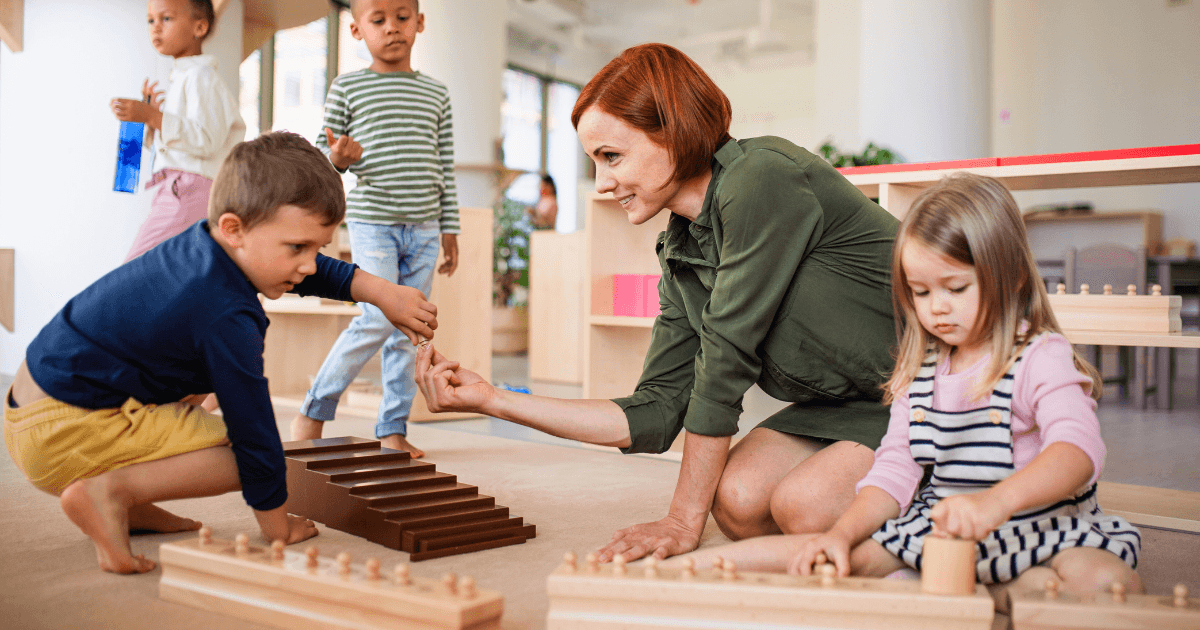
When four-year-old Maya walks into her HighScope preschool classroom each morning, she’s not just entering a room filled with toys and activities—she’s stepping into a carefully designed environment where every moment of the day has purpose. From the morning greeting to afternoon reflection time, theHighScope approach creates a rich tapestry of experiences that support children’s natural curiosity while building essential skills for lifelong success.
But what exactly happens during a typical day in a HighScope classroom? Let’s follow Maya through her day to discover how this research-based curriculum comes to life through its distinctive daily routine and active learning approach.
What Makes HighScope Unique?
Before we dive into Maya’s day, it’s helpful to understand what sets HighScope apart from other early childhood approaches.
Developed in the 1960s by the HighScope Educational Research Foundation, this curriculum is built on over 50 years of research, including the landmark Perry Preschool Project. This study demonstrated significant long-term benefits of high-quality early education, with participants showing improved outcomes well into adulthood. According to a 2024 analysis, every dollar invested in the program yielded a return of $7.50 when accounting for benefits to participants and their families.
At its core, HighScope is guided by five essential ingredients:
- Active learning through direct, hands-on experiences
- Positive adult-child interactions that support and extend learning
- A learning environment arranged to promote independence and exploration
- A consistent daily routine that helps children feel secure and in control
- Ongoing assessment that guides individualized teaching
Now, let’s see how these principles unfold throughout Maya’s day.
8:15 AM: Arrival and Greeting Time
Maya arrives at her classroom and is warmly greeted by her teacher, Ms. Jen. “Good morning, Maya! We’re so happy you’re here today,” Ms. Jen says as she kneels to Maya’s eye level.
After hanging her backpack in her cubby, Maya washes her hands and moves to the sign-in table. Today’s question asks, “What did you eat for breakfast?” Maya draws a picture of cereal and writes an “M” for her name—she’s still working on writing all the letters.
Meanwhile, other children are arriving, engaging with the question of the day, and gathering around the message board. This large chart contains information about the day’s special activities, weather, and any changes to the routine. Ms. Jen reads it aloud, pointing to each word as she goes:
“Good morning, friends! Today is Tuesday. We have new shells in our science area. Who would like to explore them during work time? Our special visitor is coming at large group time.”
What’s happening developmentally: This arrival routine helps children transition from home to school while practicing important literacy skills like writing their names and reading environmental print. The question of the day encourages language development and personal connection.
8:30 AM: Breakfast Time
The children gather at tables for a family-style breakfast. Maya helps pass out napkins while her friend Zach distributes spoons. Ms. Jen sits with the children, modeling conversation and supporting social interactions.
“I like applesauce,” says Maya, noticing it on the table.
“How does the applesauce taste?” asks Ms. Jen, extending the conversation.
“Sweet and cold!” Maya replies after a thoughtful bite.
What’s happening developmentally: Mealtimes in HighScope classrooms are valuable opportunities for building language, social skills, and independence. Children practice serving themselves, engaging in conversations, and taking responsibility for cleanup.
9:00 AM: Large Group Time
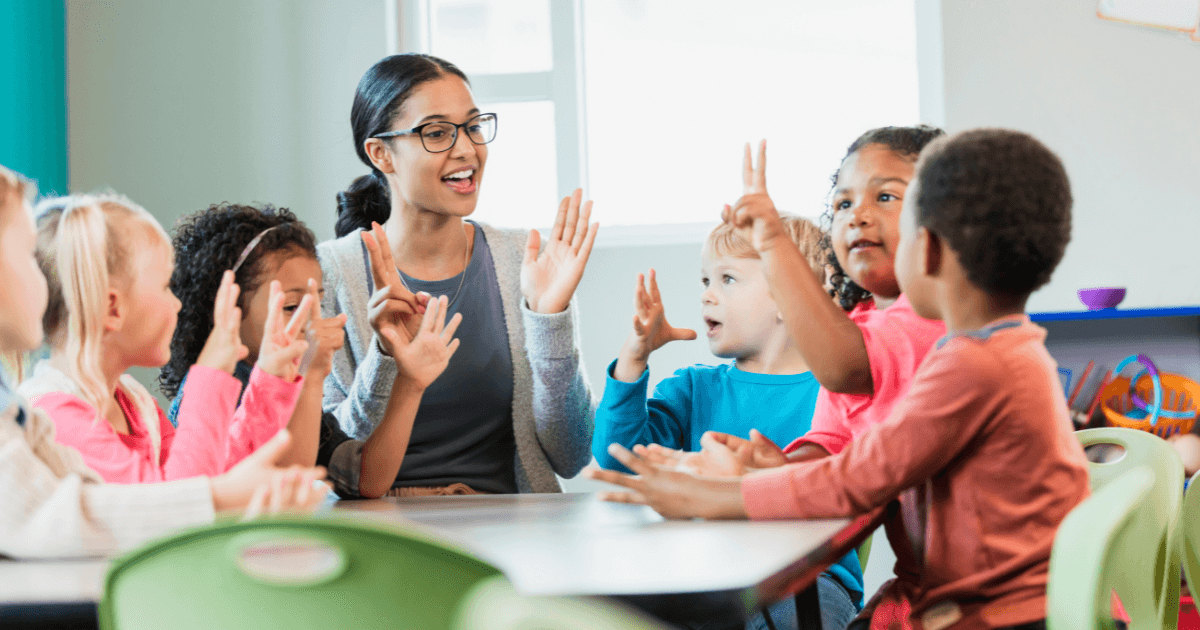
After breakfast, the children gather in a circle on the carpet. Ms. Jen leads them in a good morning song, followed by movement activities that incorporate counting and rhythm.
“Let’s count how many times we can jump,” suggests Ms. Jen. The children count together as they jump, some making it to ten, others continuing to higher numbers.
Next, they explore the concept of “over and under” through a playful activity with scarves. Maya giggles as she crawls under a bridge made by her teachers’ arms while holding her scarf “over” her head.
What’s happening developmentally: Large group time builds a sense of community while introducing concepts in a playful, movement-based way. Children practice listening, following directions, and participating in group activities—all while developing gross motor skills and cognitive concepts.
9:20 AM: Planning Time
Now comes one of the most distinctive elements of the HighScope approach: the Plan-Do-Review sequence. The class breaks into small groups with their assigned teachers to make plans for work time.
“What would you like to do during work time today, Maya?” Ms. Jen asks.
Maya thinks for a moment. “I want to build a tall tower in the block area and then paint a picture of it.”
Ms. Jen helps Maya record her plan by drawing a simple picture on a planning board. Other children share their plans too—some verbally, others by pointing to areas of the room or drawing pictures.
What’s happening developmentally: Planning time helps children develop intentionality and executive function skills. By thinking ahead about what they want to do, children begin to set goals and develop strategies to achieve them—crucial skills for later academic success.
According to HighScope research, this plan-do-review sequence promotes higher-level thinking skills linked to the development of executive functions, which are strong predictors of school readiness.
9:35 AM: Work Time (Do)
With plans made, the children move into an hour of self-directed activity. This is not “free play” in the traditional sense, but rather purposeful engagement with materials based on their plans.
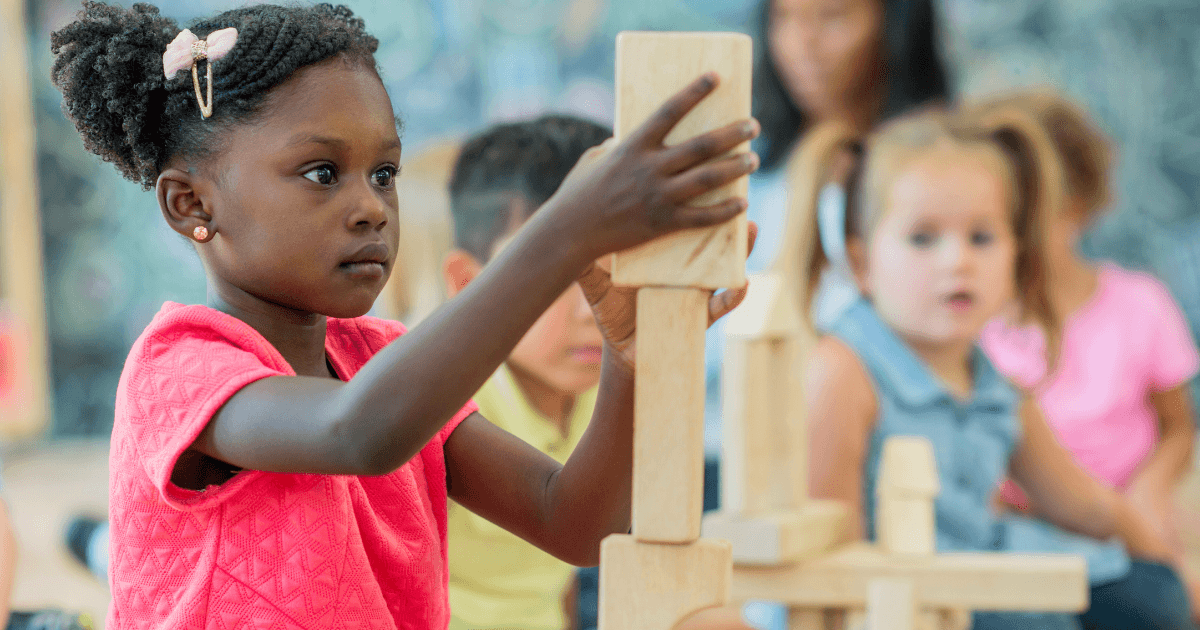
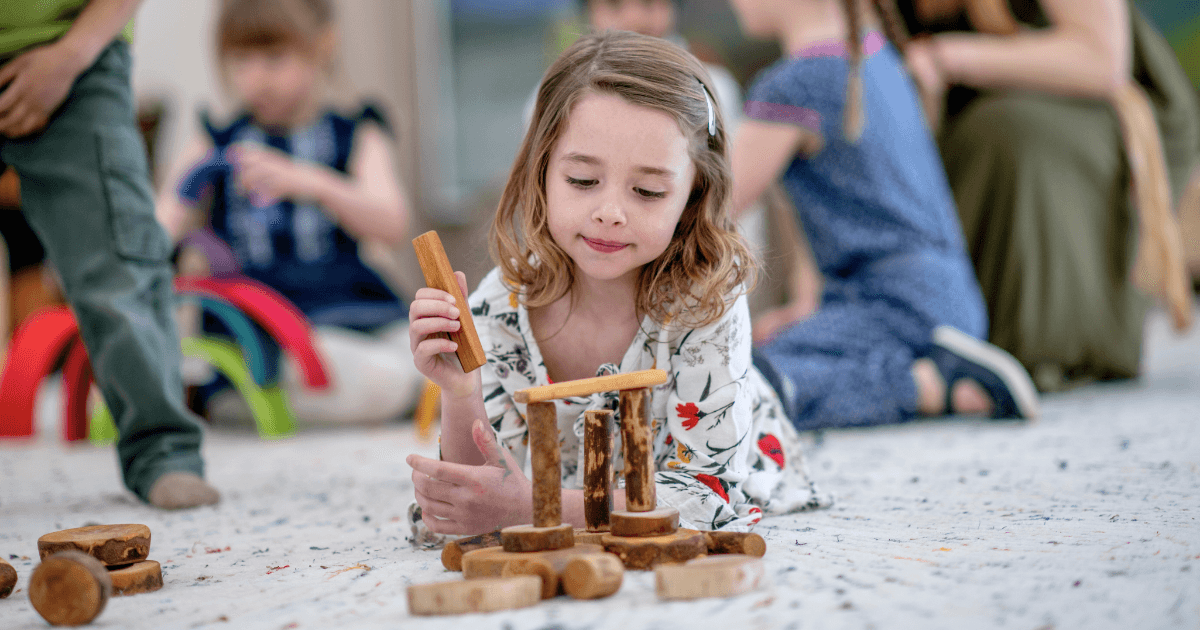
Maya heads straight to the block area and begins constructing her tower. When it keeps falling, Ms. Jen notices her frustration but doesn’t immediately solve the problem.
“Your tower keeps falling down. That seems frustrating,” she acknowledges.
“The blocks won’t stay,” Maya responds with a frown.
“I wonder what would happen if you used the wider blocks on the bottom?” Ms. Jen suggests, scaffolding Maya’s problem-solving rather than fixing it for her.
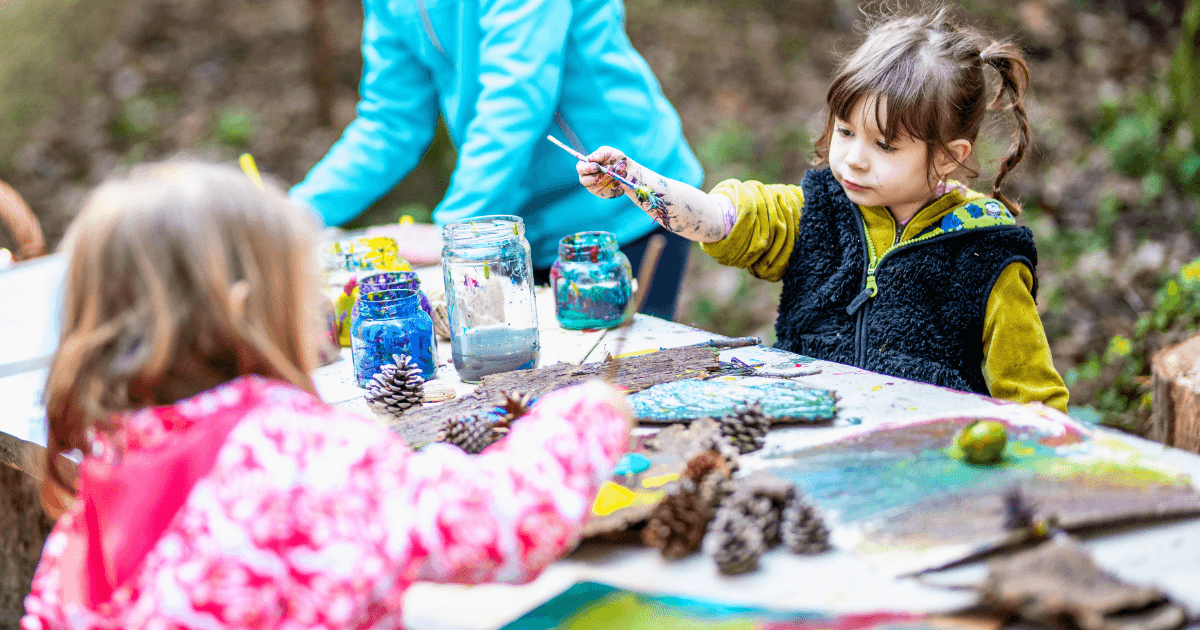
Maya tries this strategy, and her tower becomes more stable. After completing her tower, she remembers the second part of her plan and transitions to the art area to paint a picture of her creation.
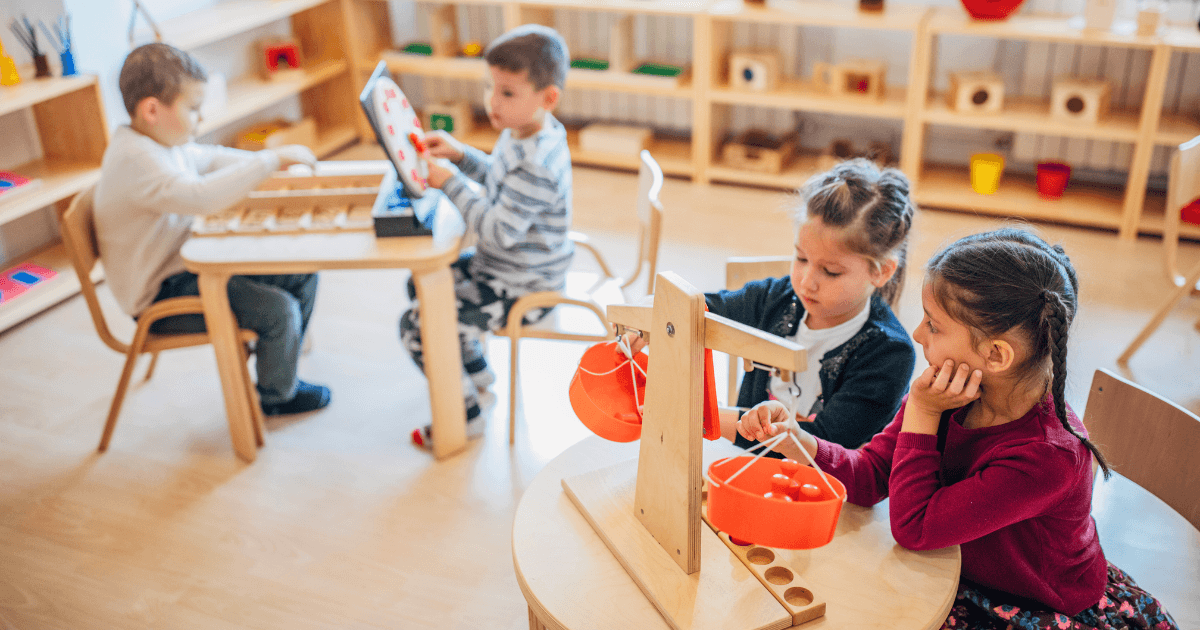
Around the room, other children are deeply engaged in their chosen activities:
- In the dramatic play area, three children have created a “restaurant”
- At the water table, two children experiment with objects that sink and float
- In the reading nook, a child looks at books with a teacher
- At the math center, children sort buttons by size and color
Teachers move throughout the room, observing, asking open-ended questions, and extending learning through thoughtful interactions. They take brief notes on what they observe, documenting children’s developmental progress.
What’s happening developmentally: During work time, children practice making choices, following through on plans, solving problems, and interacting with peers. They develop skills across all developmental domains—social, emotional, physical, cognitive, and language—through self-directed, hands-on experiences with materials.
10:35 AM: Cleanup Time
A gentle song signals that work time is ending. Children begin putting materials back in their designated places. The classroom environment supports this process through clear labeling—picture and word labels show where each item belongs.
Maya helps reorganize the blocks, matching them to the shadow outlines on the shelf. In the art area, children wash paintbrushes and hang pictures to dry.
What’s happening developmentally: Cleanup time builds responsibility, classification skills, and cooperation. By participating in the care of their environment, children develop a sense of ownership and community.
10:50 AM: Recall Time (Review)
Children return to their small groups to reflect on their work time activities. This “recall” completes the Plan-Do-Review sequence.
“Maya, what did you do during work time today?” Ms. Jen asks.
“I built a tall tower with the big blocks on the bottom,” Maya explains, showing her painting. “And I painted it green because that’s my favorite color.”
Ms. Jen extends the conversation: “You solved the problem of your tower falling down. How did that feel?”
“Good! I made it really tall and it didn’t fall,” Maya says proudly.
Other children share their experiences through various methods—some verbally, others by showing something they made, and some by acting out what they did.
What’s happening developmentally: Recall time helps children reflect on their experiences, building metacognitive skills (thinking about thinking). By verbalizing what they did, they strengthen memory, language, and sequencing abilities while gaining a sense of accomplishment.
11:10 AM: Small Group Time
Children move into predetermined small groups (typically6-8 children with one adult) for a more focused learning experience. Today, Maya’s group is exploring measurement concepts.
Ms. Jen provides string, scissors, and various objects. “Today we’re going to measure things around the room,” she explains, demonstrating how to use the string to measure length.
The children eagerly cut pieces of string and find objects to measure. Maya discovers that the block shelf is “five strings long” while her arm is “one string long.”
What’s happening developmentally: Small group time allows teachers to introduce specific materials and concepts based on curriculum goals and children’s interests. The small ratio enables more individualized support while still promoting peer interaction and collaborative learning.
11:40 AM: Outside Time
The children bundle up (if needed) and head outdoors. The playground includes traditional equipment like swings and slides, but also natural elements—logs for balancing, gardens for exploring, and open spaces for running.
Maya joins a group of children digging in the sandbox, creating an elaborate “cake bakery” with molds and containers. Teachers are actively engaged, sometimes facilitating games, other times observing and extending children’s self-initiated play.
What’s happening developmentally: Outdoor time provides essential opportunities for physical development, sensory experiences, and different types of social interactions. The natural environment offers rich possibilities for science learning and larger-scale construction than is possible indoors.
12:30 PM: Lunch Time
Similar to breakfast, lunch is served family-style, with children helping to set up, serve themselves, and clean up afterward. Conversations flow naturally, with teachers modeling language and social skills.
Today’s helper, Zach, gets to light the battery-operated candle for the lunchtime gratitude moment. The children share things they’re thankful for before enjoying their meal.
What’s happening developmentally: Like breakfast, lunch provides opportunities for nutrition education, social skills, language development, and practical life skills like pouring and serving.
1:15 PM: Rest Time
After lunch, the classroom transitions to a quieter atmosphere. Soft music plays as children lie on individual mats with blankets from home. Some fall asleep quickly, while others look at books quietly until they become drowsy.
For children who don’t nap, a quiet activity area is available after an initial rest period. Here, they can look at books, use headphones to listen to stories, or engage in calm activities like puzzles or drawing.
What’s happening developmentally: Rest time acknowledges children’s physical need for recovery and helps them learn to self-regulate. The predictable routine of transitioning to rest helps children develop coping strategies for winding down.
2:30 PM: Snack and Story Time
As children wake from naps, they join the group for a light snack followed by story time. Today, Ms. Jen reads a book about building structures, connecting to Maya’s earlier block tower experience.
Rather than simply reading the story, Ms. Jen engages the children with open-ended questions: “What do you think will happen next?” “Why do you think the tower fell down?” “Have you ever built something like this?”
What’s happening developmentally: Story time builds literacy skills, vocabulary, and comprehension. The interactive approach encourages critical thinking and makes connections between books and children’s own experiences.
3:00 PM: Choice Time and Departure
For the final part of the day, children can choose from several activity options before parents begin arriving. Maya chooses to return to the block area, this time collaborating with a friend to build a “castle with a moat.”
As parents arrive, children share highlights from their day, often showing something they created or pointing out documentation panels that display photos and descriptions of recent projects.
Ms. Jen takes a moment with Maya’s dad at pickup: “Maya solved a challenging problem with her block structure today. She figured out that using wider blocks at the base made her tower more stable.”
What’s happening developmentally: This final flexible period allows children to pursue interests and build on earlier experiences. The sharing at departure time strengthens the home-school connection and helps children reflect on their learning.
The HighScope Difference: Beyond the Daily Routine
While the consistent daily routine is a hallmark of HighScope, the curriculum’s effectiveness comes from how all elements work together to support children’s development across58 Key Developmental Indicators (KDIs) in eight content areas:
- Approaches to Learning: Initiative, planning, engagement, problem-solving, reflection
- Social & Emotional Development: Self-identity, emotion regulation, relationships, conflict resolution
- Physical Development & Health: Gross and fine motor skills, body awareness, healthy behaviors
- Language, Literacy & Communication: Speaking, listening, vocabulary, phonological awareness, reading, writing
- Mathematics: Number sense, patterns, measurement, geometry, data analysis
- Creative Arts: Visual art, music, movement, dramatic play
- Science & Technology: Observation, classification, experimentation, tools and technology
- Social Studies: Community roles, geography, history, ecology
Throughout Maya’s day, teachers intentionally support development across these areas through thoughtful interactions, environmental design, and activity planning—all while following children’s leads and interests.
The Research Behind the Practice
The HighScope approach isn’t just intuitively appealing—it’s backed by decades of research showing significant short and long-term benefits.
The Perry Preschool Project, which began in the 1960s and used the HighScope curriculum, has followed participants into adulthood. According to recent analysis, for every dollar invested in the program, communities see a return of between $7 and $12 (Heckman, Pinto, Shaikh, 2024).
By age 40, compared to a control group, program participants had:
- Higher high school graduation rates
- Higher earnings
- Lower rates of crime and incarceration
- Better health outcomes
- More stable families
Even more remarkably, these benefits extended to the next generation. According to a 2019 study, children of Perry Preschool participants were more likely to:
- Complete high school without suspension
- Be employed full-time or self-employed
- Avoid addiction and arrest
These findings highlight the powerful ripple effect of high-quality early education—not just on individual children, but on families and communities across generations.
Creating HighScope-Inspired Moments at Home
While the full HighScope curriculum is implemented in preschool settings, parents can incorporate key elements at home:
- Establish a consistent routine that includes time for planning, doing, and reviewing activities
- Ask planning questions like “What would you like to do today?” and help children think through their ideas
- Support problem-solving by asking questions rather than immediately providing solutions
- Create an accessible environment where materials are organized and within reach
- Engage in conversation throughout daily activities, asking open-ended questions
- Encourage reflection by discussing experiences afterward: “What did you do? What did you notice? What would you do differently next time?”
These simple practices can extend the benefits of the HighScope approach beyond the classroom walls, supporting children’s development of initiative, creativity, and critical thinking skills.
Conclusion: The Power of Purposeful Play
A day in Maya’s HighScope classroom might look like “just play” to casual observers, but each moment is infused with intentional opportunities for learning and growth. Through the consistent daily routine, active learning experiences, and supportive adult interactions, children develop not only academic skills but also the social-emotional foundations and executive function abilities that research shows are crucial for lifelong success.
The Plan-Do-Review sequence, in particular, transforms what might appear as simple play into a powerful learning cycle that builds critical thinking, language skills, and self-regulation. When Maya plans her block tower, works through the challenges of building it, and later reflects on her success, she’s developing the kind of executive function skills that will serve her throughout her education and beyond.
What makes HighScope especially valuable is its balance of structure and freedom—providing a consistent framework that makes children feel secure while honoring their autonomy and natural curiosity. This balance creates an environment where children aren’t just passive recipients of knowledge but active constructors of their own understanding.
The long-term research from the Perry Preschool Project confirms what we can observe in Maya’s day: when children experience education that respects their capabilities, supports their development across all domains, and engages them as active participants, the benefits extend far beyond academic readiness. They develop the confidence, problem-solving abilities, and social skills that form the foundation for lifelong learning and success.
As parents and educators, perhaps the most important lesson we can take from the HighScope approach is that play and learning are not opposing forces but natural partners. When we create environments that harness children’s innate drive to explore and discover, while thoughtfully scaffolding their experiences, we unlock the true power of purposeful play—a power that shapes not just school readiness, but the development of curious, capable, and confident human beings.
Have you observed or experienced a HighScope classroom? What elements of this approach have you found most valuable? Share your thoughts in the comments below.