50 Preschool Activities That Develop Critical Thinking Skills
Critical thinking is one of the most valuable skills we can nurture in young children. Far from being too advanced for preschoolers, critical thinking begins developing in the earliest years through play, exploration, and thoughtfully designed activities. When children learn to analyze, question, predict, and problem-solve, they build cognitive foundations that will serve them throughout their lives.
According to 21K School, critical thinking activities help children “think differently and find new solutions to problems,” setting the stage for academic success and lifelong learning. The good news is that you don’t need expensive materials or specialized training to foster these skills—many effective critical thinking activities use simple household items or no materials at all.
This comprehensive collection of 50 preschool activities is designed to develop various aspects of critical thinking while keeping learning fun and engaging. Whether you’re a parent, teacher, or caregiver, these activities will help you nurture young minds through purposeful play.
Problem-Solving Activities
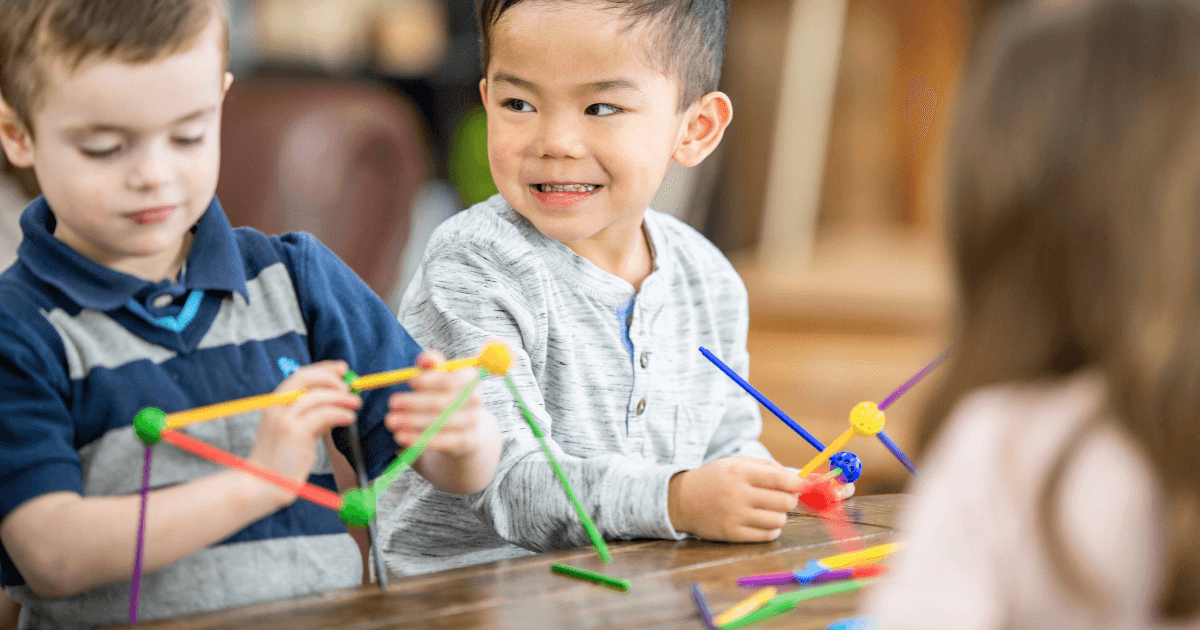
1. Building Challenges
Give children a set of blocks and a challenge: “Can you build a bridge that a toy car can drive under?” or “Can you build a tower taller than your knee?” These open-ended challenges encourage children to test solutions and revise their approach when something doesn’t work.
2. Obstacle Courses
Create simple obstacle courses indoors or outdoors. Ask children to design their own courses or solve problems like “How can we get from here to there without touching the floor?”
3. Shape Puzzles
Cut simple shapes from cardboard and then cut each shape into 2-3 pieces to create puzzles. Gradually increase the difficulty as children master simpler puzzles.
4. Water Transfer
Provide containers of different sizes and shapes, along with tools like funnels, basters, and measuring cups. Challenge children to transfer water from one container to another without spilling.
5. Fix-It Station
Collect old, broken items (with no sharp edges), such as clocks, keyboards, or toys. Provide safe tools and let children explore how things work and attempt to fix them.
6. Egg Drop Challenge
Challenge preschoolers to create a container that will protect an egg when dropped from a height. Provide materials like straws, cotton balls, paper cups, and tape.
7. Balance Scales
Create a simple balance scale using a hanger and two cups. Encourage children to predict which items will be heavier and then test their predictions.
8. Tangram Puzzles
Make simple tangram puzzles with felt or cardboard. Start with basic shapes and gradually increase complexity as children master the simpler designs.
9. Marble Runs
Use cardboard tubes, tape, and other recycled materials to create pathways for marbles. Challenge children to make a run where the marble travels slowly or makes multiple turns.
10. Pattern Block Challenges
Provide pattern blocks and challenge cards showing design outlines to complete. This develops spatial reasoning and problem-solving skills.
Classification and Sorting Activities
11. Mystery Bags
Place various objects in a bag and have children identify them by touch alone. Ask them to sort the objects by attributes after they’ve been identified.
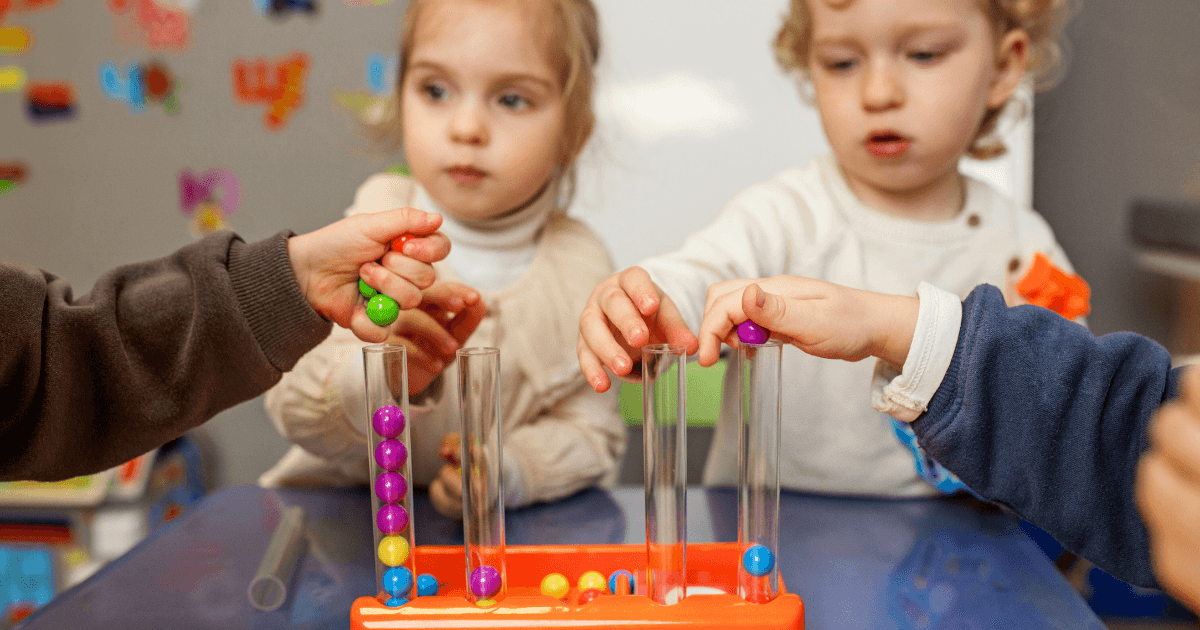
12. Attribute Sorting
Provide a collection of items and ask children to sort them in different ways—by color, size, shape, texture, or function. Ask open-ended questions about their sorting choices.
13. Venn Diagram Sorting
Use hula hoops to create a physical Venn diagram. Challenge children to sort objects into one category, another, or both (e.g., red things, round things, things that are both).
14. Nature Collections
Collect items during a nature walk and sort them by attributes such as living/non-living, rough/smooth, heavy/light, etc.
15. Button Sorting
Provide a variety of buttons for children to sort by size, color, number of holes, or material. Extend the activity by having them create patterns with the sorted buttons.
16. Animal Classification
Cut out animal pictures from magazines and have children sort them by habitat, number of legs, covering (fur, feathers, scales), or diet.
17. Recycling Sort
Create a sorting activity with clean recyclables and trash items. Discuss why certain items go in different bins and the importance of recycling.
18. Food Groups
Use food models or pictures to sort foods into different food groups. Extend this by creating pretend meals that include items from each group.
19. Sound Sorting
Fill small containers with different materials (rice, beans, buttons) to create shakers. Have children sort them based on the sounds they make—loud/soft, high/low, etc.
20. Seasonal Clothing Sort
Provide pictures or real clothing items and have children sort them by season. Discuss why certain clothes are appropriate for different weather conditions.
Prediction and Hypothesis Activities
21. Sink or Float
Collect various objects and ask children to predict whether each will sink or float before testing them in water. Encourage discussion about why some objects sink while others float.
According to Bright Horizons, this activity “encourages children to predict whether objects will sink or float, enhancing observation skills and understanding of buoyancy.”
22. Growing Seeds
Plant seeds in clear containers so children can observe root development. Before planting, ask children to predict what will happen to the seeds and how tall they think the plants will grow.
23. Ramp Experiments
Create ramps of different heights using books and cardboard. Ask children to predict which cars will go farther or faster, then test their predictions.
24. Weather Predictions
Create a simple weather chart and have children predict the next day’s weather based on the current conditions. Check the accuracy of their predictions the following day.
25. Mixing Colors
Before mixing paints or colored water, ask children to predict what color they’ll create. Extend this by asking them to predict how to make specific colors.
26. Magnet Exploration
Provide various objects and a magnet. Have children predict which items will be attracted to the magnet before testing each one.
27. Melting Ice
Place ice cubes in different locations or conditions (sunlight, shade, wrapped in foil, etc.). Ask children to predict which will melt fastest and why.
28. Shadow Predictions
On a sunny day, mark the position of an object’s shadow with chalk. Ask children to predict where the shadow will be in an hour, then check their predictions.
29. Dissolving Experiment
Test various substances (sugar, salt, flour, coffee) to see which dissolve in water. Have children predict the results before experimenting.
30. Balance Predictions
Collect objects of different weights and sizes. Ask children to predict which objects will balance on a seesaw or balance scale, then test their predictions.
Language and Reasoning Activities
31. Story Sequencing
Cut simple picture books into individual pages (use photocopies) and have children arrange them in the correct order. Discuss why certain events must happen before others.
32. “What Would Happen If…”
Pose hypothetical questions like “What would happen if it rained inside our house?” or “What would happen if dogs could talk?” Encourage creative and logical thinking in their responses.
33. Riddles and Brainteasers
Share age-appropriate riddles and encourage children to think critically about the clues. Create simple riddles about familiar objects for them to solve.
21K School notes that “decoding riddles enhances critical thinking by encouraging kids to understand language and find hidden meanings, improving vocabulary.”
34. “I Spy” with Descriptions
Play “I Spy” using descriptive clues rather than colors: “I spy something that we use to write with” or “I spy something that has four legs and a back.”
According to Empowered Parents, playing “I Spy” with descriptive clues “enhances children’s thinking” beyond simple color recognition.
35. Odd One Out
Show children groups of four objects in which three share an attribute and one doesn’t. Ask them to identify which one doesn’t belong and explain why.
36. Compare and Contrast
Show children pairs of objects and ask them to identify similarities and differences between them. Start with obvious differences and move to more subtle comparisons.
37. Story Predictions
While reading a story, pause at key points and ask children to predict what might happen next. After finishing the story, discuss whether their predictions were accurate.
38. Would You Rather?
Ask thought-provoking “would you rather” questions and have children explain their reasoning: “Would you rather be able to fly or be invisible? Why?”
39. Picture Interpretation
Show children ambiguous pictures and ask them what they see. Discuss how the same picture can be interpreted in different ways.
40. Twenty Questions
Think of an object, then have children ask yes-or-no questions to figure out what it is. This helps them develop strategic questioning skills.
Science and Exploration Activities
41. Dancing Raisins Experiment
Drop raisins into a glass of carbonated water and observe what happens. Ask children why they think the raisins “dance” up and down in the liquid.
Bright Horizons describes this as an activity that “introduces children to the concept of gases through the carbonation in seltzer water.”
42. Color Mixing
Provide primary-color paints or colored water, and let children discover what happens when they mix them. Encourage them to create specific colors through experimentation.
43. Magnetic Exploration
Provide magnets and various objects for testing. Challenge children to predict which objects will be attracted to the magnets and why.
44. Cloud in a Jar
Create a “cloud in a jar” using warm water, hairspray, and ice. Discuss how real clouds form and why this model helps us understand weather.
45. Nature Observation Journals
Give children simple journals to record observations about plants, animals, or weather. Encourage drawing, dictation, or simple writing to document what they notice.
46. Baking Soda and Vinegar Reactions
Set up simple experiments with baking soda and vinegar. Ask children to predict what will happen when they’re mixed and explain the reaction they observe.
47. Light and Shadow Play
Use flashlights to create shadows with various objects. Explore how changing the distance between the light, object, and wall affects the shadow’s size.
48. Exploring States of Matter
Demonstrate how water can exist as a solid (ice), liquid (water), and gas (steam). Discuss what causes these changes and have children predict what will happen in different scenarios.
49. Insect Observation
Provide magnifying glasses and bug catchers for examining insects. Create a simple chart to compare the characteristics of different insects.
50. Simple Machines Exploration
Introduce levers, pulleys, inclined planes, and wheels through hands-on exploration. Challenge children to use these simple machines to move objects.
To maximize the benefits of these activities, consider these implementation strategies:
Ask Open-Ended Questions
Instead of questions with yes/no answers, ask questions that prompt deeper thinking:
“What do you think will happen if…?”
“How could we solve this problem?”
“Why do you think that happened?”
“How else could we do this?”
Embrace the Process, Not Just Results
Focus on the thinking process rather than getting the “right” answer. Praise effort, strategies, and creative approaches rather than just successful outcomes.
Follow Children’s Interests
Notice what captivates children’s attention and build critical thinking activities around their interests. A child fascinated by dinosaurs might enjoy sorting dinosaurs by various attributes or predicting what different dinosaurs ate based on their teeth.
Scaffold Learning
Start with simpler versions of activities and gradually increase the complexity as children master basic concepts. Provide just enough support to help children succeed while still challenging them to think.
Model Critical Thinking
Think aloud as you solve problems: “I’m trying to figure out how to fit all these toys in the box. I notice some are bigger than others. Maybe I should put the big ones in first…”
Provide Time for Reflection
After activities, discuss what happened, what worked, what didn’t, and what children might try differently next time. This metacognitive practice strengthens critical thinking skills.
Conclusion
Critical thinking isn’t just for older children—it’s a skill set that begins developing in the earliest years through thoughtful engagement with the world. By incorporating these 50 activities into your preschool classroom or home routine, you’ll help children develop the analytical, problem-solving, and reasoning skills they’ll use throughout their lives.
Remember that the most powerful learning happens when children are engaged, curious, and having fun. These activities are designed to spark joy while building critical cognitive skills—a winning combination for young learners.
Which critical thinking activities have you tried with preschoolers? What worked well? Share your experiences and additional ideas in the comments below!