Fall Sensory Activities: Exploring Autumn with All Five Senses

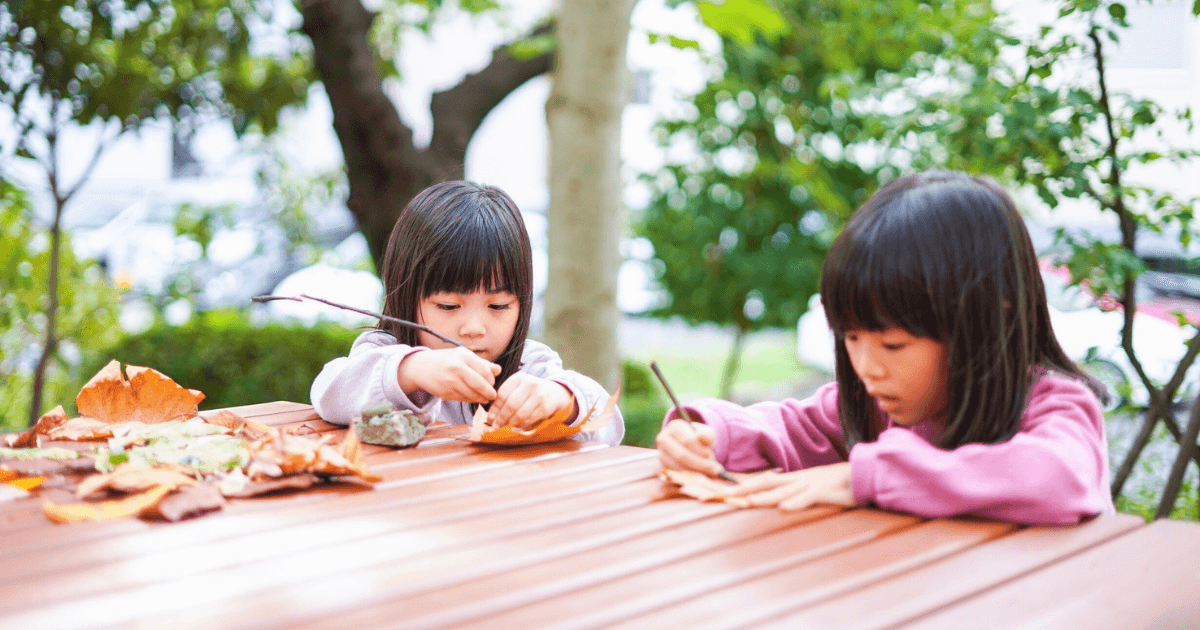
Two young children sit at a wooden table outdoors, drawing or writing on autumn leaves with pens—one of many engaging fall sensory activities. Fallen leaves are scattered on the tabletop, with green trees visible in the background.

Autumn transforms our world into a vibrant sensory playground. The crisp air carries the scent of fallen leaves, trees display a spectacular color show, and seasonal harvests offer new tastes and textures. This makes fall the perfect time to engage children in rich, multi-sensory learning experiences.

Sensory exploration isn’t just fun—it’s fundamental to how children learn. According to the American Academy of Pediatrics, sensory experiences build neural connections that support cognitive development, language acquisition, motor skills, problem-solving, and social interaction.

Let’s explore how to harness autumn’s natural sensory opportunities through activities that engage all five senses—sight, sound, touch, taste, and smell—while supporting educational goals across multiple domains.

The Educational Value of Sensory Exploration

Before diving into specific activities, it’s worth understanding why sensory play matters:

  • Brain Development: Sensory experiences create neural pathways that form the foundation for complex learning
  • Language Enrichment: Describing sensory experiences builds vocabulary and communication skills
  • Scientific Thinking: Observation and comparison of sensory information develops early scientific concepts
  • Emotional Regulation: Sensory activities can be calming and help children process emotions
  • Cultural Connection: Seasonal sensory experiences connect children to natural cycles and cultural traditions

Research from Montessori educators emphasizes that well-designed sensory activities “improve focus, coordination, and creativity” while building foundations for academic learning.

Sight: Visual Explorations of Autumn

Fall’s spectacular visual display offers countless opportunities for learning:

1. Fall Color Hunt

Materials:

  • Color swatches or paint chips in fall colors
  • Paper bags or containers for collecting
  • Optional: magnifying glasses

Activity:

  1. Provide children with color swatches in autumn hues (reds, oranges, yellows, browns)
  2. Take a nature walk to find items matching each color
  3. Collect items or document findings with drawings or photographs
  4. Create a visual display organizing items by color shade

Educational Connections:

  • Color recognition and matching
  • Observation skills and attention to detail
  • Classification and sorting
  • Vocabulary development (crimson, amber, golden, etc.)

2. Leaf Transformation Journal

Materials:

  • Small notebooks or stapled paper
  • Colored pencils or crayons
  • Clear contact paper (optional)

Activity:

  1. Select a few leaves still on trees
  2. Draw and color them in their current state
  3. Visit the same leaves weekly to observe and document changes
  4. Compare drawings to track the transformation

Educational Connections:

  • Observation and documentation skills
  • Understanding of natural cycles and changes
  • Practice with representational drawing
  • Introduction to scientific journaling

3. Light and Shadow Leaf Play

Materials:

  • Collected leaves of different shapes
  • Flashlight or lamp
  • White paper or wall for projecting shadows

Activity:

  1. Place leaves between a light source and white surface
  2. Observe the shadows created by different leaf shapes
  3. Experiment with distance from light source to change shadow size
  4. Trace shadows to create artwork

Educational Connections:

  • Basic physics concepts (light and shadow)
  • Spatial awareness
  • Shape recognition
  • Fine motor control through tracing

Sound: The Acoustic Landscape of Fall

Autumn has its own distinctive soundscape that children can explore:

1. Crunchy Leaf Symphony

Materials:

  • Collected fallen leaves in various states (fresh, dry, crunchy)
  • Recording device (optional)
  • Basic rhythm instruments (optional)

Activity:

  1. Explore different sounds made by walking on, crushing, or rustling various leaves
  2. Create a “leaf orchestra” where children produce different sounds with leaves
  3. Record the sounds and create a fall soundscape
  4. Move to the different sounds—fast for crackly sounds, flowing for rustling sounds

Educational Connections:

  • Auditory discrimination
  • Cause and effect relationships
  • Basic music concepts (rhythm, tempo, dynamics)
  • Creative expression through sound

2. Wind Listening Walk

Materials:

  • Notebooks for recording observations
  • Wind chimes (optional)

Activity:

  1. Take a walk on a breezy fall day
  2. Stop periodically to close eyes and listen
  3. Identify different sounds made by wind (rustling leaves, creaking branches)
  4. Discuss how wind sounds different in fall than other seasons

Educational Connections:

  • Focused listening skills
  • Descriptive language development
  • Weather awareness
  • Seasonal comparisons

3. Nature’s Instruments

Materials:

  • Collected natural items (pinecones, acorns, dried seed pods, sticks)
  • Containers of different materials (plastic, metal, wood)

Activity:

  1. Explore sounds made by dropping, shaking, or tapping natural items
  2. Sort items by similar sounds
  3. Create simple instruments using natural materials
  4. Compose a fall “song” using the natural instruments

Educational Connections:

  • Properties of materials
  • Categorization by sound qualities
  • Basic engineering through instrument creation
  • Collaborative music-making

Touch: Tactile Experiences of Autumn

Fall offers a rich variety of textures to explore:

1. Sensory Autumn Bin

Materials:

  • Large container
  • Collection of fall items with varied textures:
    • Smooth acorns and chestnuts
    • Rough pinecones
    • Crinkly leaves
    • Soft moss
    • Bumpy gourds
    • Feathery grasses

Activity:

  1. Fill container with items, encouraging free exploration
  2. Provide vocabulary cards with texture words
  3. Add tools like tongs, scoops, or sorting containers
  4. Invite children to sort items by texture or create texture patterns

Educational Connections:

  • Tactile discrimination
  • Descriptive vocabulary (rough, smooth, bumpy, etc.)
  • Fine motor development through manipulation
  • Classification skills

As TXSource notes, activities like these “enhance fine motor skills, hand-eye coordination, and early math concepts.”

2. Texture Rubbings Collection

Materials:

  • White paper
  • Unwrapped crayons
  • Various textured fall items (leaves, bark, seed pods)
  • Binding materials to create a book

Activity:

  1. Place paper over textured items
  2. Rub with side of crayon to reveal texture
  3. Label each rubbing with item name and texture words
  4. Compile rubbings into a texture book

Educational Connections:

  • Tactile awareness
  • Cause and effect understanding
  • Scientific documentation
  • Fine motor development

3. Mystery Bag Guessing Game

Materials:

  • Opaque bags or boxes
  • Various fall items with distinctive textures
  • Blindfold (optional)
  • Paper for recording guesses

Activity:

  1. Place one item in each bag
  2. Have children feel inside without looking
  3. Encourage descriptive language about what they feel
  4. Guess the item based on texture alone

Educational Connections:

  • Sensory discrimination
  • Descriptive language development
  • Memory skills
  • Deductive reasoning

Smell: The Aromas of Autumn

Fall brings distinctive scents that create powerful learning opportunities:

1. Autumn Scent Jars

Materials:

  • Small containers with perforated lids
  • Fall-scented items:
    • Cinnamon sticks
    • Apple slices
    • Pine needles
    • Fallen leaves
    • Cloves
    • Nutmeg

Activity:

  1. Place each scented item in its own container
  2. Label containers with pictures and words
  3. Explore scents and discuss associations
  4. Match duplicate scent jars in a memory game

Educational Connections:

  • Olfactory discrimination
  • Memory development
  • Vocabulary building
  • Emotional connections to scents

2. Scented Playdough

Materials:

  • Basic playdough recipe
  • Fall spices (cinnamon, nutmeg, allspice, cloves)
  • Food coloring in fall colors
  • Natural additions (orange zest, vanilla, apple pie spice)

Activity:

  1. Create batches of playdough with different fall scents
  2. Explore the scents while engaging in creative play
  3. Compare and contrast different aromas
  4. Create scented sculptures representing fall objects

Educational Connections:

  • Sensory integration (combining smell and touch)
  • Fine motor development
  • Creative expression
  • Following sequential directions

3. Scent-Inspired Storytelling

Materials:

  • Various fall scents (apple cider, pumpkin, fallen leaves, etc.)
  • Drawing materials
  • Story prompt cards

Activity:

  1. Introduce a fall scent and have children close their eyes while smelling
  2. Ask what memories or images the scent evokes
  3. Create stories inspired by the scent associations
  4. Illustrate stories and compile into a class book

Educational Connections:

  • Sensory-emotional connections
  • Narrative development
  • Memory and association
  • Creative expression through multiple modalities

Taste: Savoring Autumn Flavors

Fall harvests provide delicious opportunities for taste exploration:

1. Apple Tasting Laboratory

Materials:

  • Several apple varieties
  • Cutting board and knife (teacher use only)
  • Tasting chart with simple rating system
  • Apple facts for each variety

Activity:

  1. Examine whole apples, discussing colors, shapes, and sizes
  2. Predict how each might taste based on appearance
  3. Sample small pieces of each variety
  4. Record observations about sweetness, tartness, and texture

Educational Connections:

  • Scientific observation and prediction
  • Data collection and representation
  • Vocabulary development
  • Agricultural awareness

2. Pumpkin Investigation

Materials:

  • Small pumpkin
  • Cutting tools (teacher use only)
  • Spoons for scooping
  • Roasting materials for seeds
  • Descriptive word cards

Activity:

  1. Examine the outside of the pumpkin using all senses
  2. Open the pumpkin and explore the inside
  3. Separate, count, and describe seeds
  4. Clean and roast seeds for tasting
  5. Compare raw and roasted seed flavors

Educational Connections:

  • Plant life cycles
  • Counting and estimation
  • Transformation through cooking
  • Descriptive language development

3. Harvest Soup Creation

Materials:

  • Fall vegetables (carrots, squash, potatoes, etc.)
  • Cooking pot and heat source
  • Vegetable broth
  • Cutting boards, peelers (age-appropriate)
  • Recipe chart with pictures

Activity:

  1. Examine and describe each vegetable
  2. Prepare vegetables according to abilities (washing, peeling)
  3. Follow pictorial recipe to create soup
  4. Sample and describe the flavors

Educational Connections:

Integrating All Five Senses: Multi-Sensory Fall Experiences

While individual sensory activities are valuable, the most powerful learning happens when multiple senses work together:

1. Fall Nature Exploration Stations

Set up outdoor stations where children rotate through activities engaging different senses:

  • Seeing Station: Color matching with natural items
  • Hearing Station: Sound mapping of environmental noises
  • Touching Station: Texture collection and sorting
  • Smelling Station: Scent identification of natural materials
  • Tasting Station: Sampling seasonal fruits or vegetables

2. Autumn Sensory Story Path

Create a sequential journey through fall sensory experiences:

  1. Begin with a fall-themed storybook
  2. Move through a series of connected activities based on the story
  3. Document the journey through drawings, recordings, or photographs
  4. Create a class book connecting the sensory experiences to the story

3. Fall Harvest Festival

Organize a culminating event that celebrates autumn learning:

  • Display documentation of sensory explorations
  • Share foods created from fall ingredients
  • Perform sound compositions using natural instruments
  • Exhibit artwork inspired by fall colors and textures
  • Create a sensory walk for families to experience

Adapting for Different Ages and Abilities

Sensory activities can be modified to meet diverse needs:

For Younger Children (2-3 years)

  • Focus on exploration rather than specific outcomes
  • Provide simple language to describe sensations
  • Offer more support and modeling
  • Emphasize safety with smaller items

For Older Children (6-8 years)

  • Add documentation components
  • Incorporate more complex vocabulary
  • Connect to specific curriculum standards
  • Add quantitative elements (measurement, data collection)

For Children with Sensory Sensitivities

  • Provide options for indirect contact with textures
  • Offer noise-reducing headphones for sound activities
  • Create visual schedules to prepare for new sensory experiences
  • Include familiar objects alongside new sensory materials

Extending the Learning

Fall sensory activities naturally connect to broader curriculum areas:

Science Connections

  • Weather changes and their effects on plants
  • Plant life cycles and seasonal adaptations
  • States of matter (as leaves change from flexible to brittle)
  • Animal preparation for winter

Literacy Connections

  • Descriptive writing inspired by sensory experiences
  • Fall-themed vocabulary development
  • Sequencing stories based on seasonal changes
  • Poetry inspired by sensory observations

Math Connections

  • Counting and sorting natural materials
  • Measuring changes in leaves or temperature
  • Creating and extending patterns with natural items
  • Graphing preferences from taste tests

Social Studies Connections

  • Harvest traditions across cultures
  • Agricultural practices related to fall crops
  • How communities prepare for seasonal changes
  • Historical uses of fall plants and materials

Documenting the Sensory Journey

Capturing children’s sensory explorations creates valuable assessment information and meaningful memories:

  • Create individual sensory journals with drawings and dictated descriptions
  • Develop a class book documenting seasonal changes
  • Record audio of children describing sensory experiences
  • Take photographs of engagement with sensory materials
  • Create a digital presentation to share with families

Conclusion: The Lasting Impact of Seasonal Sensory Exploration

Autumn’s rich sensory landscape offers a perfect opportunity to engage children in meaningful, multi-sensory learning. These experiences do more than teach isolated skills—they help children develop a deeper connection to the natural world, build essential neural pathways, and create lasting memories associated with learning.

As Yoremi Kids notes, these activities support not just sensory development but also “gross and fine motor development and mindfulness,” encouraging children to be fully present in their exploration of the world around them.

By intentionally designing activities that engage all five senses, we invite children to become more observant, more descriptive, and more connected to the seasonal changes that mark our journey through the year. These sensory foundations will support their learning across all domains, while nurturing their natural curiosity and wonder.


What are your favorite ways to explore autumn through the senses with children? Share your ideas and experiences in the comments below!

Leave a Reply

Your email address will not be published. Required fields are marked *