Classroom Organization Systems That Promote Independence
Picture this: A student needs scissors for a project. Instead of asking “Where are the scissors?” or waiting for teacher assistance, she confidently walks to a clearly labeled supply station, retrieves what she needs, completes her task, and returns the scissors to their designated spot—all without teacher intervention.
This scenario represents the power of intentional classroom organization. Beyond creating an aesthetically pleasing environment, thoughtful organization systems build student independence, maximize instructional time, and develop crucial executive functioning skills that benefit learners throughout their lives.
As educators, our ultimate goal isn’t just to teach content—it’s to develop self-sufficient, resourceful learners who can navigate their world with confidence. Strategic classroom organization serves as a foundation for this independence, creating an environment where students gradually take ownership of their learning journey.
The Connection Between Organization and Independence
Before exploring specific systems, let’s understand why classroom organization is fundamental to student independence:
1. Reduces Cognitive Load
When students know exactly where to find materials and what procedures to follow, their cognitive resources are freed up to focus on learning rather than logistics. According to Life Skills Advocate, “A well-organized classroom environment aids students in managing their belongings and thoughts, reducing distractions.”
2. Builds Executive Functioning Skills
Organizational systems help develop crucial executive functioning skills, including:
Planning and prioritization
Time management
Self-monitoring
Cognitive flexibility
Working memory
Research from K12Dive indicates that “The development of social-emotional learning skills related to executive functioning is associated with a 23% increase in graduation rates.”
3. Fosters Agency and Ownership
When students can navigate classroom resources independently, they develop a sense of agency and ownership over their learning environment. This autonomy builds confidence that extends beyond classroom walls.
4. Creates Accessibility for All Learners
Well-designed organization systems support diverse learners, including those with executive functioning challenges, language barriers, or learning differences. Visual supports and consistent systems create predictability that benefits everyone.
5. Maximizes Instructional Time
As noted by The K Files, “Less time spent searching for supplies means more time for meaningful learning.” When students can independently access what they need, transitions are smoother and learning time increases.
Physical Organization Systems That Build Independence
1. Color-Coded Subject Areas
Implementation strategy:
Assign a specific color to each subject area
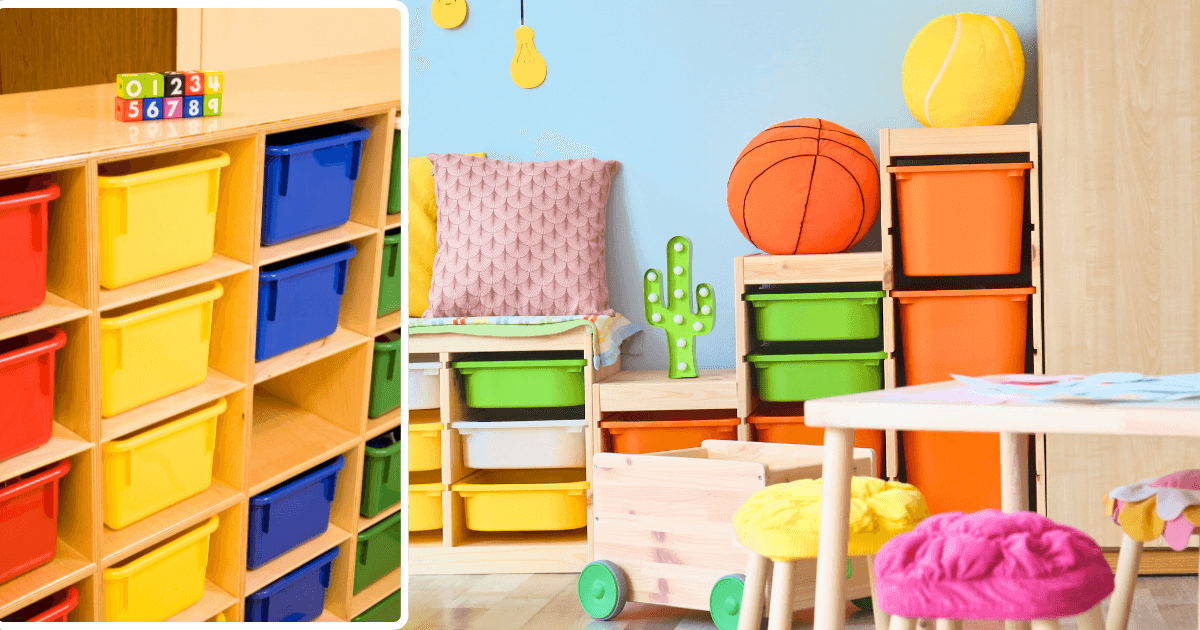
Use matching colored bins, folders, notebooks, and labels
Maintain consistency across all materials for each subject
How it promotes independence: Students quickly identify materials needed for each subject without teacher direction. This system particularly supports visual learners and students who struggle with text-based organization.
Teacher tip: “I use color-coding for everything—math is always blue, reading is red, science is green, and social studies is yellow. My students can instantly find what they need, and it’s especially helpful during transitions between subjects.” —Ms. Garcia, 3rd grade teacher
2. Accessible Supply Stations
Implementation strategy:
Create designated areas for frequently used supplies
Use clear containers with picture and word labels
Organize similar items together (writing tools, adhesives, measuring tools)
Implement a check-out system for limited supplies if needed
How it promotes independence: Students access materials without teacher assistance and learn responsibility by properly using and returning shared resources.
Teacher tip: “I have three identical supply stations around my classroom to prevent bottlenecks. Each has the essentials, and students know they can get what they need without asking permission—they need to return items when finished.” —Mr. Johnson, 4th grade teacher
3. Visual Labeling Systems
Implementation strategy:
Label everything with both words and pictures/symbols
Use consistent fonts and visual styles
Place labels at the student’s eye level
Include both storage location and return location labels
How it promotes independence: Visual labels help all learners find and return materials independently. According to Advanced Autism, “Visual supports, such as schedules and graphic organizers, help students with diverse needs understand routines and expectations.”
Teacher tip: “My labels include both English and Spanish words, plus a clear image. This helps my English language learners navigate the classroom independently from day one.” —Ms. Rodriguez, kindergarten teacher
Teach specific organization methods for personal materials
Include checklists for what belongs in each space
Schedule regular time for organization maintenance
How it promotes independence: Students learn to manage their own materials and develop personal organizational habits that carry over to other settings.
Teacher tip: “Every Friday, we have a 10-minute ‘Folder Fix-Up’ where students organize their take-home folders and desk contents. This weekly routine has dramatically reduced lost papers and missing assignments.” —Ms. Thompson, 2nd grade teacher
5. Learning Center Organization
Implementation strategy:
Create self-contained centers with all necessary materials
Include visual directions for center activities
Use consistent organizational systems across all centers
Implement clear procedures for cleanup and rotation
How it promotes independence: Well-organized centers allow students to navigate learning activities without constant teacher direction, promoting self-directed learning.
Teacher tip: “Each of my centers has a photo instruction card showing exactly what the completed setup should look like. Students check this during cleanup to ensure everything is ready for the next group.” —Mr. Williams, 1st grade teacher
Procedural Organization Systems That Foster Self-Management
1. Visual Schedules and Agendas
Implementation strategy:
Display the daily schedule prominently
Use movable pieces to show progress through the day
Include picture supports for non-readers
Teach students to reference the schedule independently
How it promotes independence: Students learn to anticipate transitions and prepare for upcoming activities without teacher prompts. This predictability reduces anxiety and builds time management skills.
Teacher tip: “When students ask, ‘What are we doing next?’ I point to our visual schedule. After a few weeks, I noticed students checking it themselves before asking me.” —Ms. Adams, special education teacher
2. Task Management Systems
Implementation strategy:
Implement must-do/may-do lists
Create task cards or menus for independent work time
Teach students to track completion with checklists
Gradually increase the number of self-managed tasks
How it promotes independence: Students learn to manage their work time and make choices within appropriate boundaries. According to TeachHub, “Prioritizing tasks helps students learn to manage their responsibilities effectively.”
Teacher tip: “I use a simple red/yellow/green cup system on each table. Students flip to yellow when they need help but can keep working, and red when they’re stuck. This allows me to prioritize who needs assistance while others work independently.” —Mr. Chen, 5th grade teacher
3. Self-Assessment and Reflection Routines
Implementation strategy:
Create simple rubrics for common tasks
Teach students to check their own work against the criteria
Implement regular reflection protocols
Provide tools for self-correction
How it promotes independence: Students develop the ability to evaluate their own work and make improvements without relying solely on teacher feedback.
Teacher tip: “Before turning in any writing assignment, my students use our ‘COPS’ checklist—Capitalization, Organization, Punctuation, Spelling. This simple self-editing routine has improved their work quality tremendously.” —Ms. Wilson, 3rd grade teacher
4. Classroom Job Systems
Implementation strategy:
Create meaningful roles that contribute to classroom functioning
Rotate jobs regularly to provide varied experiences
Include visual reminders of job responsibilities
Implement accountability systems for job completion
How it promotes independence: Classroom jobs build responsibility and ownership of the learning environment. Research from K12 Dive confirms that “In-classroom jobs for students, such as passing out papers and leading the line, are key elements in developing skills like planning and self-management.”
Teacher tip: “I’ve moved beyond basic jobs like line leader to more meaningful roles—technology manager, supply supervisor, peer tutor. These jobs give students real responsibility and build skills they’ll use throughout life.” —Ms. Patel, 4th grade teacher
5. Problem-Solving Protocols
Implementation strategy:
Teach and post a simple problem-solving process
Create visual decision trees for common issues
Establish “Ask3 Before Me” or similar peer-assistance routines
Acknowledge and celebrate independent problem-solving
Teacher tip: “We use a four-step problem-solving protocol: 1) Name the problem, 2) Think of solutions, 3) Choose and try one, 4) Evaluate if it worked. Having this consistent approach has dramatically reduced the number of small problems brought to me.” —Mr. Jackson, 2nd grade teacher
Implementation: Building Independence Through Gradual Release
Effective classroom organization systems don’t create independence overnight. Consider this gradual implementation approach:
Phase 1: Explicit Teaching and Modeling
Directly teach each organizational system’s purpose and procedures
Model proper use through think-alouds and demonstrations
Provide guided practice with immediate feedback
Use visual supports to reinforce expectations
Phase 2: Supported Independence
Implement regular routines that utilize organizational systems
Provide reminders and prompts as needed
Acknowledge and celebrate successful independent use
Make adjustments based on observations of student success
Phase 3: Full Independence with Accountability
Gradually remove scaffolds as students demonstrate mastery
Implement peer teaching of systems to new students
Involve students in evaluating and improving organizational systems
Connect classroom organization skills to broader life applications
Addressing Diverse Learner Needs
While thoughtful organization benefits all students, consider these adaptations for diverse learners:
For Students with Executive Functioning Challenges
Provide individual visual checklists for multi-step processes
Use color-coding consistently across all materials
Implement digital organization tools when appropriate
Break down organizational tasks into smaller steps
Ensure all materials are accessible from appropriate heights
Consider container types that are easy to open and manipulate
Implement assistive technology for organization when needed
Create clear pathways to all organizational systems
Success Story: Transformation Through Organization
Fifth-grade teacher Ms. Rivera transformed her classroom management approach by implementing strategic organization systems. “I was spending so much time managing materials and answering the same questions repeatedly,” she recalls. “It was exhausting and took away from actual teaching time.”
She began by creating clear visual labels for all materials and establishing consistent color-coding across subjects. Next, she implemented visual schedules and task management systems that students could navigate independently. Finally, she taught explicit problem-solving protocols that empowered students to resolve minor issues without teacher intervention.
“The change was remarkable,” she reports. “Within two months, my students were managing transitions independently, accessing materials without asking, and solving many of their own problems. Not only did this free me up to work with students who needed extra support, but I watched my students grow in confidence and responsibility. The organizational skills they developed extended beyond our classroom—parents reported seeing more organization at home, too.”
Overcoming Common Challenges
Challenge: Initial Time Investment
Solution: Start small with one system at a time. The front-end investment in teaching organizational systems pays off exponentially in time saved throughout the year.
Challenge: Maintaining Consistency
Solution: Build regular maintenance routines into your schedule. Friday afternoon “reset” times or daily end-of-period cleanup routines help maintain organizational systems.
Challenge: Student Resistance
Solution: Involve students in creating and evaluating organizational systems. When students help design the systems, they develop greater buy-in and ownership.
Challenge: Budget Limitations
Solution: Focus on systems over products. An effective organization doesn’t require expensive materials—consistent labeling, clear procedures, and thoughtful arrangement of existing resources can create significant improvements.
Final Thoughts: Organization as a Life Skill
Classroom organization systems do more than create an efficient learning environment—they develop life skills that benefit students long after they leave our classrooms. As noted by TeachHub, “Skills learned in a self-organized classroom contribute to lifelong organization and success.”
When we invest time in creating and teaching effective organization systems, we’re not just making our classrooms run more smoothly—we’re equipping students with executive functioning skills that will serve them throughout their academic careers and into adulthood. The independence fostered through thoughtful classroom organization transfers to other settings, creating more capable, confident, and self-sufficient learners.
What classroom organization systems have you found most effective in promoting student independence? Share your experiences in the comments below!