Fine Motor Skills: 15 Activities That Prepare Little Hands for Writing
As parents and educators, we often focus on teaching children their ABCs and 123s. Still, before a child can successfully write these symbols, they need to develop the physical foundation for writing—their fine motor skills.
Fine motor skills involve the coordination of small muscles in the hands and fingers, working together with the eyes to perform precise tasks. According to Child Development Australia, these skills are essential building blocks for writing readiness and include hand strength, proper pencil grasp, hand-eye coordination, and object manipulation.
“The development of fine motor skills is actually more predictive of academic success than early reading skills,” explains Dr. Emily Carter, pediatric occupational therapist. “When children have strong hand muscles and coordination, they can focus on learning to form letters rather than struggling with the physical act of writing.”
The good news? You don’t need expensive equipment or formal lessons to develop these crucial skills. Here are 15 engaging, play-based activities that will help prepare your child’s hands for writing success.
Activities for Developing Hand Strength
Strong hand muscles provide the foundation for sustained writing without fatigue. These activities focus on building that essential strength.
1. Play-Dough Workouts
Materials needed:
Play-dough (homemade or store-bought)
Small tools like plastic knives, cookie cutters, and rolling pins
How it works: Manipulating play-dough provides excellent resistance training for little hands. Encourage your child to squeeze, pinch, roll, flatten, and poke the dough. For an added fine motor challenge, have them:
Roll tiny balls using just their fingertips
Press small objects like beads or buttons into the dough and then pick them out
Roll “snakes” and form them into letters
Cut shapes with plastic knives or cookie cutters
According to ACT Therapy Services, activities such as play-dough manipulation significantly enhance hand and finger strength, which directly translates into better pencil control.
2. Spray Bottle Activities
Materials needed:
Small spray bottle filled with water
Optional: food coloring, paper, or plants
How it works: The squeezing motion required to use a spray bottle builds hand strength in a fun, purposeful way. Try these variations:
Water plants indoors or outdoors
Spray colored water on the snow in winter
Create spray bottle art by spraying colored water onto paper
“Erase” chalk drawings on the sidewalk
This activity is particularly effective because it requires sustained pressure and repeated squeezing, building endurance in hand muscles.
3. Paper Crumpling Challenges
Materials needed:
Various types of paper (newspaper, construction paper, tissue paper)
Container or target
How it works: This simple activity delivers powerful hand-strengthening benefits:
Have your child tear paper into smaller pieces
Ask them to crumple each piece into a tight ball using just one hand
Create a game by tossing the paper balls into a target
For added challenge, try different types of paper that offer varying resistance. Newspaper provides more resistance than tissue paper, for example.
School Specialty notes that tearing and crumpling paper are excellent activities for developing the hand strength needed for proper pencil grip and control.
Activities for Developing Pincer Grasp
The pincer grasp—using the thumb and index finger to pick up small objects—is crucial for proper pencil hold. These activities refine this essential skill.
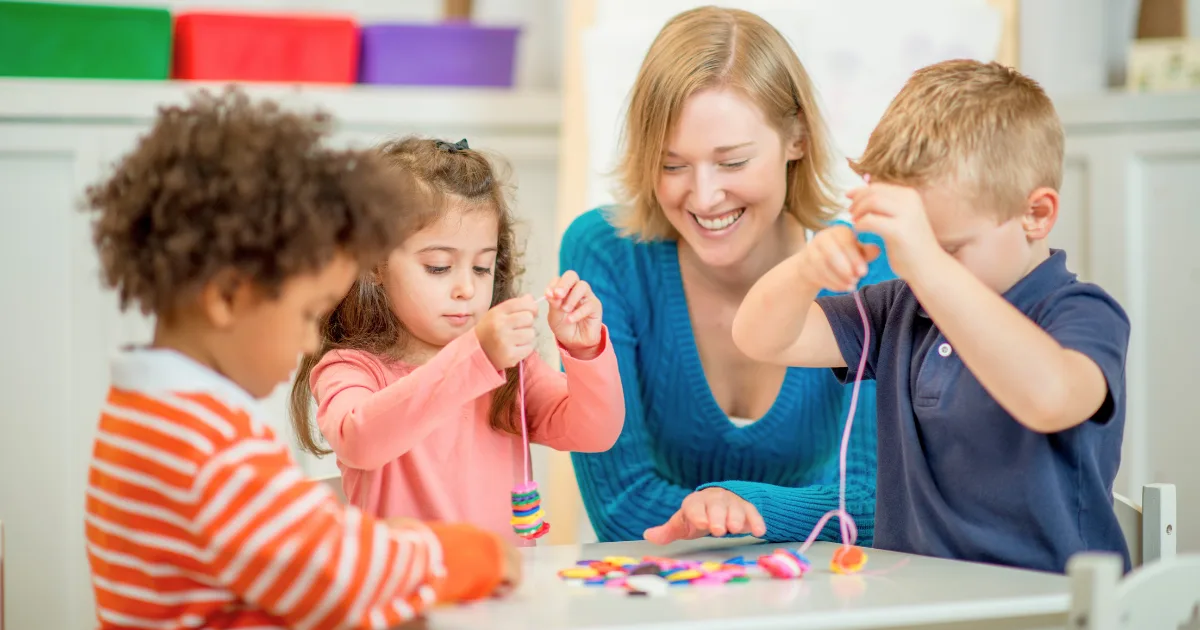
4. Bead Stringing
Materials needed:
Various-sized beads (larger for beginners, smaller as skills progress)
String, yarn, or pipe cleaners
How it works: Stringing beads requires children to use their pincer grasp while also incorporating hand-eye coordination and concentration:
Start with larger beads and a thick string for beginners
Progress to smaller beads and thinner string as skills develop
Create patterns to add cognitive challenge
Make necklaces, bracelets, or decorations
According to Skill Point Therapy, activities like bead stringing directly strengthen the pincer grasp needed for proper pencil control.
5. Clothespin Activities
Materials needed:
Spring-type clothespins
Containers, cardboard, or paper plates
Optional: items to sort or pictures to match
How it works: The squeezing motion of clothespins provides excellent resistance training for the thumb, index, and middle fingers—exactly the fingers used in a proper pencil grip:
Clip clothespins around the edge of a paper plate or container
Use clothespins to transfer small objects between containers
Match clothespins to colored dots
Create clothespin number or letter matching games
For younger children, start with clothespins that require less pressure, and gradually introduce more resistant ones as their strength develops.
6. Tweezer Transfer Games
Materials needed:
Child-friendly tweezers or tongs
Small objects (pom-poms, beads, cereal pieces)
Containers for sorting
How it works: Using tweezers to pick up and transfer small objects refines the pincer grasp while adding an element of precision:
Set up containers with small objects
Have your child use tweezers to transfer items between containers
Add sorting challenges by color, size, or type
Time the activity for added excitement
NAPA Center recommends this activity as particularly effective for developing the precise finger control needed for writing.
Activities for Developing Hand-Eye Coordination
Hand-eye coordination allows children to guide their pencil accurately on paper. These activities strengthen the connection between visual input and hand movements.
7. Tracing Activities
Materials needed:
Tracing templates (can be homemade or printed)
Different writing tools (crayons, markers, pencils)
Optional: sensory materials like sand or salt trays
How it works: Tracing helps children practice controlling their hand movements while following visual guides:
Start with simple straight lines, then progress to curved lines and basic shapes
Use finger tracing first, then implement writing tools
Try tracing in sensory materials like sand or salt before moving to paper
Create mazes of increasing complexity for children to trace through
According to The OT Toolbox, practicing pre-writing lines is essential for developing the strokes needed for letter formation.
8. Lacing Cards
Materials needed:
Lacing cards (store-bought or homemade from cardboard)
Yarn or shoelaces with stiff ends
How it works: Lacing activities develop hand-eye coordination, bilateral coordination (using both hands together), and fine motor precision:
Demonstrate how to push the lace through one hole and pull it out of another
Start with simple patterns and fewer holes for beginners
Progress to more complex patterns and smaller holes
Create themed lacing cards based on your child’s interests
This activity also builds the visual tracking skills needed to follow lines of text when reading.
9. Q-Tip Painting
Materials needed:
Q-tips or cotton swabs
Paint
Paper
Optional: dot-to-dot templates or letter outlines
How it works: Using the small tip of a cotton swab requires precision and control:
Create dot paintings by dipping Q-tips in paint
Follow lines or connect dots using a Q-tip painting
Trace letters or shapes with Q-tips
Create patterns or pictures using dots
According to Fun Strokes, the “Q-Tip Erase” activity targets precision, pincer grasp, fine motor skills, and hand-eye coordination, making it excellent preparation for writing.
Activities for Developing Finger Isolation
Finger isolation—the ability to move individual fingers independently—is crucial for the dexterity needed in writing. These activities help children gain better control of their fingers.
10. Finger Puppets
Materials needed:
Finger puppets (store-bought or homemade from paper or fabric)
Simple stories or songs
How it works: Using finger puppets encourages children to move individual fingers independently:
Place puppets on different fingers
Create simple stories or songs where each puppet has a role
Have children move just the finger with the puppet when it’s that character’s turn
This playful activity builds finger strength and dexterity while engaging children’s imagination.
11. Bubble Wrap Popping
Materials needed:
Bubble wrap of various bubble sizes
Optional: markers to create patterns or letters
How it works: Popping bubble wrap is not only satisfying but also great for developing finger strength and isolation:
Pop bubbles using just the thumb and index finger
Follow patterns or lines drawn on the bubble wrap
Pop bubbles to trace letters or numbers
Use different fingers to pop different sections
We Are Teachers suggests using bubble wrap for letter tracing, having children pop bubbles as they trace letters to make learning tactile and engaging.
12. Piano Fingers
Materials needed:
No materials required, though a toy piano or keyboard is optional
How it works: This activity focuses purely on finger isolation and dexterity:
Have children tap each finger one at a time on a table
Create patterns of finger taps to follow
Increase speed gradually
If available, use a real or toy piano to make the activity musical
This exercise directly translates to the finger control needed for writing, as it strengthens the same neural pathways used for fine motor control.
Activities for Developing Proper Pencil Grasp
A proper pencil grasp allows for comfortable, controlled writing. These activities help children naturally develop the tripod grasp (using thumb, index, and middle fingers) recommended for writing.
13. Vertical Surface Drawing
Materials needed:
Easel, wall-mounted paper, or tape paper to a wall
Various drawing tools (crayons, markers, chalk)
How it works: Drawing on vertical surfaces naturally promotes a proper wrist position and pencil grip:
Tape paper to a wall or use an easel
Provide various drawing tools
Encourage large arm movements that gradually become more refined
Try tracing or copying simple shapes and lines
According to Child Development Australia, drawing on vertical surfaces is one of the most effective activities for developing wrist stability and the proper grasp needed for writing.
14. Broken Crayon Drawing
Materials needed:
Short crayon pieces (1-2 inches long)
Paper
How it works: Short crayons naturally encourage a proper tripod grasp because they’re too small to hold with a fisted grip:
Break crayons into small pieces (about 1-2 inches long)
Encourage drawing or coloring activities
Observe how the small size forces children to use their fingertips
This simple adaptation of a familiar activity can make a significant difference in developing proper pencil grasp.
15. Squeeze and Write
Materials needed:
Small sponges, stress balls, or therapy putty
Writing tools
Paper
How it works: This two-step activity combines strengthening with immediate application:
Have the child squeeze a small sponge, stress ball, or therapy putty for 30 seconds
Immediately after, have them practice writing or drawing
Repeat the sequence several times
The squeezing action warms up and activates the hand muscles, preparing them for more controlled fine motor activities. According to occupational therapists, this warm-up can significantly improve pencil control and writing endurance.
Integrating Fine Motor Activities Into Daily Life
While dedicated activity time is valuable, you can also incorporate fine motor skill development into everyday routines:
Mealtime Opportunities
Using utensils
Opening containers
Pouring from small pitchers
Helping to set the table
Dressing Skills
Buttoning and unbuttoning
Zipping and unzipping
Putting on socks
Tying shoes (for older children)
Bath Time Fun
Squeezing water from sponges
Using squeeze bottles
Picking up small floating toys
Drawing with bath crayons
When to Expect Writing Readiness
While every child develops at their own pace, ACT Therapy Services provides these general handwriting milestones:
12-18 months: Imitating spontaneous scribbles
19-24 months: Imitating vertical and horizontal strokes and drawing circles
2.5-3 years: Copying vertical lines, horizontal lines, and circles accurately
4-5 years: Copying a cross, square, triangle, and ‘X’; beginning to practice letter formation
5 years: Establishing hand dominance for fine motor activities
Remember that rushing to write before a child has developed the necessary fine-motor foundation can lead to poor habits that are difficult to correct later. Focus on making fine motor development playful and pressure-free.
Signs Your Child May Need Additional Support
While all children develop at different rates, certain signs might indicate a need for additional support with fine motor skills:
Avoiding fine motor activities or showing frustration when attempting them
Consistently using a fisted grasp on writing tools past age 3-4
Applying too much or too little pressure when writing or drawing
Struggling with self-care tasks like buttoning or using utensils
Switching hands frequently during fine motor tasks
If you notice these signs persisting, consider consulting with an occupational therapist who specializes in pediatric development. Early intervention can make a significant difference in a child’s writing journey.
Conclusion: Building Skills Through Play
The beauty of fine motor development is that it can happen naturally through play. The 15 activities outlined above not only build the physical skills needed for writing but also create opportunities for creativity, problem-solving, and quality time together.
By incorporating these activities into your routine, you’re setting your child up for writing success while keeping learning enjoyable. Remember, strong fingers lead to confident writers—and it all begins with play!
What fine motor activities have worked well for your child? Share your experiences in the comments below!