Play School Near Me: The Benefits of Play-Based Early Education
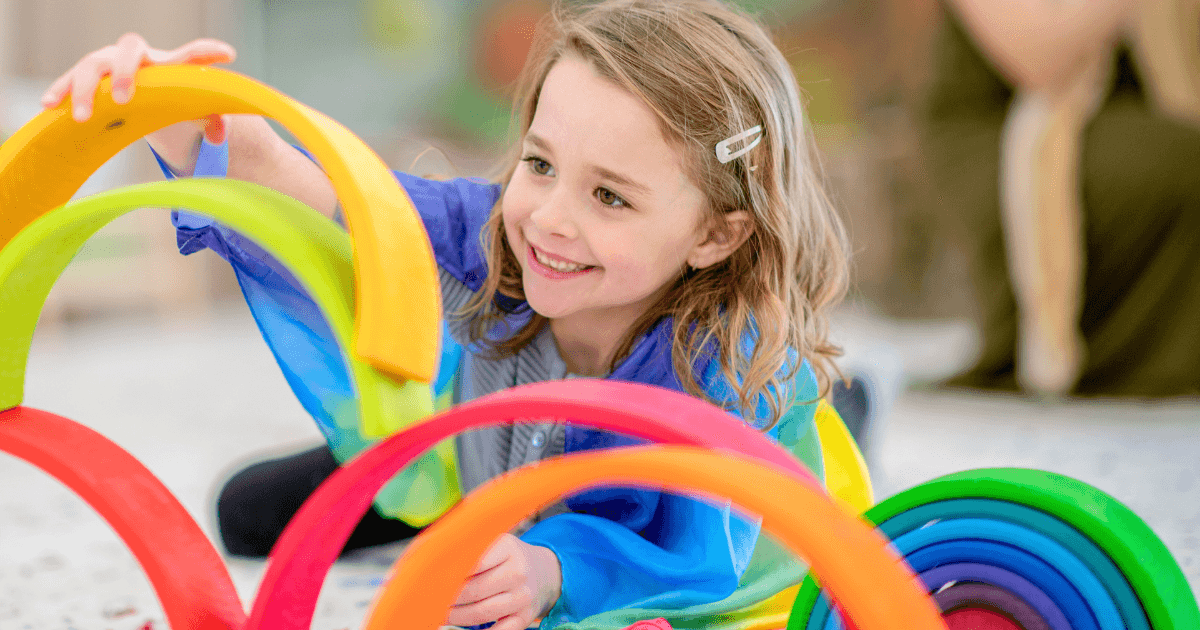
Last week, I observed something remarkable at my daughter’s play-based preschool. A group of four-year-olds had transformed the dramatic play area into a “veterinary hospital.” They were using blocks as “medicine,” stuffed animals as “patients,” and had created a complex check-in system using clipboards and scribbled notes. Without any adult direction, they were taking turns being veterinarians, receptionists, and pet owners—negotiating roles, solving problems, and using sophisticated vocabulary I didn’t even know they possessed.
This wasn’t just cute pretend play. It was learning in its most natural and effective form.
If you’re searching for “play school near me,” you’re likely considering a play-based approach to early education. But what exactly does “play-based” mean, and why do many early childhood experts consider it the gold standard for young children’s learning? Let’s explore the substantial benefits of play-based early education and why it might be the perfect choice for your child.
What Is Play-Based Early Education?
Before diving into benefits, it’s important to understand what play-based education truly means—and what it doesn’t.
Play-Based vs. Academic Approaches
Play-based education stands in contrast to more academic or didactic approaches:
Play-based approach:
- Learning occurs primarily through child-initiated activities
- Teachers serve as facilitators who extend learning through thoughtful interactions
- Curriculum emerges from children’s interests and questions
- Skills are developed through meaningful, contextualized experiences
- Children have significant choice in their activities
Academic approach:
- Learning is primarily teacher-directed
- Focus on explicit instruction in academic skills
- Predetermined curriculum sequence
- Greater emphasis on worksheets, drills, and structured lessons
- More structured daily schedule with less choice time
According to Dr. Kathy Hirsh-Pasek, a leading researcher in child development at Temple University, “Play-based learning is not just about letting children play freely all day. It’s about creating purposeful play experiences where children can explore, experiment, and discover—with skilled educators who know how to extend learning through these experiences.”
Types of Play in Early Education
Play-based programs typically incorporate several types of play:
Free play: Completely child-directed activities where children choose what, how, and with whom to play
Guided play: Teacher-supported play where adults scaffold learning by asking questions, suggesting materials, or introducing concepts within play contexts
Game play: Structured activities with rules that teach specific skills while maintaining playful engagement
Outdoor play: Exploration of natural environments that supports physical development, risk assessment, and scientific thinking
The Institute of Education Sciences notes that the most effective early education programs incorporate a balance of these play types, with free play forming the foundation but guided play strategically introduced to support specific learning goals.
The Research-Backed Benefits of Play-Based Learning
The case for play-based education isn’t just philosophical—it’s grounded in robust research. Here’s what the evidence tells us about the benefits:
1. Cognitive Development and Academic Readiness
Contrary to what some might assume, play-based approaches don’t sacrifice academic readiness—they enhance it in developmentally appropriate ways:
- Problem-solving skills: A 2022 study published in Developmental Psychology found that children in play-based programs demonstrated stronger problem-solving abilities than peers in academic-focused programs.
- Language development: Research from the American Academy of Pediatrics shows that play-based learning environments foster richer vocabulary and more complex language use, particularly during dramatic play.
- Early math concepts: Children naturally explore mathematical concepts like sorting, patterning, and spatial relationships through play with blocks, manipulatives, and other open-ended materials.
- Scientific thinking: Play inherently involves hypothesizing, testing, and revising ideas—the foundations of scientific thinking. When children ask “What happens if…?” during play, they’re engaging in the scientific method.
As noted by early childhood expert Dr. Alison Gopnik, “Children are designed by evolution to be powerful learners and explorers, to adapt to complex environments, and to flexibly consider multiple options. Play is nature’s way of supporting this learning.”
2. Social-Emotional Development
Perhaps the most compelling advantage of play-based education is its impact on social-emotional skills—abilities increasingly recognized as critical for long-term success:
- Self-regulation: Through play, children practice controlling impulses, managing emotions, and focusing attention—skills linked to academic achievement and mental health.
- Empathy and perspective-taking: Role-play and dramatic play help children understand others’ feelings and viewpoints, laying the groundwork for empathy and social awareness.
- Conflict resolution: Play naturally creates situations where children must negotiate, compromise, and resolve disagreements, developing crucial interpersonal skills.
- Emotional resilience: Play allows children to process complex emotions and experiences in a safe context, building emotional vocabulary and coping strategies.
According to a landmark study from the Harvard Center on the Developing Child, these social-emotional skills are stronger predictors of life success than academic abilities alone—and play is the optimal context for developing them.
3. Creativity and Innovative Thinking
In our rapidly changing world, the ability to think creatively and adapt to new situations is increasingly valuable:
- Divergent thinking: Play encourages children to generate multiple solutions and possibilities rather than seeking a single “right” answer.
- Flexibility: When children transform objects and ideas during play (a block becomes a phone, then a car, then a building), they develop cognitive flexibility.
- Risk-taking: Play creates low-stakes opportunities to try new approaches and learn from mistakes, fostering a growth mindset.
- Originality: Without prescribed outcomes, children develop truly original ideas and approaches during play.
The World Economic Forum consistently lists creativity among the top skills needed for future workforce success—and play-based learning nurtures this capacity from the earliest years.
4. Physical Development and Health
Play-based programs typically prioritize physical activity and movement, supporting crucial developmental needs:
- Gross motor skills: Running, climbing, jumping, and balancing during outdoor play develop coordination and strength.
- Fine motor development: Manipulating small objects, using art materials, and engaging in sensory play build the hand muscles and coordination needed for writing.
- Sensory integration: Play with varied textures, sounds, and materials helps children process sensory information effectively.
- Healthy habits: Active play establishes patterns of physical activity that can last a lifetime, combating childhood obesity and related health concerns.
The American Academy of Pediatrics emphasizes that physical play isn’t just about physical health—it’s essential for brain development, stress regulation, and overall well-being.
5. Intrinsic Motivation and Love of Learning
Perhaps most importantly, play-based education nurtures children’s natural curiosity and joy in learning:
- Autonomy: When children direct their own learning through play, they develop agency and internal motivation.
- Mastery: Play provides natural opportunities to practice skills until mastery is achieved, driven by the child’s own interest.
- Purpose: Play allows children to connect learning to meaningful contexts that matter to them.
- Engagement: Children remain deeply engaged in playful learning, developing longer attention spans and deeper focus.
Research from psychologist Edward Deci shows that these elements—autonomy, mastery, and purpose—are the foundations of intrinsic motivation, which predicts academic success far better than external rewards or pressures.
What Play-Based Learning Looks Like in Practice
When searching for “play school near me,” understanding what quality play-based education looks like in practice can help you evaluate your options:
The Physical Environment
Quality play-based classrooms typically feature:
- Well-defined learning centers: Areas for dramatic play, blocks, art, reading, science, and sensory exploration
- Open-ended materials: Items that can be used in multiple ways (blocks, loose parts, natural materials)
- Accessible organization: Materials stored where children can independently access and return them
- Outdoor spaces: Rich opportunities for nature exploration, physical play, and sensory experiences
- Documentation: Photos, notes, and children’s work displayed to make learning visible
The Daily Schedule
A typical day in a play-based program might include:
- Arrival and choice time: Children select from available activities upon arrival
- Morning meeting: Brief group time for songs, stories, and planning the day
- Extended play period: Substantial time (often 60+ minutes) for deep engagement in self-chosen activities
- Small group explorations: Teacher-facilitated activities based on children’s interests
- Outdoor time: Significant time outdoors in all but the most extreme weather
- Reflection: Opportunities to share discoveries and consider next steps
The Teacher’s Role
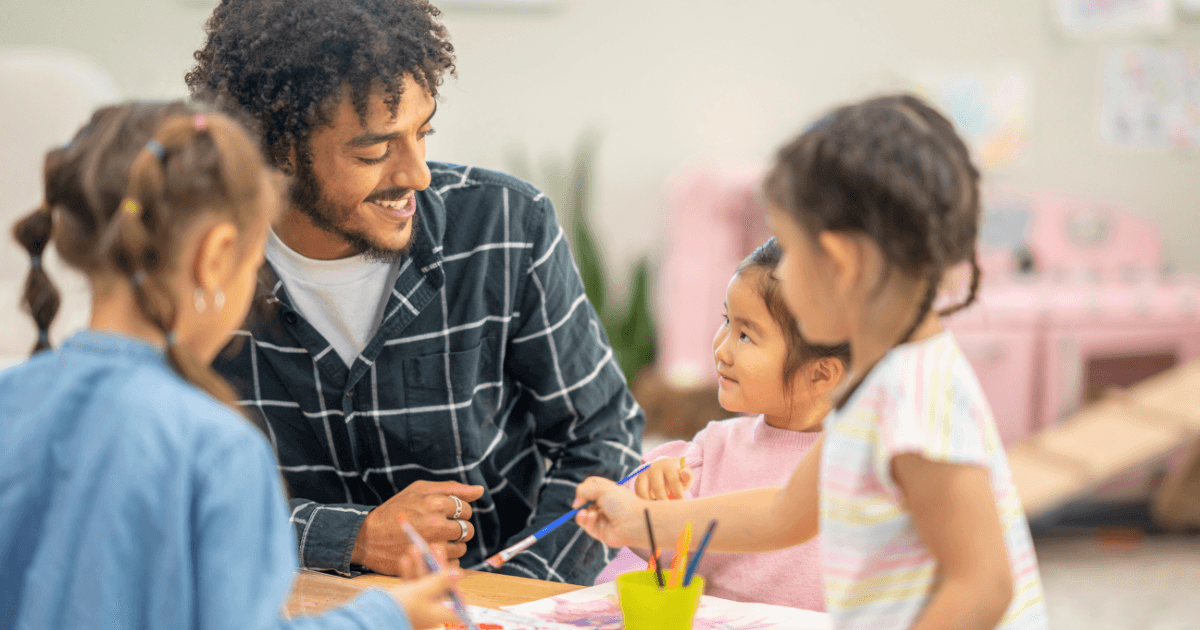
In play-based settings, skilled teachers:
- Observe carefully to understand children’s interests and developmental needs
- Ask open-ended questions that extend thinking
- Introduce materials and ideas that enrich play
- Document learning to make it visible to children and families
- Create environments that inspire exploration
- Support social interactions and problem-solving
- Recognize and build on teachable moments within play
As early childhood educator Maggie Desmond explains, “In play-based programs, teachers aren’t less active—they’re differently active. Instead of standing at the front delivering information, they’re down at the children’s level, noticing, wondering, and extending learning through thoughtful interactions.”
Finding Quality Play-Based Programs Near You
If you’re searching for “play school near me,” here are strategies for finding quality play-based programs in your area:
What to Look For
- Philosophy and approach: Ask about the program’s educational philosophy and how play is incorporated into learning.
- Environment: Look for rich, well-organized spaces with diverse materials and evidence of children’s work.
- Interactions: Observe how teachers engage with children—are they respectful, curious, and responsive?
- Outdoor emphasis: Quality play-based programs prioritize outdoor time in all weather.
- Family engagement: Programs should welcome family involvement and communicate learning processes, not just products.
Questions to Ask
When touring potential schools, consider asking:
- “How do you balance child-led and teacher-guided activities?”
- “How do you support academic skills within play contexts?”
- “How much time do children spend outdoors each day?”
- “How do you document and share children’s learning with families?”
- “How do teachers extend learning when they observe children’s interests?”
Resources for Finding Play-Based Programs
- National Association for the Education of Young Children (NAEYC): Search for accredited programs that follow developmentally appropriate practices
- North American Reggio Emilia Alliance: Directory of Reggio-inspired programs
- American Montessori Society: While not purely play-based, many Montessori programs incorporate significant self-directed learning
- Waldorf Early Childhood Association: Directory of Waldorf early childhood programs
- Local parenting groups and social media communities often share recommendations and experiences
The Future of Early Education: Play as Foundation
As we look toward the future of education in 2025 and beyond, the evidence increasingly points toward play-based approaches as the most effective foundation for early learning. Major educational organizations including the National Association for the Education of Young Children and the American Academy of Pediatrics have issued strong statements supporting play as the primary vehicle for early learning.
Even as technology transforms many aspects of education, the fundamentals of how young children learn remain constant: through active engagement, meaningful relationships, and playful exploration of their world. The most innovative early education programs are finding ways to honor these developmental needs while preparing children for a rapidly changing future.
As Dr. Rebecca Isbell, early childhood expert, notes: “Play isn’t just how children learn—it’s how they practice being human. Through play, children develop the cognitive flexibility, creative problem-solving, and collaborative skills they’ll need for success in a future we can barely imagine.”
Conclusion: The Gift of Play-Based Learning
When you search for “play school near me,” you’re seeking more than just childcare or academic preparation—you’re looking for an environment that honors childhood while laying the foundations for lifelong learning and well-being.
Quality play-based early education offers children the gift of joyful, meaningful learning experiences that respect their development and nurture their innate curiosity. It recognizes that young children don’t need to choose between having a joyful childhood and building skills for future success—when learning happens through play, they can have both.
As you consider options for your child, remember the words of early childhood pioneer Friedrich Froebel: “Play is the highest expression of human development in childhood, for it alone is the free expression of what is in a child’s soul.”
What questions do you have about play-based early education? Share your thoughts and experiences in the comments below!
Addressing Common Questions and Concerns
As you explore play-based options, you might encounter these common questions:
Research consistently shows that children from quality play-based programs enter kindergarten with strong foundational skills. A 2024 study in the Journal of Educational Psychology found that graduates of play-based preschools demonstrated equal or superior academic readiness compared to peers from academic preschools, plus stronger self-regulation and problem-solving abilities.
Play-based programs don’t ignore literacy—they embed it in meaningful contexts. Children develop pre-reading skills through story dictation, environmental print, dramatic play involving writing (like “restaurants” with menus), and rich language experiences. Research shows this approach builds stronger comprehension and motivation than drill-based methods.
Quality play-based programs do provide structure—just not the kind with children sitting at desks for extended periods. They offer clear routines, boundaries, and expectations within a flexible framework that respects children’s autonomy and developmental needs.
Good play-based programs make learning visible through documentation—photos, videos, learning stories, and displays of children’s work with teacher commentary. This documentation often provides deeper insight into children’s thinking than worksheets or test scores ever could.