Music and Movement: 10 Activities That Develop Coordination and Rhythm
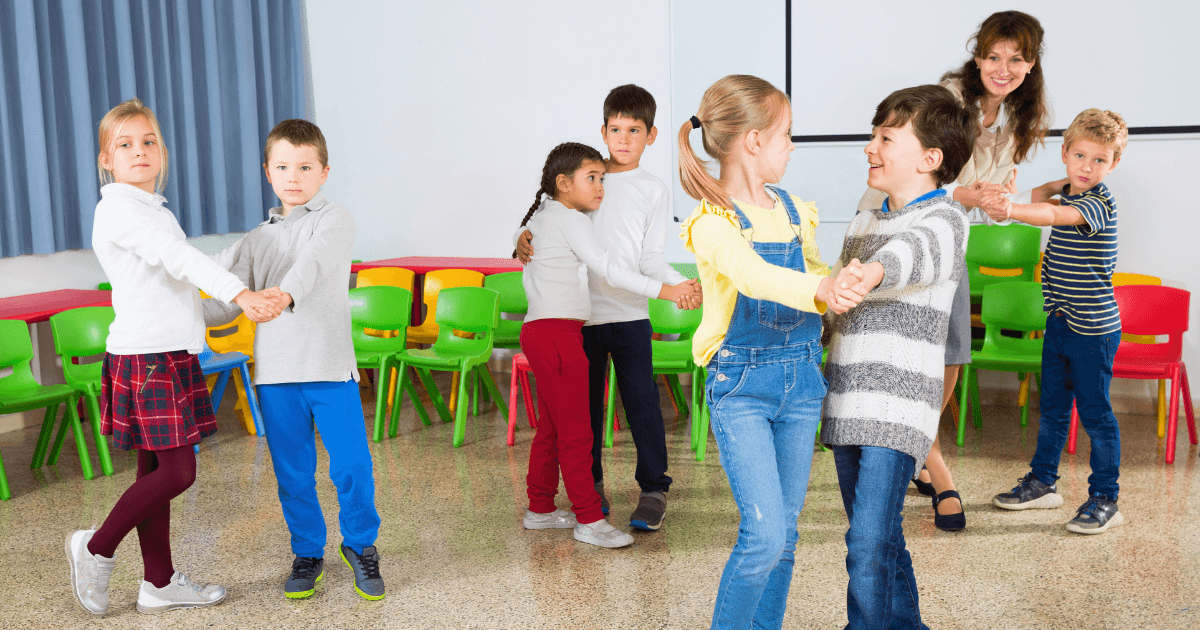
The sound of a drum beating, little feet stomping, and children laughing—few things are as joyful as watching children engage with music through movement. But beyond the immediate fun, these experiences are building crucial neural pathways that support development across multiple domains.
According to the Music Institute, during the first five years of life, a child’s brain forms over one million new neural connections per second. Music and movement activities provide rich, multisensory experiences that strengthen these connections, supporting everything from physical coordination to emotional regulation and cognitive development.
Let’s explore ten engaging music and movement activities that develop coordination and rhythm while creating joyful learning experiences for children.
The Developmental Benefits of Music and Movement
Before diving into specific activities, it’s helpful to understand exactly how music and movement support children’s development:
Physical Development
- Gross motor skills: Large body movements like jumping, marching, and dancing
- Fine motor skills: Smaller movements like finger plays and playing simple instruments
- Balance and coordination: Controlling body movements in response to music
- Spatial awareness: Understanding where the body is in relation to objects and other people
Cognitive Development
- Pattern recognition: Understanding sequences and repetition in music and movement
- Memory: Recalling lyrics, movements, and sequences
- Attention: Focusing on changing musical cues and responding appropriately
- Language development: Building vocabulary through songs and musical concepts
Social-Emotional Development
- Self-expression: Communicating feelings through movement and music
- Self-regulation: Controlling impulses (like in freeze dance games)
- Cooperation: Working together in group movement activities
- Cultural awareness: Experiencing music and dance from diverse traditions
Research from Music Science Life indicates that children who regularly engage in music and movement activities show higher levels of happiness, lower stress levels, and enhanced cognitive development.
10 Music and Movement Activities for Coordination and Rhythm
1. Rhythm Stick Patterns
Age range: 3-8 years
Materials needed: Rhythm sticks (or wooden dowels/unsharpened pencils)
Developmental benefits: Beat competency, bilateral coordination, pattern recognition, listening skills
How to play:
- Give each child a pair of rhythm sticks.
- Begin with simple patterns: tap-tap, tap-tap (pause), tap-tap, tap-tap.
- Gradually introduce more complex patterns: tap-cross-tap-tap or tap-floor-tap-together.
- For older children, try call and response patterns where you create a rhythm and they echo it back.
Variations:
- Add movement by having children march or step to the beat while playing
- Incorporate different surfaces to create varied sounds
- Let children take turns being the pattern leader
Why it works: Rhythm sticks provide immediate tactile and auditory feedback. The physical act of tapping the sticks engages both sides of the brain, supporting coordination between the left and right hemispheres—a crucial foundation for many learning skills.
2. Freeze Dance with Feeling
Age range: 2-8 years
Materials needed: Music player, variety of music with different tempos and styles
Developmental benefits: Impulse control, listening skills, emotional expression, balance
How to play:
- Play music and encourage children to dance freely.
- When the music stops, children “freeze” in position.
- Add an emotional or physical challenge for each freeze: “Freeze like you’re happy!” or “Freeze in a low position!”
- Resume the music and repeat with different challenges.
Variations:
- For younger children, simplify by just focusing on the basic freeze
- For older children, add more complex emotions or physical challenges
- Use different musical genres to inspire varied movement styles
Why it works: According to Ducklings Early Learning Center, freeze dance builds listening skills, reaction time, body control, and focus—all essential components of coordination. The emotional element adds a layer of self-expression and emotional literacy.
3. Ribbon Dance Exploration
Age range: 2-8 years
Materials needed: Ribbons attached to rings or sticks (about 2-3 feet long)
Developmental benefits: Spatial awareness, visual tracking, gross motor coordination, creativity
How to play:
- Demonstrate basic ribbon movements: circles, figure eights, waves, spirals.
- Play music with varied tempos and encourage children to move their ribbons in response.
- Suggest movement concepts: “Can your ribbon move high? Low? Fast? Slow?”
- Allow time for free exploration and creative movement.
Variations:
- Use scarves instead of ribbons for younger children
- Add specific challenges for older children: “Can you make your ribbon dance without moving your feet?”
- Incorporate color recognition by calling out colors for children to emphasize
Why it works: The visual feedback from the ribbon helps children connect their movements to spatial patterns. The flowing nature of ribbons encourages continuous, rather than jerky, movements—building smooth motor coordination and rhythm.
4. Body Percussion Orchestra
Age range: 3-8 years
Materials needed: None—just bodies!
Developmental benefits: Body awareness, sequencing, auditory discrimination, teamwork
How to play:
- Introduce different body percussion sounds: clapping, patting thighs, stomping, finger snapping, tongue clicking.
- Create simple patterns using one or two sounds.
- Gradually build to more complex patterns combining different sounds.
- Divide children into groups to create a layered “body percussion orchestra.”
Variations:
- Start with just clapping for very young children
- Add vocal sounds (like “shh” or “bum”) for additional variety
- For older children, create a conductor role who directs the “orchestra”
Why it works: Body percussion connects children directly to rhythm through their own bodies, without requiring any special equipment. This builds a fundamental sense of internal rhythm while developing coordination between different body parts.
5. Musical Obstacle Course
Age range: 3-8 years
Materials needed: Various obstacles (pillows, hula hoops, tape on floor), music player
Developmental benefits: Gross motor skills, following directions, rhythm awareness, balance
How to play:
- Set up a simple obstacle course with 4-6 stations.
- Assign a specific movement to each station: hop through hoops, crawl under a table, walk along a tape line, etc.
- Play music and have children move through the course in time with the beat.
- Vary the music tempo to challenge coordination.
Variations:
- For younger children, simplify with fewer stations and clearer paths
- For older children, add rhythmic challenges (like “take 3 quick steps, then 1 slow step”)
- Try different musical styles to inspire different movement qualities
Why it works: This activity combines the structure of an obstacle course with the freedom of musical expression. Children must coordinate their movements not only to navigate obstacles but also to match the musical tempo, creating a multi-layered coordination challenge.
6. DIY Rhythm Shakers
Age range: 2-8 years
Materials needed: Empty containers (plastic bottles, cardboard tubes), filling materials (rice, beans, beads), decorating supplies
Developmental benefits: Fine motor skills, cause and effect understanding, creativity, rhythm development
How to play:
- Create shakers by filling containers with different materials and securely sealing them.
- Explore the different sounds each shaker makes.
- Play simple follow-the-leader rhythm games with the shakers.
- Accompany familiar songs with shaker rhythms.
Variations:
- For very young children, use securely sealed, small plastic containers
- For older children, experiment with different fillers to create varied sounds
- Create a shaker “conversation” where children respond to each other’s rhythms
Why it works: Tinkerer Box explains that simple percussion instruments allow children to explore cause and effect, strengthen their hands, and experiment with sound and timing. The process of creating the instruments adds an additional layer of engagement and ownership.
7. Animal Movement Songs
Age range: 2-6 years
Materials needed: None required, optional animal pictures or puppets
Developmental benefits: Gross motor development, listening skills, imaginative play, vocabulary
How to play:
- Sing songs that incorporate animal movements, like “Walking in the Jungle” or “Down on Grandpa’s Farm.”
- Encourage children to move like each animal mentioned in the song.
- Discuss how different animals move: hop like a bunny, slither like a snake, gallop like a horse.
- Create your own animal movement song with the children’s input.
Variations:
- Add rhythm instruments to accompany different animals
- For older children, challenge them to move like animals to different musical tempos
- Create a guessing game where children take turns moving like an animal for others to guess
Why it works: Animal movements naturally incorporate a wide range of motor patterns—hopping, crawling, reaching, and more. By connecting these movements to music and rhythm, children develop coordination while engaging their imagination.
8. Parachute Play with Music
Age range: 3-8 years
Materials needed: Play parachute (or large sheet), music with varied tempos
Developmental benefits: Social cooperation, rhythm awareness, arm strength, listening skills
How to play:
- Have children stand in a circle holding the edge of the parachute.
- Play music and guide movement of the parachute to match the tempo and mood.
- Try different movements: gentle waves, high mountains, running in a circle while holding it.
- Incorporate rhythm patterns: shake-shake-stop or slow-slow-quick-quick-slow.
Variations:
- For younger children, focus on simple up and down movements
- Add a ball on top of the parachute to increase the challenge
- For older children, try more complex rhythm patterns or have them create their own
Why it works: Parachute activities naturally require group coordination and cooperation. Adding music creates an additional layer of rhythmic awareness while the parachute itself provides visual feedback about the group’s collective rhythm.
9. Drum Circle Stories
Age range: 4-8 years
Materials needed: Various drums or percussion instruments (or makeshift drums using buckets, pots, etc.)
Developmental benefits: Listening skills, creative expression, sequencing, fine and gross motor coordination
How to play:
- Arrange children in a circle, each with a percussion instrument.
- Begin telling a simple story that incorporates sound effects.
- Assign different sounds to represent characters or events in the story.
- As the story unfolds, children play their instruments at the appropriate moments.
Variations:
- For younger children, use a familiar story with simple sound cues
- For older children, let them help create the story and assign sounds
- Try different dynamics (loud/soft) and tempos (fast/slow) for emotional expression
Why it works: This activity combines narrative understanding with rhythmic expression. Children must listen carefully, anticipate their turn, and coordinate their movements to produce sounds at the right moment—building multiple aspects of coordination simultaneously.
10. Mirror Movement Game
Age range: 3-8 years
Materials needed: Music with a clear, moderate beat
Developmental benefits: Visual tracking, motor planning, social connection, rhythm synchronization
How to play:
- Pair children or have them face you as the leader.
- Play music with a steady beat.
- One partner creates simple movements to the music while the other mirrors them.
- Switch roles after a minute or two.
Variations:
- For younger children, start with very simple, large movements
- For older children, add more complex sequences or faster tempos
- Try mirroring without music first, then add musical elements gradually
Why it works: Mirroring activities develop observational skills and motor planning as children must carefully watch and reproduce movements. Adding music creates an additional layer of coordination as they must match both the visual pattern and the musical rhythm.
Adapting for Different Abilities and Needs
Music and movement activities can and should be accessible to all children. Here are some tips for adapting these activities:
For Children with Physical Disabilities
- Focus on the parts of the body that can move freely
- Provide stable seating for activities that can be done sitting down
- Adapt instruments with larger handles or attachment straps
- Partner activities where one child provides movement support to another
For Children with Sensory Sensitivities
- Offer noise-reducing headphones for activities with louder sounds
- Provide a visual schedule so children know what to expect
- Create a “sensory break” space for children who need a pause
- Consider the texture of materials (like ribbon handles) for children with tactile sensitivities
For Children with Attention Challenges
- Keep activities brief and engaging
- Use visual cues alongside verbal instructions
- Break down complex sequences into smaller steps
- Provide extra physical boundaries for movement activities (like carpet squares)
Incorporating Music and Movement Throughout the Day
These activities don’t need to be isolated events. Consider these ways to integrate music and movement naturally:
- Transitions: Use musical cues to signal clean-up time or transitions between activities
- Morning meetings: Start the day with a rhythmic greeting or movement activity
- Brain breaks: Incorporate short movement activities between more sedentary learning
- Outdoor time: Bring portable instruments outside for a different sensory experience
- Quiet time: Use gentle movement activities like ribbon dancing to calm energy before rest
Cultural Connections Through Music and Movement
Music and movement provide wonderful opportunities to explore diverse cultures. Consider:
- Learning simpledances from different cultural traditions
- Exploring instruments from around the world
- Singing songs in different languages
- Discussing how music and dance serve similar purposes across cultures
These cultural connections not only broaden children’s horizons but also help children from diverse backgrounds see their cultural traditions valued and celebrated.
The Lasting Impact of Music and Movement
The benefits of music and movement extend far beyond childhood. Research consistently shows that early rhythmic and coordination activities build neural pathways that support:
- Academic skills like reading and math
- Executive function abilities like focus and self-regulation
- Social skills like cooperation and empathy
- Emotional regulation and stress management
By making music and movement a regular, joyful part of children’s experiences, we’re not just developing coordination and rhythm—we’re building a foundation for lifelong learning, emotional well-being, and creative expression.
So put on some music, grab those rhythm sticks or ribbons, and start moving! The developmental benefits are profound, but the joy of the experience is what will keep children coming back for more.
What are your favorite music and movement activities? Share your experiences in the comments below!