Preschool Behavior Management: Positive Discipline Techniques That Work

Managing a classroom full of energetic preschoolers can feel like herding butterflies—beautiful, unpredictable, and constantly in motion. When challenging behaviors arise, as they inevitably will, educators and parents often find themselves wondering which approaches actually work without dampening children’s spirits or hindering their development.
The good news? Research in early childhood education has made significant strides in identifying positive discipline techniques that effectively guide young children’s behavior while nurturing their emotional development. Unlike punitive approaches that focus on what children shouldn’t do, positive discipline emphasizes teaching children what they should do, building skills that will serve them throughout life.
According to a 2025 study published in the Journal of Early Childhood Research, effective behavior management strategies not only reduce challenging behaviors but also “create productive learning environments and foster positive teacher-student relationships.” This comprehensive guide explores research-backed positive discipline techniques specifically designed for preschool-aged children, offering practical strategies that respect children’s dignity while effectively guiding their behavior.
Understanding the Preschool Mind: Why Traditional Discipline Often Falls Short
Before diving into specific techniques, it’s crucial to understand why traditional disciplinary approaches often fail with preschoolers. The preschool brain is still very much under construction, particularly in areas responsible for:
Impulse Control
The prefrontal cortex, which governs impulse control, isn’t fully developed until early adulthood. When we expect preschoolers to consistently control their impulses, we’re asking for neurological skills they simply haven’t developed yet.
Emotional Regulation
Preschoolers experience emotions intensely but lack the tools to manage them effectively. Their emotional responses often seem disproportionate to adults because they haven’t yet developed regulatory mechanisms.
Perspective-Taking
Young children are naturally egocentric—not out of selfishness, but because they’re still developing the cognitive ability to see situations from others’ perspectives. This developmental stage makes concepts like sharing challenging.
Language Development
Many behavior issues stem from frustration when children can’t effectively communicate their needs, feelings, or ideas. Limited vocabulary can lead to physical expressions of emotions.
Understanding these developmental realities helps us approach discipline as an opportunity to teach rather than punish. As noted by the Canadian Paediatric Society, “The goal of discipline is to guide and teach, not to punish.”
Setting the Foundation: Proactive Strategies for Preventing Challenging Behaviors
The most effective behavior management begins before challenging behaviors occur. These proactive strategies create an environment where positive behavior is more likely to flourish:
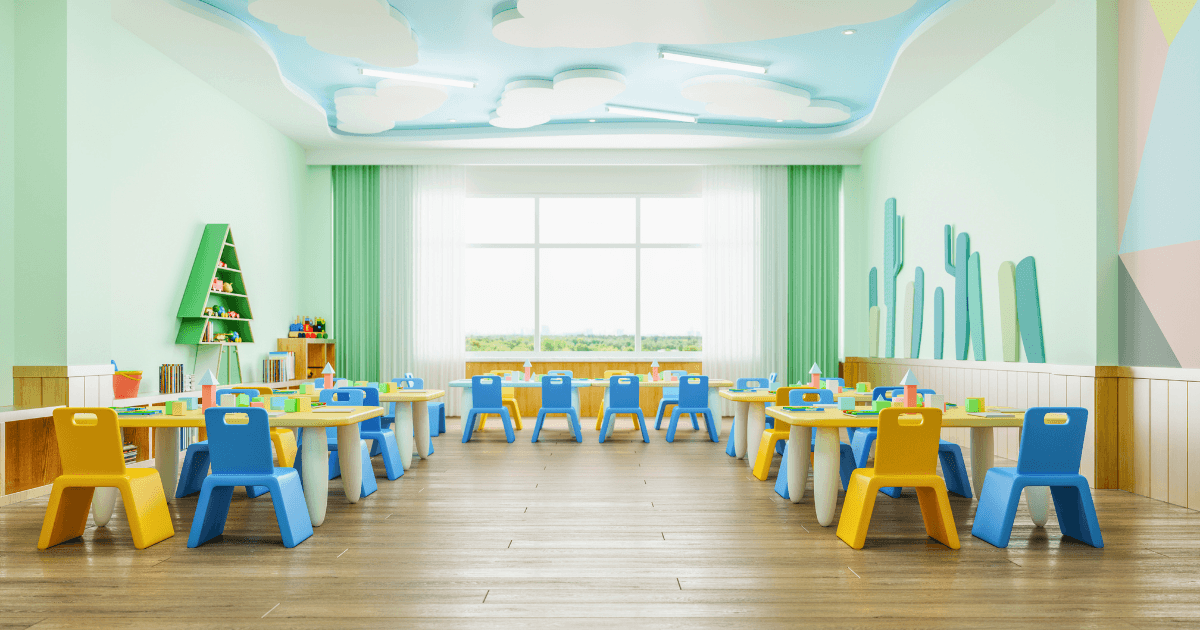
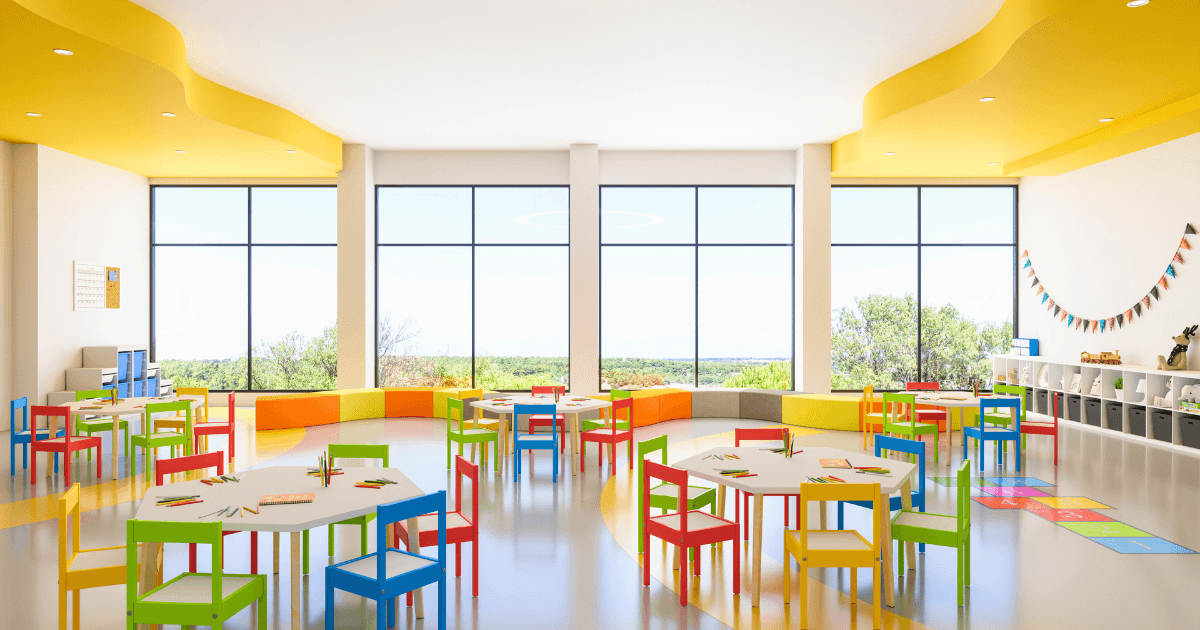
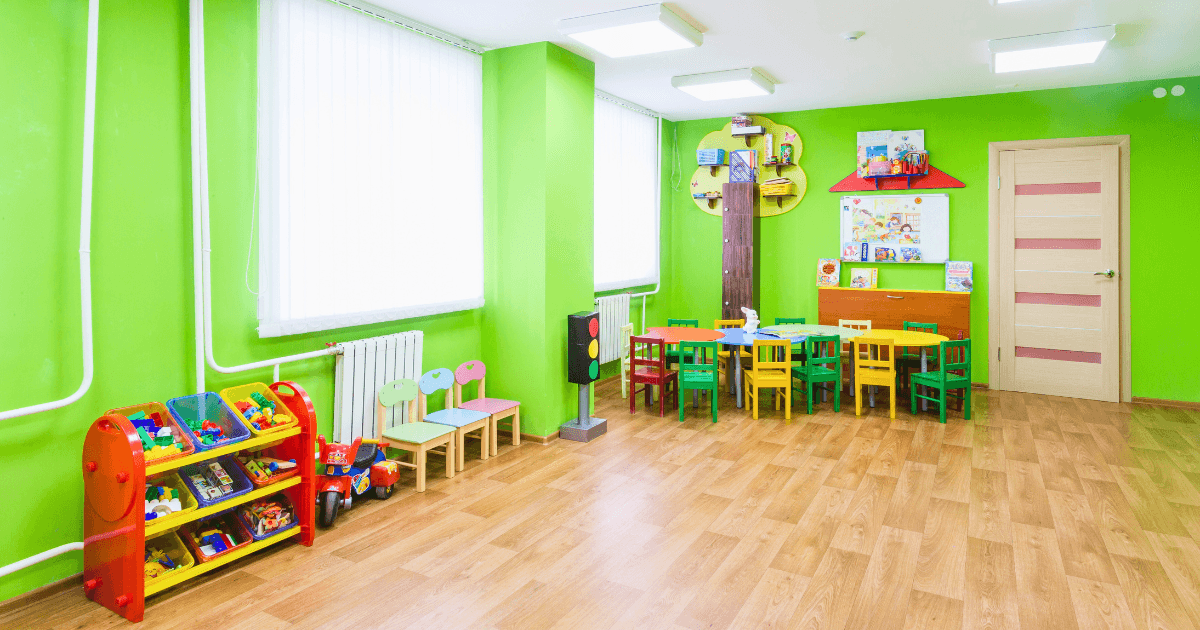
1. Thoughtful Classroom Design
Research consistently shows that physical environment significantly impacts behavior. According to Lillio, a well-organized classroom promotes smoother transitions and limits disruptions.
Practical Implementation:
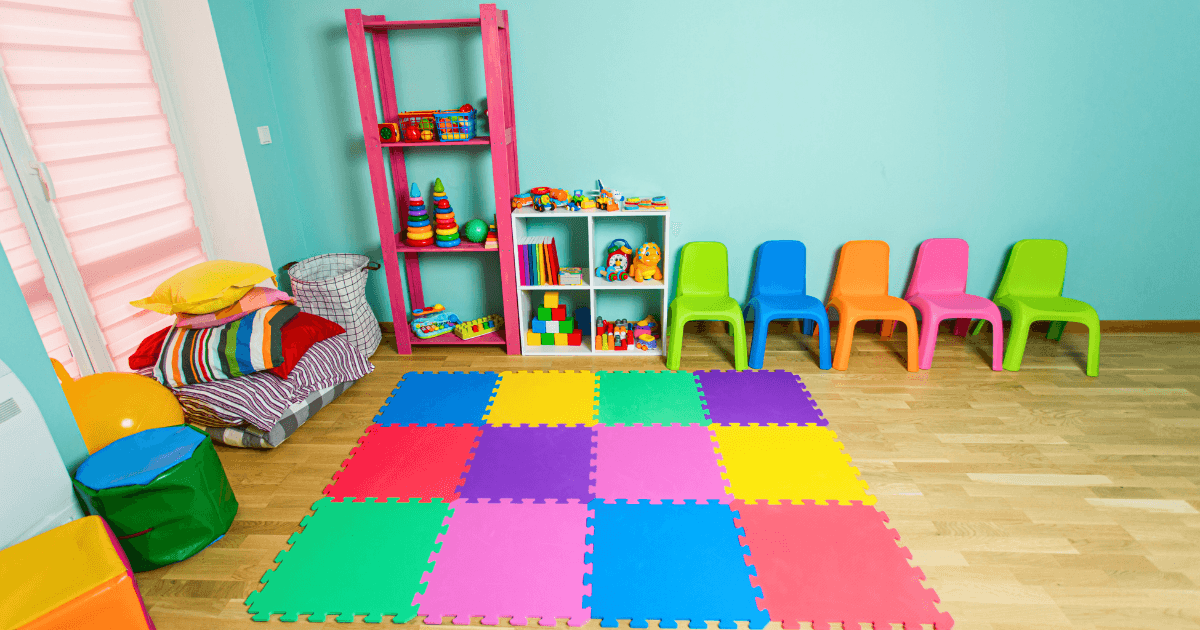
- Create distinct areas for different types of activities (quiet reading corners, active play spaces, art areas)
- Ensure clear sightlines for supervision while allowing children some privacy
- Reduce visual clutter that can overwhelm young children’s sensory systems
- Provide adequate materials to minimize conflicts over resources
- Consider traffic flow to prevent congestion and conflicts
2. Consistent Routines and Schedules
Predictability helps preschoolers feel secure and reduces anxiety-driven behaviors. When children know what to expect, they’re better able to regulate their behavior.
Practical Implementation:
- Establish and maintain consistent daily schedules
- Use visual schedules with pictures showing the day’s flow
- Prepare children for transitions with warnings and consistent signals
- Balance active and quiet activities throughout the day
- Include children in routine-setting when possible
3. Clear, Positively Stated Expectations
Young children respond better to knowing what to do rather than what not to do. Framing expectations positively guides behavior in constructive directions.
Practical Implementation:
- Limit classroom rules to 3-5 simple, positively stated expectations (e.g., “Walking feet” instead of “No running”)
- Involve children in creating classroom agreements when appropriate
- Illustrate rules with pictures and demonstrations
- Regularly review and practice expectations, especially after breaks
- Acknowledge when expectations are met
4. Relationship Building
Perhaps the most powerful preventative strategy is building strong, trusting relationships with each child. As noted by Athena Careers, “Discipline works best when it focuses on teaching correct behavior in a caring and consistent manner.”
Practical Implementation:
- Greet each child by name daily
- Schedule regular one-on-one time with each child
- Show interest in their lives outside the classroom
- Get down to their eye level when communicating
- Practice active listening when children speak
5. Teaching Emotional Literacy
Many challenging behaviors stem from children’s inability to identify and express their emotions appropriately. Teaching emotional vocabulary gives children tools to communicate instead of act out.
Practical Implementation:
- Incorporate books about feelings into regular reading
- Label emotions as they occur (“I see you’re feeling frustrated”)
- Create feelings charts with pictures and words
- Model appropriate expression of your own emotions
- Role-play different emotional scenarios
Responsive Strategies: Effective Techniques When Challenging Behaviors Occur
Even with the best prevention strategies, challenging behaviors will occur. These research-backed responsive techniques help address behaviors while teaching valuable skills:
1. Redirection
Redirection is one of the most effective techniques for preschoolers, shifting a child’s attention from inappropriate behavior to an acceptable alternative. The Canadian Paediatric Society recommends using the acronym REDIRECT:
- Reduce words (keep instructions simple)
- Embrace emotions (acknowledge feelings)
- Describe desired behavior
- Involve the child in finding solutions
- Reframe “no” into “yes” when possible
- Emphasize positive behavior
- Creatively approach situations
- Teach emotional recognition
Practical Implementation:
- For a child drawing on the table: “Tables are for eating and activities. Here’s paper for drawing.”
- For children arguing over a toy: “I see you both want the car. Here’s another one that goes just as fast.”
- For a child running indoors: “Walking feet inside. Let’s practice walking like a dinosaur to the next activity.”
2. Natural and Logical Consequences
Unlike punishment, which often has no relationship to the behavior, natural and logical consequences help children understand the direct impact of their actions. Natural consequences occur without adult intervention, while logical consequences are arranged by adults but directly related to the behavior.
Practical Implementation:
- Natural consequence: A child who refuses to wear a coat feels cold on the playground.
- Logical consequence: A child who throws sand must play elsewhere for 5 minutes since sand-throwing makes the sandbox unsafe.
- Logical consequence: A child who spills must help clean up (with assistance as needed).
The key is ensuring consequences are:
- Directly related to the behavior
- Respectful and reasonable
- Applied consistently
- Focused on learning rather than suffering
3. Positive Reinforcement
Noticing and acknowledging positive behaviors increases their frequency. According to Athena Careers, “Noticing good behavior is more effective in managing a preschool classroom than addressing poor behavior.”
Practical Implementation:
- Be specific about the behavior you’re praising: “You shared the blocks with Emma. That was kind and helpful.”
- Focus on effort and improvement: “You’re working hard on waiting for your turn.”
- Use a variety of reinforcement methods: verbal praise, special responsibilities, visual recognition systems
- Catch children being good, especially those who frequently struggle with behavior
- Consider group recognition systems that promote community
4. Time-In Instead of Time-Out
Traditional time-outs often leave children feeling abandoned in their moment of greatest emotional need. Time-in provides support while helping children calm down and learn from the situation.
Practical Implementation:
- Create a calm-down corner with soft furnishings, sensory tools, and emotion charts
- Join the child initially to help them regulate their emotions
- Teach and practice calming techniques (deep breathing, counting, sensory activities)
- Once calm, briefly discuss what happened and how to handle similar situations in the future
- Return to regular activities without extended discussion
For situations where separation is necessary, Child Mind Institute recommends keeping time-outs brief, immediate, and focused on teaching rather than punishing.
5. Problem-Solving Approach
Teaching children to solve problems builds critical thinking skills while addressing the root of behavioral issues. This approach works particularly well for conflicts between children.
Practical Implementation:
- Acknowledge feelings on all sides
- State the problem in neutral terms
- Ask for ideas from the children involved
- Help evaluate suggested solutions
- Implement an agreed-upon solution
- Follow up to see how it’s working
Kids USA Montessori notes that “guiding children to solve conflicts collaboratively” helps them develop crucial social skills while addressing immediate behavior concerns.
Specialized Strategies for Common Preschool Behavior Challenges
Certain behaviors are particularly common in preschool settings. Here are targeted strategies for addressing these specific challenges:
For Aggression (Hitting, Biting, Pushing)
Aggressive behaviors often stem from frustration, overstimulation, or underdeveloped communication skills.
Effective Approaches:
- Intervene immediately to ensure safety
- Remain calm and avoid showing strong emotional reactions
- Focus first on the child who was hurt
- Use simple, clear language: “Hands are for helping, not hitting”
- Teach alternative expressions of strong feelings: stomping feet, squeezing a stress ball, asking for help
- Look for patterns to identify triggers
- Provide extra supervision during trigger situations
- Teach and practice appropriate ways to get attention or desired items
For Defiance and Refusal
Preschoolers are developing autonomy and independence, sometimes leading to power struggles.
Effective Approaches:
- Offer limited, genuine choices: “Would you like to put on your coat or carry it to the door?”
- Avoid direct commands when possible
- Use “first-then” language: “First clean up, then we can read a story”
- Give advance notice of transitions
- Create routines that minimize the need for compliance
- Acknowledge the child’s perspective: “You want to keep playing. It’s hard to stop when you’re having fun.”
- Pick your battles and be flexible on non-safety issues
- Use playfulness to reduce resistance: “Let’s see if your toys can jump into the bin!”
For Tantrums
Tantrums typically represent emotional overwhelm and lack of regulation skills.
Effective Approaches:
- Remain calm and present
- Ensure physical safety
- Minimize language during the height of the tantrum
- Offer comfort without giving in to demands
- Help identify feelings once the child is calmer
- Teach regulation strategies during calm times
- Look for patterns and triggers
- Prepare for situations that typically trigger tantrums
- Validate feelings while holding boundaries: “You’re really disappointed. We still need to leave now.”
For Attention-Seeking Behaviors
All children need attention, but some seek it through disruptive behaviors.
Effective Approaches:
- Provide regular, positive attention throughout the day
- “Catch” the child being good and provide specific praise
- Ignore minor attention-seeking behaviors when safe to do so
- Teach appropriate ways to request attention
- Use special signals between you and the child
- Schedule regular one-on-one time
- Give responsibilities that provide positive attention
- Consider whether the child’s attention needs are being adequately met
Implementing a Comprehensive Approach: Putting It All Together
Effective behavior management isn’t about implementing isolated techniques but creating a comprehensive approach that addresses the whole child. Here’s how to integrate these strategies into a cohesive system:
1. Observe and Document
Begin by carefully observing children’s behavior patterns. Note:
- What happens before challenging behaviors (triggers)
- What the behavior looks like exactly
- What happens afterward (consequences)
- When and where behaviors occur most frequently
This information helps identify patterns and tailor your approach to specific needs.
2. Create an Individual Approach for Each Child
Children respond differently to various techniques based on their temperament, background, and developmental needs. Consider:
- Which prevention strategies work best for this child
- Which responsive techniques are most effective
- Any special considerations (trauma history, developmental differences, cultural factors)
- The child’s strengths and interests that can be leveraged
3. Ensure Consistency Among All Adults
Consistency is crucial for effective behavior management. Establish:
- Shared understanding of expectations and consequences
- Common language for discussing behavior
- Regular communication among all adults working with the child
- Consistent follow-through on agreed-upon approaches
4. Partner with Families
Family involvement strengthens behavior management efforts. Child Care Ed emphasizes the importance of “maintaining open communication with families by providing regular updates on children’s progress.”
Effective family partnerships include:
- Sharing information about behavior management approaches
- Learning about family values and practices
- Discussing specific strategies that work at home and school
- Creating consistent expectations across environments
- Celebrating progress together
5. Continuously Evaluate and Adjust
Effective behavior management is dynamic, requiring regular assessment and adjustment:
- Monitor whether strategies are working
- Adapt approaches based on children’s changing needs
- Seek additional resources for persistent challenges
- Continue learning about new research and approaches
When More Support Is Needed: Recognizing When to Seek Help
While most challenging behaviors respond to positive discipline techniques, some situations may require additional support. Consider seeking help when:
- Behaviors pose a safety risk to the child or others
- Strategies that work for most children are consistently ineffective
- Behaviors significantly interfere with learning or social relationships
- Behaviors are developmentally atypical in type or intensity
- You observe sudden or dramatic changes in behavior
Resources for additional support include:
- Early childhood mental health consultants
- School psychologists or counselors
- Developmental-behavioral pediatricians
- Early intervention programs
- Behavior analysts specializing in early childhood
Early support can make a significant difference in addressing more serious behavioral concerns.
The Role of Self-Regulation: Supporting Adults Who Support Children
Perhaps the most overlooked aspect of behavior management is the emotional regulation of the adults implementing it. Research from Edutopia highlights the importance of teachers modeling the self-regulation they hope to see in children.
Strategies for maintaining your own regulation include:
- Recognizing your emotional triggers
- Developing personal calming techniques
- Taking brief breaks when needed
- Building a support network of colleagues
- Practicing self-care consistently
- Separating children’s behavior from your self-worth
- Maintaining realistic expectations for preschoolers
Remember that your calm presence is one of the most powerful behavior management tools available.
Measuring Success: Beyond Compliance
How do we know if our positive discipline approaches are working? Success goes beyond mere compliance to include:
Skill Development
Effective discipline helps children develop:
- Emotional regulation skills
- Problem-solving abilities
- Communication strategies
- Empathy and perspective-taking
- Self-awareness and reflection
Relationship Quality
Positive discipline should strengthen, not damage, relationships:
- Trust between children and adults
- Positive peer relationships
- Willingness to seek adult help when needed
- Sense of belonging in the classroom community
Classroom Climate
The overall environment should reflect:
- Joy and engagement in learning
- Appropriate noise and activity levels
- Children taking age-appropriate responsibility
- Mutual respect among all community members
- Recovery and repair after conflicts
Conclusion: The Lasting Impact of Positive Discipline
The approaches we use to guide preschoolers’ behavior have implications far beyond managing the classroom in the moment. Positive discipline techniquesdo more than just create a peaceful learning environment—they lay the groundwork for children’s lifelong social-emotional development and relationship patterns.
When we implement positive discipline approaches, we’re teaching children essential life skills that will serve them well beyond the preschool years. Research from the Journal of Early Childhood Research indicates that children who experience positive discipline approaches during their early years demonstrate stronger self-regulation, better problem-solving skills, and more positive relationships with peers and adults throughout their educational journey.
Perhaps most importantly, positive discipline preserves children’s dignity and strengthens rather than damages the crucial relationship between children and their caregivers. As noted by Brightwheel, positive guidance “aims to build self-esteem and trust rather than instilling fear or guilt, which can result from punishment.”
The preschool years represent a critical window for developing these foundational skills. By choosing positive discipline techniques that teach rather than punish, we honor children’s developmental needs while effectively guiding their behavior. We show them that mistakes are opportunities for learning, that emotions can be expressed appropriately, and that problems can be solved collaboratively.
In the words of Dr. Jane Nelsen, founder of Positive Discipline, “Where did we ever get the crazy idea that in order to make children do better, first we have to make them feel worse?” The research is clear: children do better when they feel better—respected, capable, and supported by the adults in their lives.
By implementing the positive discipline techniques outlined in this guide, educators and parents can create environments where preschoolers not only behave appropriately but thrive emotionally, socially, and academically. The investment we make in positive approaches today yields dividends in children’s development for years to come.
What positive discipline techniques have you found most effective with preschoolers? Share your experiences in the comments below!