Physical Literacy: Building the Foundation for a Lifetime of Activity
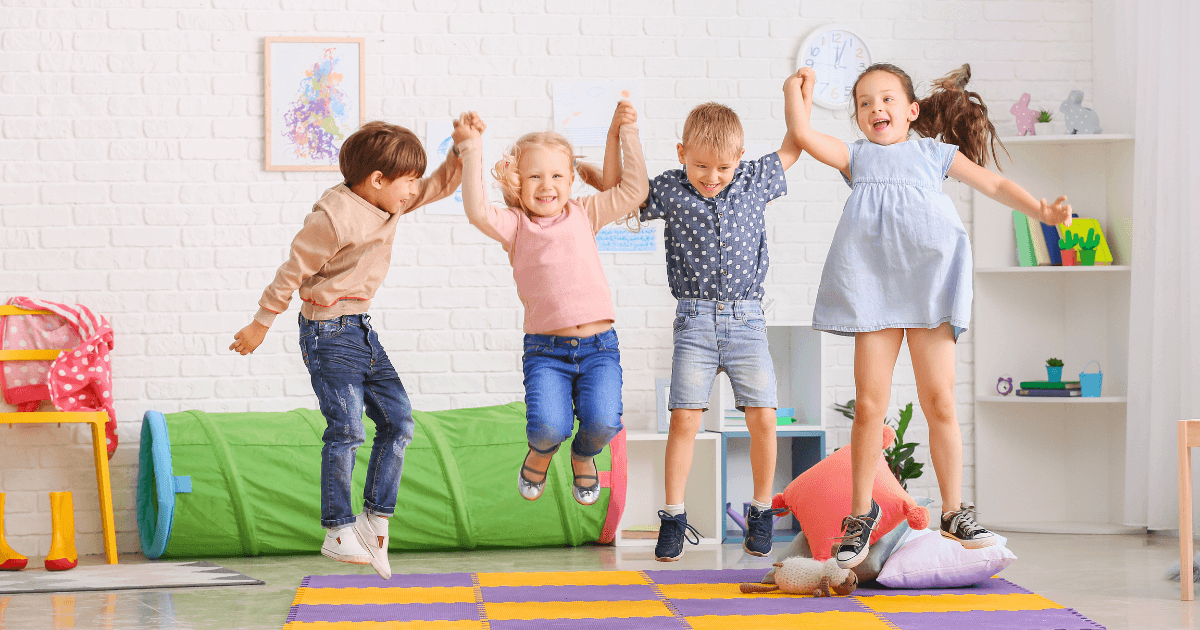
When four-year-old Mia first attempted to climb the playground ladder, she hesitated, her small hands gripping the sides with uncertainty. After weeks of encouragement and practice, that same ladder became her favorite challenge—conquered with confidence, joy, and a proud smile. This transformation wasn’t just about mastering a physical skill; it represented the development of Mia’s physical literacy—a foundation that will influence her relationship with movement and activity throughout her life.
As early childhood educators, we witness these pivotal moments daily. The preschool years represent a critical window for developing physical literacy, yet according to research published in Frontiers in Public Health, children aged 3-6 spend 50-94% of their time sedentary, with only 1-17% engaged in moderate physical activity. This statistic is concerning, especially considering the World Health Organization recommends at least 180 minutes of daily physical activity for children aged 1-4 years.
The good news? We have tremendous influence over children’s physical development during these formative years. By understanding physical literacy and implementing intentional strategies, we can help every child build the movement skills, confidence, and motivation needed for an active, healthy life.
Understanding Physical Literacy: More Than Just Physical Skills
Physical literacy goes beyond simply teaching children to run, jump, or throw. According to Active for Life, it encompasses three essential components:
1. Movement Skills
These include fundamental movement skills that serve as building blocks for more complex movements:
Children need to develop a belief in their own physical abilities:
Willingness to try new physical challenges
Persistence when facing movement difficulties
Understanding their own bodies and capabilities
Recognizing their improvement over time
3. Motivation and Enjoyment
The emotional component of physical literacy is crucial:
Finding joy in movement
Developing intrinsic motivation to be active
Building positive associations with physical activity
Experiencing the social benefits of active play
Recent research from MDPI confirms that physical literacy in preschool children manifests across four domains—physical, cognitive, affective, and social—highlighting the holistic nature of this development.
Why Physical Literacy Matters: The Long-Term Impact
The benefits of developing physical literacy in early childhood extend far beyond the preschool years:
Health and Well-being Benefits
Establishes healthy activity patterns that can last a lifetime
Reduces risk of childhood obesity and related health conditions
Supports bone development and overall physical growth
Enhances spatial awareness and mathematical understanding
Supports brain development through cross-lateral movements
Contributes to school readiness and academic success
Social and Emotional Benefits
Builds self-confidence and positive self-image
Develops cooperation and teamwork skills
Teaches emotional regulation through physical challenges
Creates opportunities for social connection and friendship
Lifelong Activity Participation
Children who develop physical literacy are more likely to:
Participate in sports and recreational activities
Maintain active lifestyles into adulthood
Experience greater enjoyment in physical activities
Seek out new movement challenges and experiences
Assessing Physical Literacy in Young Children
Before implementing strategies, it’s helpful to understand where children are in their physical literacy journey. While formal assessment tools exist, such as the Test of Gross Motor Development-Third Edition (TGMD-3) mentioned in PMC’s research, simple observation can provide valuable insights:
Locomotor Skills Observation
Watch for children’s ability to:
Run with coordination (arms and legs moving in opposition)
Jump with both feet and land with balance
Hop on one foot
Gallop and skip with rhythmic movement
Climb using alternating feet
Object Control Observation
Notice how children:
Throw balls with proper weight transfer and follow-through
Catch objects of different sizes
Kick with a coordinated approach and follow-through
Strike objects with hands or implements
Roll or bowl with directional control
Stability and Balance Observation
Observe children’s capacity to:
Balance on one foot
Walk on narrow surfaces
Stop and start quickly without falling
Change directions while moving
Land safely after jumping
Confidence and Motivation Indicators
Look for signs that children:
Willingly attempt new physical challenges
Express enjoyment during movement activities
Persist when facing difficulties
Seek out physical play opportunities
Show pride in their physical accomplishments
Creating a Physical Literacy-Rich Environment
The environment we create significantly influences children’s physical development. Here’s how to design spaces that promote physical literacy:
Indoor Environment Considerations
Open space: Ensure there’s adequate room for movement activities
Varied surfaces: Include different textures and levels for diverse movement experiences
Accessible equipment: Store movement materials where children can independently access them
Visual supports: Display images of children engaged in various movements
Safety features: Pad corners, secure shelving, and create clear movement pathways
Outdoor Environment Design
Natural elements: Incorporate logs, stones, hills, and other natural features that invite diverse movements
Climbing opportunities: Provide age-appropriate structures for developing upper body strength
Open areas: Include spaces for running, group games, and large movement activities
Ball play zones: Designate areas for throwing, kicking, and striking activities
Balance challenges: Create pathways, beams, and stepping stones for stability development
Equipment Essentials
Stock your environment with versatile equipment that supports various skills:
Balls of different sizes, weights, and textures
Scarves and bean bags for throwing and catching
Hoops and ropes for jumping and boundary activities
Intentional Teaching Strategies for Physical Literacy
While free play is valuable, research published in Frontiers in Public Health indicates that fundamental movement skills do not develop naturally—they require structured instruction and practice. Here are strategies for intentional instruction:
Skill-Focused Mini-Lessons
Dedicate short periods (5-10 minutes) to focus on specific skills:
Demonstrate the skill: Show proper technique through modeling or video
Break down the components: Explain key elements in child-friendly language
Provide guided practice: Support children as they attempt the skill
Offer specific feedback: “I notice you’re bending your knees when you land—that helps you stay balanced!”
Encourage peer modeling: “Look how Jamal is using his arms when he throws”
Integrated Learning Approaches
Weave physical literacy into other curriculum areas:
Literacy connection: Act out movements from stories
Math integration: Count jumps, measure throwing distances, create pattern movements
Science exploration: Investigate how different objects move through the air or roll down inclines
Social studies: Explore movement games from different cultures
Arts integration: Create dance sequences that incorporate fundamental movements
Differentiation for All Abilities
Modify activities to ensure success for every child:
Skill progressions: Offer simpler versions of skills for beginners and more challenging options for advanced movers
Equipment adaptations: Provide lighter balls, lower targets, or stability supports as needed
Participation options: Create movement activities with multiple roles and entry points
Visual supports: Use pictures, videos, and demonstrations for visual learners
10 Engaging Activities to Develop Physical Literacy
Here are ten classroom-tested activities that promote various aspects of physical literacy:
1. Animal Movement Parade
Skills developed: Locomotor movements, body awareness, creativity
How it works: Create cards with different animals. Children draw a card and move like the animal on it across a designated space. Examples include bear walking (on all fours), frog jumping, crab walking (on hands and feet with belly up), and snake slithering.
Extension: Add habitat obstacles that animals must navigate—”elephants” step over “logs,” “fish” swim under “bridges.”
2. Obstacle Course Adventures
Skills developed: Multiple locomotor and stability skills, spatial awareness, sequencing
How it works: Create a course with 4-6 stations that require different movements, such as crawling through tunnels, balancing on tape lines, jumping into hoops, stepping on stumps, etc.
Extension: Let children help design courses and add narrative elements—for example, “We’re explorers crossing a jungle” or “We’re delivering important packages through a busy city.”
How it works: Provide scarves and play music with different tempos. Guide children to move their scarves high/low, fast/slow, swirling/straight while moving their bodies in complementary ways.
Extension: Introduce simple choreographed movements that all children follow, then allow for creative interpretation.
4. Target Practice
Skills developed: Throwing, rolling, eye-hand coordination, and spatial awareness.
How it works: Set up various targets (buckets, hula hoops on the ground, tape marks on walls) and provide different objects to throw or roll (beanbags, soft balls, rolled socks). Children practice aiming from various distances.
Extension: Create a scoring system or challenge children to hit targets in a specific sequence.
5. Balance Challenges
Skills developed: Static and dynamic balance, core strength, body awareness
How it works: Create a series of balance challenges: standing on one foot, walking heel-to-toe on a line, balancing a beanbag on different body parts, or freezing in different positions.
Extension: Turn it into “Balance Simon Says,” where children must maintain balance as they follow directions.
6. Parachute Play
Skills developed: Arm strength, coordination, cooperative movement, timing
How it works: Using a play parachute, guide children through activities such as making waves, forming mushrooms (lifting and going under), rolling balls, and cooperative games.
Extension: Add literacy elements by acting out stories with the parachute (e.g., “calm sea” vs. “stormy sea”).
7. Rhythm Stick Activities
Skills developed: Bilateral coordination, rhythm, following sequences
How it works: Provide rhythm sticks and teach patterns: tap together, tap the floor, tap a partner’s sticks. Gradually increase the complexity of the patterns.
Extension: Create movement sequences in which children tap sticks, perform a movement, and then tap again.
8. Ball Skill Stations
Skills developed: Throwing, catching, kicking, striking, and hand-eye/foot-eye coordination.
How it works: Set up stations focusing on different ball skills: throwing at targets, catching with partners, kicking toward goals, and striking with racquets or paddles.
Extension: Create skill-challenge cards for each station with progressively more difficult challenges.
How it works: Create various jumping challenges, such as jumping over lines, hopping in and out of hoops, jumping for distance or height, and leaping over small obstacles.
Extension: Measure and record jumps to help children set improvement goals.
10. Partner Mirroring
Skills developed: Body awareness, coordination, social interaction, observation
How it works: Children pair up and face each other. One child performs movements while the other mirrors them. Start with slow, simple movements and progress to more complex sequences.
Extension: Add music and have partners create a mirrored “dance” to share with the class.
Involving Families in Physical Literacy Development
Physical literacy development is most effective when reinforced at home. Here’s how to engage families:
Education and Awareness
Share information about physical literacy through newsletters, workshops, or information sessions.
Explain the connection between early movement skills and later participation in physical activity.
Highlight the cognitive and social-emotional benefits of physical development.
Home Activity Suggestions
Provide simple activity ideas that require minimal or no equipment
Create “movement homework” bags with basic equipment and activity cards
Share videos or photos of classroom physical activities that can be replicated at home
Community Resource Connections
Compile information about local parks, playgrounds, and recreation facilities.
Share details about affordable community programs that promote physical activity.
Organize family play dates at local parks or recreation areas.
Create opportunities for children to demonstrate their skills to family members.
Recognize and celebrate improvements in skills, confidence, and enjoyment.
Overcoming Common Challenges
Implementing physical literacy programming isn’t without challenges. Here are solutions to common obstacles:
Limited Indoor Space
Create movable activity zones that can be quickly set up and put away
Use hallways, multi-purpose rooms, or other available spaces on a rotating schedule
Develop “in-place” movement activities that require minimal space
Maximize outdoor time when the weather permits
Safety Concerns
Establish clear rules and boundaries for movement activities
Teach children how to assess risks and move their bodies safely
Ensure proper supervision and appropriate equipment
Start with basic skills before progressing to more challenging activities
Varying Skill Levels
Provide multiple entry points for each activity
Create mixed-ability groupings where children can learn from peers
Offer parallel activities with different challenge levels
Focus on individual progress rather than comparison between children
Time Constraints
Integrate physical literacy into existing routines and transitions
Plan short, focused movement breaks throughout the day
Combine physical development with other learning domains
Create efficient systems for setting up and putting away equipment
Measuring Progress and Success
How do we know our physical literacy efforts are working? Look for these indicators:
Observable Skill Development
Improvement in fundamental movement skills
Increased coordination and control
Greater variety of movement patterns
More complex combinations of movements
Confidence and Attitude Changes
Increased willingness to try new physical challenges
More frequent self-initiated physical play
Expressions of pride in physical accomplishments
Persistence when facing movement difficulties
Social-Emotional Growth
Cooperation during group movement activities
Encouragement of peers during physical challenges
Appropriate risk-taking in movement exploration
Emotional regulation during physically demanding tasks
Transfer of Skills
Application of learned movements to new contexts
Creative combinations of fundamental skills
Independent problem-solving during physical challenges
Connection of movement concepts across learning domains
Conclusion: The Gift of Physical Literacy
When we prioritize physical literacy in early childhood, we give children more than just movement skills—we provide a foundation for health, confidence, and joy that can last a lifetime. In a world where physical activity levels continue to decline, our role as early educators has never been more important.
As Active for Life notes, developing physical literacy is similar to developing language literacy—it requires daily practice, encouragement, and joyful engagement. Just as we wouldn’t expect a child to become a reader without regular exposure to books and reading experiences, we can’t expect children to develop physical literacy without intentional opportunities for movement.
By creating environments rich in movement possibilities, implementing thoughtful teaching strategies, and celebrating physical development, we help ensure that every child has the opportunity to discover the joy of movement. According to PE Scholar, physically literate individuals are more likely to maintain healthy weights, build strong bones and muscles, and experience better cardiovascular health throughout their lives.
The benefits extend far beyond physical health. Research highlighted by Connected PE shows that skills developed through physical literacy—such as goal setting, perseverance, teamwork, and communication—transfer to other areas of life and learning. When children develop confidence in their moving bodies, they often develop confidence in their thinking minds as well.
Perhaps most importantly, physical literacy fosters a lifelong love for movement. Children who experience success and joy in physical activities during their early years are more likely to seek out and enjoy active pursuits throughout their lives. As one study published in PMC describes it, the preschool stage is the starting point of the “journey of physical literacy,” critical for developing fundamental movement skills and establishing healthy behaviors that ensure long-term success.
Every time we encourage a child to try climbing just one rung higher, help them experience the satisfaction of catching a ball for the first time, or celebrate their creative movement expression, we’re not just teaching physical skills—we’re nurturing their relationship with their own bodies and with the physical world around them.
This is the true gift of physical literacy: opening a door to a lifetime of movement, health, and joy that every child deserves to discover.
What physical literacy strategies have worked in your classroom? Share your experiences in the comments below!