Forest Preschools: The Benefits of All-Weather Outdoor Learning
“There’s no such thing as bad weather, only inappropriate clothing.”
This Scandinavian saying captures the essence of forest preschools, where children spend most—if not all—of their day learning outdoors, regardless of rain, snow, or shine. While traditional preschools might limit outdoor time to brief playground visits on pleasant days, forest preschools embrace nature as the primary classroom, teacher, and playground all in one.
This approach, which originated in Denmark in the 1950s as “udeskole” (outdoor school) and spread throughout Scandinavia before gaining popularity worldwide, represents a significant departure from conventional early childhood education. But as research increasingly highlights the developmental benefits of nature-based learning, more families and educators are reconsidering what constitutes an optimal learning environment for young children.
What Exactly Is a Forest Preschool?
Forest preschools (also called nature preschools, outdoor preschools, or forest kindergartens) are early childhood programs where children spend 75-100% of their school day outdoors in natural settings. Unlike traditional programs that may incorporate occasional nature activities, forest preschools use the outdoors as their primary learning environment in all weather conditions, except during severe weather that poses safety risks.
Key characteristics include:
Child-led learning: Activities emerge from children’s interests and discoveries rather than predetermined lesson plans
Place-based curriculum: Learning experiences connect directly to the local ecosystem and seasonal changes
All-weather philosophy: Children and teachers dress appropriately for weather conditions rather than avoiding them
Risk-positive approach: Supervised “risky play” helps children develop judgment and confidence
Natural materials: Minimal manufactured toys, with emphasis on creative use of natural objects
Small groups: Typically lower child-to-teacher ratios than conventional programs
Environmental stewardship: Fostering deep connection with and respect for nature
According to Upper Canada Child Care, “Forest School programs are rooted in Scandinavian early childhood education, where outdoor learning is considered essential for development.”
The Multifaceted Benefits of Forest Preschools
Research increasingly supports what forest school advocates have long observed: immersive outdoor learning offers significant advantages across all developmental domains.
Physical Development and Health Benefits
Enhanced Motor Development
The varied terrain of natural settings—with hills, fallen logs, rocks, and uneven surfaces—creates a natural obstacle course that develops both gross and fine motor skills. Research shows that children in outdoor programs demonstrate better balance, coordination, and overall physical competence than peers in conventional settings.
Improved Health Outcomes
According to TeachKloud, outdoor play supports a range of developmental benefits, including improved physical health, enhanced motor skills, and better cardiovascular fitness.
Emerging research also suggests potential benefits for immune function and gut health, with a study cited by the Seattle Times examining how outdoor preschool attendance may positively affect children’s microbiome.
Reduced Illness Rates
Contrary to what some might expect, children in forest programs often experience fewer illnesses than those in traditional indoor settings. Better air circulation, natural social distancing, and reduced exposure to indoor germs contribute to fewer sick days.
Healthy Weight Management
With constant movement and active play, children in forest preschools typically engage in significantly more physical activity than indoor peers. The National Institute of Health reports that children who spend more time outdoors have lower rates of obesity and stress-related disorders.
Cognitive Development and Learning
Enhanced Attention and Focus
Natural environments provide what psychologists call “soft fascination”—a gentle engagement of attention that allows for mental restoration rather than depletion. Research published in the Taylor & Francis Online journal notes that “experiences in nature can reduce stress and improve mood among children,” creating optimal conditions for learning.
Improved Academic Readiness
Despite spending less time on formal academics, children from forest preschools often demonstrate strong school readiness. A 2018 study by the American Institutes for Research found that students in outdoor education programs showed improved test scores in math, reading, and science.
Language Development
The rich sensory environment of nature provides abundant opportunities for vocabulary as children describe their discoveries and experiences. Conversations flow naturally around shared observations and collaborative problem-solving, creating authentic contexts for language development.
Creative Problem-Solving
Without manufactured toys with predetermined uses, children in forest settings develop remarkable creativity and problem-solving skills. A stick might become a writing tool, a measuring device, a building material, or a magic wand—all in the span of a single day.
Social-Emotional Benefits
Self-Regulation and Resilience
The variable conditions of outdoor settings—from weather changes to physical challenges—naturally build resilience and emotional regulation. Children learn to adapt to discomfort, persist through challenges, and regulate their responses to changing circumstances.
Authentic Social Development
Collaborative projects emerge organically in forest settings, from dam-building in streams to fort construction among trees. These child-initiated group endeavors foster negotiation, leadership, and cooperation in meaningful contexts.
Reduced Stress and Anxiety
Multiple studies confirm nature’s stress-reducing effects on children. As noted by TeachKloud, “Nature-based activities can reduce stress and anxiety in children, promoting a sense of wellbeing.” This emotional regulation benefit is particularly valuable in our increasingly high-pressure educational environments.
Confidence and Independence
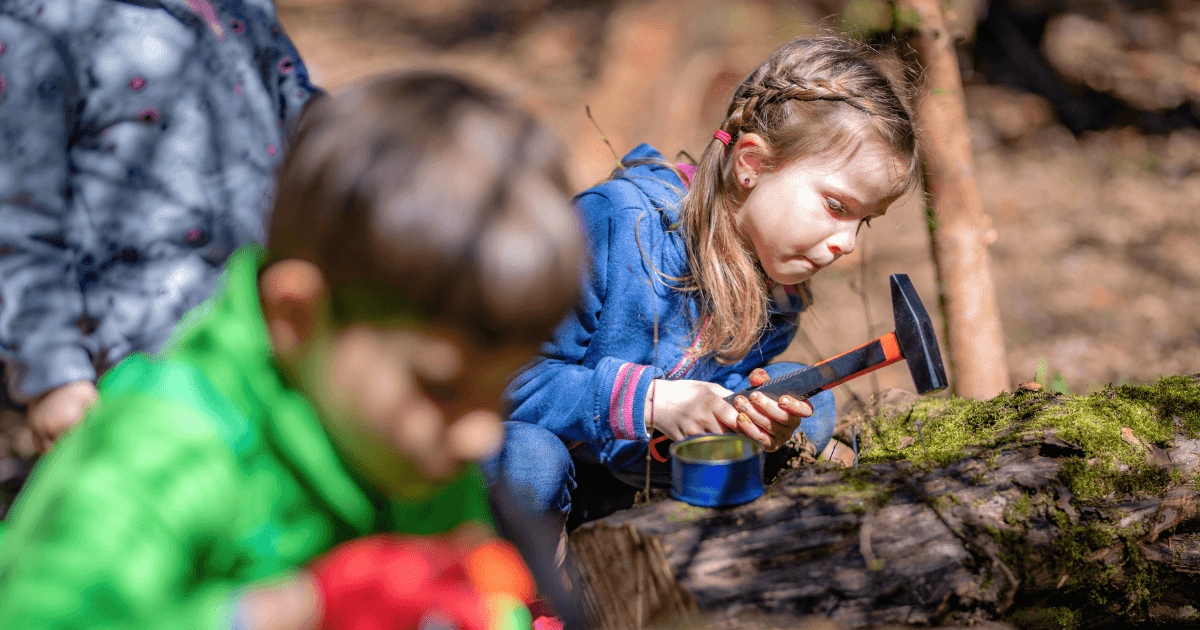
Forest preschools intentionally incorporate appropriate risk-taking, allowing children to climb trees, balance on logs, or use real tools under supervision. These experiences build genuine confidence based on actual competence rather than arbitrary praise.
Environmental Connection and Stewardship
Ecological Literacy
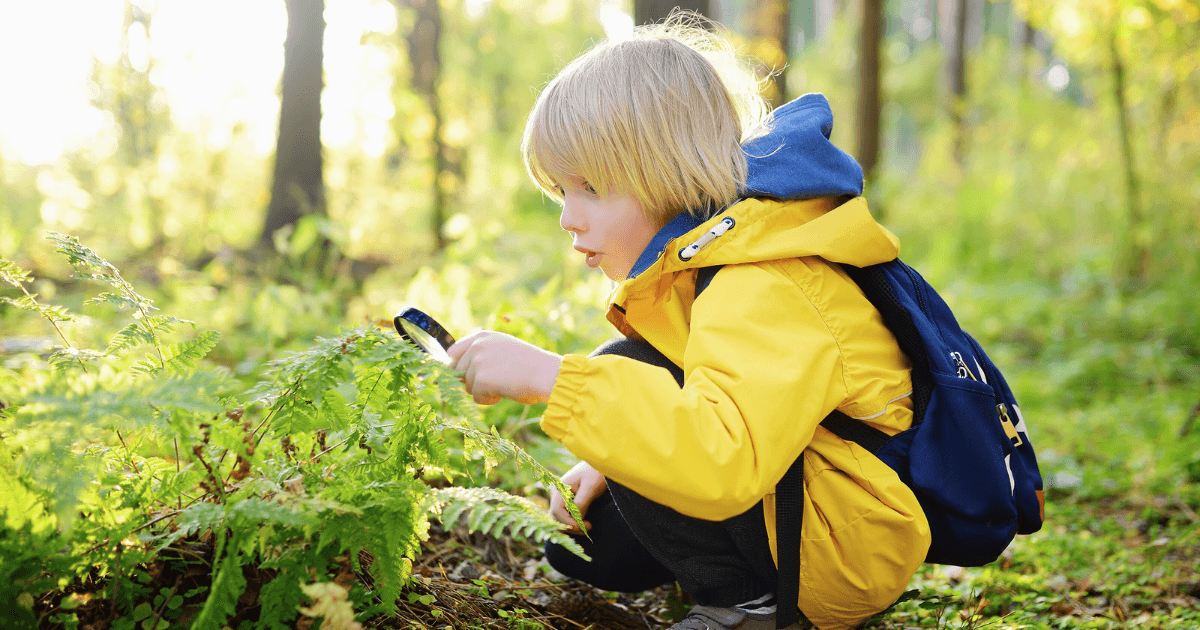
Daily immersion in nature builds deep knowledge of local ecosystems, seasonal changes, and ecological relationships. Children develop scientific thinking through direct observation of natural phenomena—from insect life cycles to weather patterns.
Environmental Stewardship
Research consistently shows that meaningful time in nature during childhood is the strongest predictor of environmental consciousness in adulthood. As School Poster Printers notes, “Outdoor learning instills a sense of environmental responsibility, teaching students about ecosystems, sustainability, and conservation.”
Place-Based Connection
Forest preschools foster deep connection to specific natural places, helping children develop a sense of belonging and stewardship. This place-based identity counters the increasing disconnection many children experience in our digital, indoor-focused society.
The All-Weather Approach: Embracing Nature’s Seasons
A defining characteristic of forest preschools is their commitment to outdoor learning year-round, regardless of weather conditions. This all-weather approach offers unique benefits and learning opportunities with each season.
Winter: Embracing the Cold
In winter months, forest preschools continue outdoor learning with appropriate clothing and adaptations:
Cold-Weather Learning Opportunities:
Tracking animals in the snow
Observing hibernation and winter adaptations
Experiencing the physics of ice and snow
Building snow structures and sculptures
Noticing how the landscape changes without leaves
Implementation Strategies:
Layered clothing systems (base layers, insulating layers, waterproof outer layers)
Frequent movement to maintain warmth
Warm drinks and energy-rich snacks
Sheltered areas for wind protection
Shorter outdoor sessions with warming breaks when needed
According to research from Finland cited in the Taylor & Francis study, “Weather conditions can limit outdoor learning opportunities, but children can engage in outdoor activities year-round with appropriate attire.”
Rainy Days: The Magic of Water
Rain transforms the landscape and offers rich sensory experiences and learning opportunities:
Rainy-Day Learning Opportunities:
Observing how water moves through the environment
Creating and following water channels
Experiencing the sensory joy of puddle-jumping
Noticing how rain changes colors, sounds, and smells
Observing which animals appear during rainy weather
Implementation Strategies:
Quality rain gear (waterproof jackets, pants, and boots)
Changes of clothes are readily available
Sheltered areas for snack and story times
Warm drinks after extended rain exposure
Celebrating rather than avoiding rain experiences
Seasonal Transitions: Witnessing Change
The changing seasons provide unparalleled opportunities to observe natural cycles and transformations:
Seasonal Learning Opportunities:
Documenting changes in specific plants and locations
Collecting and comparing natural materials across seasons
Observing animal behavior changes
Experiencing how the same space feels different throughout the year
Developing scientific thinking through prediction and observation
As TeachKloud notes, “Seasonal changes can be integrated into learning activities, providing unique educational opportunities throughout the year.”
Addressing Common Concerns
Despite growing evidence supporting forest preschools, parents and educators often raise legitimate questions about this approach.
Academic Readiness Concerns
Concern: Will children be prepared for kindergarten without formal academic instruction?
Research Response: Multiple studies show that forest preschool graduates demonstrate strong kindergarten readiness, often exceeding peers in problem-solving, attention, and social skills. The American Institutes for Research study found improved academic outcomes for students with outdoor learning experiences.
Practical Approach: Many forest preschools incorporate emergent literacy and numeracy through nature-based activities—such as counting pinecones, creating letter shapes with sticks, or documenting observations in journals.
Safety Considerations
Concern: Is all-day outdoor learning safe for young children?
Research Response: Forest preschools typically have excellent safety records due to low teacher-to-student ratios, clear boundaries, and gradual introduction to appropriate risk-taking. Children develop better risk-assessment skills through supervised, challenging experiences.
Practical Approach: Staff are trained in outdoor first aid, weather monitoring, and risk management. Programs establish clear safety protocols while allowing children to develop confidence through appropriate challenges.
Weather and Comfort
Concern: Won’t children be uncomfortable in harsh weather?
Research Response: With appropriate clothing and gradual acclimation, children typically adapt well to outdoor conditions. The Fiddleheads Forest School maintains a “gear library” with over 200 items for families to borrow, including weather-appropriate clothing, ensuring all children can participate comfortably.
Practical Approach: Programs educate families about layering systems and often provide gear libraries or exchanges. Teachers monitor children’s comfort and provide warming breaks or shelter during extreme conditions.
Accessibility and Inclusion
Concern: Are forest preschools accessible to all children, including those with disabilities or from diverse backgrounds?
Research Response: The Seattle Times notes that “Nationally, white children are more likely to enroll in outdoor preschools, while Black and Latino children are less likely to do so,” highlighting an equity gap that needs addressing.
Practical Approach: Progressive forest programs are working to increase accessibility through scholarship programs, multilingual materials, adaptive equipment, and culturally responsive practices. Many find that natural settings can be particularly beneficial for children with certain needs, such as those with sensory processing differences or attention challenges.
Implementation: Creating a Forest Preschool Experience
For educators interested in incorporating forest preschool elements, here are key implementation considerations:
Essential Components
Natural Space Access
Identify accessible natural areas (doesn’t require a forest—parks, gardens, or natural playgrounds can work)
Ensure diverse natural elements (trees, rocks, water features, if possible, varied terrain)
Create agreements with landowners or parks if using public spaces
Staff Training and Approach
Develop knowledge of local ecosystems and natural history
Train in risk assessment and outdoor first aid
Cultivate an approach that balances safety with appropriate risk-taking
Learn to facilitate rather than direct children’s exploration
Family Engagement
Educate families about the benefits of outdoor learning
Provide clear guidance on appropriate clothing and gear
Create opportunities for family participation in outdoor experiences
Communicate regularly about children’s learning and discoveries
Curriculum Framework
Develop observation tools that document learning in natural contexts
Create flexible planning approaches that follow children’s interests
Incorporate seasonal rhythms and celebrations
Balance child-led exploration with intentional learning provocations
Starting Small: Incorporating Forest School Elements
For programs not ready to transition fully outdoors, consider these incremental steps:
Extended Outdoor Time
Gradually increase daily outdoor time in all weather conditions
Move traditional indoor activities (snack time, story time, art) outdoors
Natural Materials Integration
Replace some manufactured toys with natural loose parts
Create collections of natural objects for exploration
Develop outdoor art experiences using natural materials
Community Connections
Partner with local nature centers or environmental organizations
Invite naturalists or environmental educators as guests
Create regular “field site” visits to nearby natural areas
Success Story: Transforming Early Education Through Nature
The White Pines Forest School, part of Upper Canada Child Care, exemplifies the potential of forest preschool approaches. Operating on 60 acres of woodland, the program allows children to develop deep connections with nature across all seasons.
As their educators report, “Children engaged in outdoor learning show improvements in creativity, resilience, and critical thinking.” The program emphasizes child-led inquiry while providing a framework that ensures comprehensive development across all learning domains.
One parent shared: “My daughter started as a timid child who avoided getting dirty or taking physical risks. After a year in forest preschool, she confidently identifies plants, climbs trees safely, and leads her friends in building projects. Most importantly, she’s developed an incredible sense of wonder and connection to the natural world.”
The Growing Movement: Forest Preschools in North America
While Scandinavian countries have embraced outdoor education for decades, North America is experiencing rapid growth in this approach. According to the Seattle Times, “The number of outdoor preschool programs in the United States has rapidly increased in recent years.”
Washington state made history in 2019 as the first state to license outdoor, nature-based preschools, with approximately 20 licensed programs serving about 440 children as of early 2023. The Natural Start Alliance estimates that about 90 preschools in Washington alone focus on nature-based education.
This growth reflects increasing recognition of the benefits of nature-based early education, supported by a growing body of research. As more families seek alternatives to conventional indoor-focused early education, forest preschools are moving from a niche alternative to a recognized educational approach.
Final Thoughts: Reconnecting Children with Their Natural Habitat
In our increasingly digital, indoor-focused society, forest preschools offer a powerful counterbalance—reconnecting children with the natural world that has shaped human development for millennia. The all-weather approach of these programs doesn’t just teach children about nature; it helps them recognize themselves as part of nature.
As research continues to highlight the developmental benefits of nature immersion in early childhood, the forest preschool movement represents more than just an educational trend. It addresses a fundamental human need for connection with the natural world—what biologist E.O. Wilson termed “biophilia,” our innate affinity for living things.
Children today spend approximately 50% less time outdoors than their parents did, according to Theoria Technical. This nature deficit has coincided with rising rates of childhood obesity, attention disorders, anxiety, and disconnection from natural systems. Forest preschools offer a deliberate counterpoint to this trend, creating what EdSource describes as “psychological stability and academic agility” through meaningful exposure to nature.
Perhaps most importantly, forest preschools foster what may be the most essential skill for our children’s future: environmental stewardship. As Garden Montessori Schools observes, “Children in forest schools develop a strong understanding of environmental responsibility and sustainability practices.” Through direct, joyful experiences in nature across all seasons, children develop not just knowledge about environmental issues but an emotional connection that motivates lifelong care for the natural world.
In the words of renowned environmentalist Rachel Carson: “If a child is to keep alive his inborn sense of wonder, he needs the companionship of at least one adult who can share it, rediscovering with him the joy, excitement, and mystery of the world we live in.” Forest preschools provide exactly this companionship—guiding children to discover the wonder of their natural habitat in all its seasonal transformations, weather patterns, and interconnected systems.
As we look toward a future of increasing environmental challenges, perhaps the most valuable gift we can offer our youngest children is not earlier academics or more structured indoor learning, but the opportunity to fall in love with the natural world—in sunshine and rain, through winter frost and summer heat—developing the embodied knowledge that they are part of, not separate from, the living systems that sustain us all.