Preschool vs Daycare vs Home Learning: Choosing the Right Option for Your Family
Deciding how to structure your child’s early learning experience is one of the most significant choices you’ll make as a parent. With options ranging from traditional preschools to daycare centers to home-based learning, the decision can feel overwhelming. Each option offers distinct advantages and considerations that extend beyond simple childcare—they represent different philosophies about how young children learn and develop.
In this comprehensive guide, we’ll explore the key differences between preschool, daycare, and home learning environments to help you make an informed decision that aligns with your family’s values, schedule, and your child’s unique needs.
Understanding the Fundamental Differences
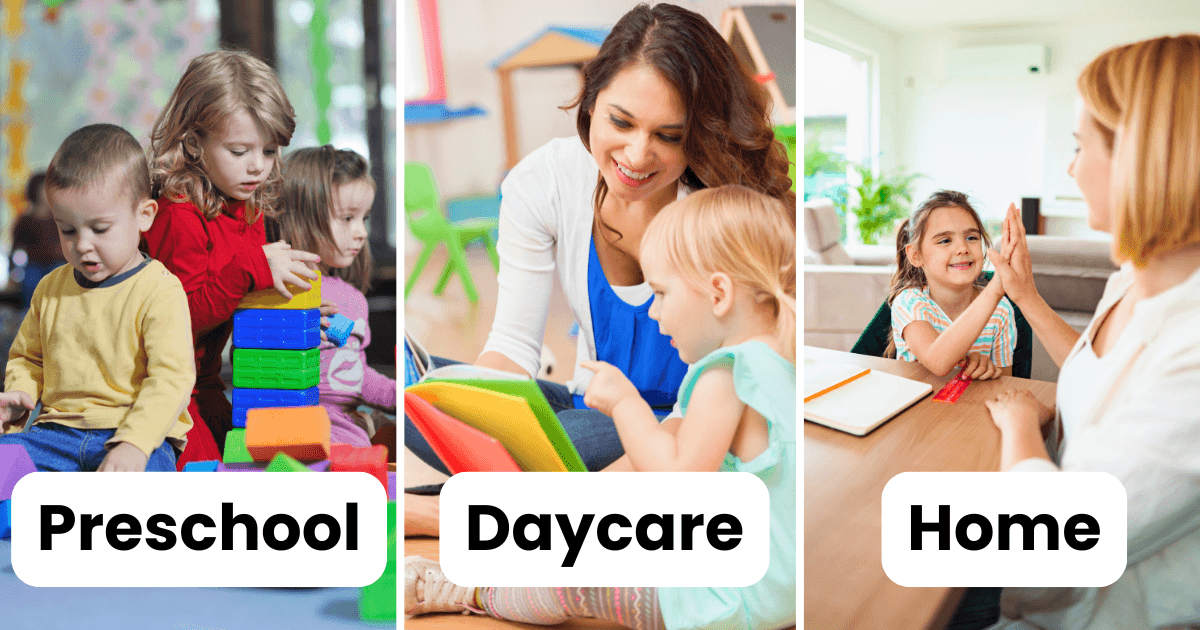
Before diving into the specifics of each option, let’s clarify what distinguishes these three early childhood approaches:
Preschool: Education-Focused
Preschools are primarily educational institutions designed to prepare children for kindergarten and beyond. According to the National Association for the Education of Young Children, quality preschool programs focus on developing:
- Early academic foundations (pre-literacy, pre-math)
- Social skills and emotional regulation
- Critical thinking and problem-solving abilities
- Fine and gross motor skills
- Classroom readiness behaviors
Most preschools serve children between ages 2.5 and 5 years old, operate on a school-year calendar, and offer part-day programs (typically 2-5 hours).
Daycare: Care-Focused with Educational Elements
Daycare centers provide supervision and care for children while parents work, though many modern daycares incorporate educational components. They typically:
- Accept children from infancy (as young as 6 weeks) through age 5 or 6
- Operate year-round with extended hours (often 7am-6pm)
- Focus on meeting children’s basic needs while incorporating play-based learning
- Maintain consistent daily routines that include meals, naps, and activities
Home Learning: Family-Centered Education
Home learning (sometimes called homeschooling for preschoolers) keeps education within the family environment. This approach:
- Allows for customized learning based on the child’s interests and developmental pace
- Provides flexibility in scheduling and curriculum choice
- Emphasizes one-on-one instruction and family values
- Can incorporate community activities, co-ops, and specialized classes
Key Comparison Factors
Now let’s examine how these options compare across several important dimensions:
1. Daily Schedule and Structure
Preschool:
- Structured schedule with designated times for different activities
- Typically operates 2-5 days per week for 2-5 hours per day
- Follows a school-year calendar with holidays and summer breaks
- May offer morning or afternoon sessions
Daycare:
- Full-day programs with flexible drop-off and pick-up times
- Operates year-round, including summer months
- Consistent daily routine that includes meals, naps, and activities
- Often available 5 days per week for up to 10-12 hours per day
Home Learning:
- Highly flexible schedule determined by the family
- Can adapt to parents’ work schedules and children’s natural rhythms
- Ability to take advantage of “teachable moments” throughout the day
- Freedom to incorporate learning into daily life activities
A 2025 survey by the National Center for Education Statistics found that families increasingly value flexibility in early childhood education, with 68% of parents citing schedule compatibility as a major factor in their decision-making process.
2. Educational Approach and Curriculum
Preschool:
- Follows a defined curriculum with specific learning objectives
- Typically employs teachers with early childhood education degrees
- May adhere to specific educational philosophies (Montessori, Reggio Emilia, etc.)
- Structured approach to kindergarten readiness skills
- Group-based learning activities and projects
Daycare:
- Varies widely in educational content—some are primarily care-focused while others have robust educational components
- Staff typically have general childcare training rather than teaching credentials
- Learning often happens through play and daily activities
- May incorporate elements of early childhood curricula but with less structure
- Focus on social development alongside basic academic concepts
Home Learning:
- Completely customizable curriculum based on the child’s interests and needs
- Parent serves as primary educator, possibly supplemented with outside classes
- Can incorporate various educational philosophies and approaches
- One-on-one instruction allows for personalized pacing
- Freedom to explore topics in depth based on the child’s curiosity
Research published in the Journal of Educational Psychology indicates that regardless of setting, the most effective early learning environments share key qualities: responsive adult-child interactions, language-rich environments, and opportunities for both structured and exploratory learning.
3. Socialization Opportunities
Preschool:
- Daily interaction with peers in a group setting (typically 12-20 children)
- Structured social learning through sharing, turn-taking, and group activities
- Exposure to diverse backgrounds and perspectives
- Regular opportunities to practice conflict resolution with teacher guidance
- Development of classroom social skills needed for kindergarten
Daycare:
- Extended time with a consistent peer group
- Mixed-age interactions in some settings
- Less structured social learning, butample opportunities for natural social development
- Formation of long-term friendships due to consistent daily contact
- Social skills develop through daily routines and play
Home Learning:
- Requires intentional planning for peer interaction
- Can include participation in homeschool co-ops, library programs, and community classes
- More controlled social environments that can be tailored to the child’s temperament
- Opportunities for mixed-age socialization through community activities
- Strong family bonds and sibling relationships
A common misconception is that home-educated children lack socialization. However, research from the National Home Education Research Institute suggests that home-educated children often have rich social lives through community involvement, though the nature of their socialization differs from institutional settings.
4. Cost Considerations
Preschool:
- Average cost: $400-$1,300 per month
- Often less expensive per month than full-time daycare due to shorter hours
- Higher cost per hour reflecting specialized curriculum and smaller class sizes
- Some public preschool options available in certain areas
- May offer scholarships or sliding scale tuition
Daycare:
- Average cost: $540-$1,500+ per month
- Costs vary significantly by location, with urban areas commanding premium prices
- Infant and toddler care typically more expensive than preschool-age care
- May offer sibling discounts for multiple children
- Some employers provide childcare benefits or subsidies
Home Learning:
- Direct costs can be minimal (basic supplies and resources)
- Potential indirect costs include reduced income if a parent reduces work hours
- Supplemental activities (classes, field trips, materials) add variable costs
- Complete control over budget allocation for educational resources
- Potential tax benefits in some states for homeschool expenses
According to data from Child Care Aware of America, the average American family spends between 8-19% of their household income on childcare, making cost a significant factor in this decision.
5. Teacher-to-Child Ratios and Individual Attention
Preschool:
- Typical ratios range from 1:8 to 1:12 depending on age and state regulations
- Group-oriented activities with some individual instruction
- Structured observation and assessment of developmental progress
- Limited ability to customize learning for individual children
- Professional educators trained in early childhood development
Daycare:
- Ratios vary by age: approximately 1:4 for infants, 1:6 for toddlers, and 1:10 for preschoolers
- Focus on meeting individual care needs within a group setting
- Less formal assessment of developmental milestones
- Variable staff training in child development principles
- Consistent caregivers build strong relationships with children
Home Learning:
- One-on-one instruction (typically 1:1 to 1:3 depending on family size)
- Maximum customization to child’s learning style and interests
- Continuous observation and adjustment of teaching approaches
- Immediate feedback and support during learning activities
- Deep understanding of the child’s strengths and challenges
Research consistently shows that lower adult-to-child ratios correlate with higher quality care and education, regardless of setting. The American Academy of Pediatrics recommends lower ratios for younger children to ensure adequate supervision and interaction.
6. Preparation for Kindergarten
Preschool:
- Structured focus on kindergarten readiness skills
- Experience with classroom routines and expectations
- Systematic introduction to pre-academic concepts
- Regular practice with group learning activities
- Gradual development of independence in a school-like setting
Daycare:
- Variable emphasis on kindergarten preparation depending on the program
- Development of self-help skills and independence
- Social preparation through peer interaction
- May incorporate some pre-academic activities, particularly for older children
- Transition support as kindergarten approaches
Home Learning:
- Customized approach to kindergarten readiness based on the child’s development
- One-on-one instruction in pre-academic skills
- Flexibility to focus on areas needing additional support
- Intentional introduction to group learning through community activities
- Ability to move at the child’s pace rather than following a standardized timeline
A 2024 study published in the journal Science found that while preschool programs offer academic advantages early in elementary school, the specific elements that contribute to kindergarten readiness may be present in various settings when intentionally implemented.
Making the Decision: What’s Right for Your Family?
With these comparisons in mind, how do you determine which option best suits your family? Consider these key factors:
Your Child’s Temperament and Needs
Some children thrive in busy, social environments, while others do better with quieter, more individualized attention. Consider:
- How does your child respond to new people and situations?
- Does your child need time to warm up in group settings?
- How independent is your child with self-care tasks?
- Does your child have any special needs that might be better addressed in a particular setting?
- How does your child prefer to learn and explore?
Your Family’s Schedule and Logistics
Practical considerations often play a significant role in this decision:
- What are your work hours and commute times?
- Do you need full-day care or is part-time sufficient?
- How will transportation to and from the program work?
- Do you have family members who can assist with childcare?
- What options are actually available in your area?
Your Educational Values and Priorities
Each family has different priorities for early childhood:
- How important is early academic preparation to you?
- What role do you want to play in your child’s early education?
- Are there specific values or approaches you want emphasized?
- How do you feel about structured learning versus play-based approaches?
- What kind of social experiences do you want your child to have?
Financial Considerations
Budget realities cannot be ignored:
- What can your family realistically afford for early education?
- Are there subsidies or tax benefits available to you?
- How might your choice impact your family’s income and career progression?
- What value do you place on different aspects of early education?
Hybrid Approaches: The Best of Multiple Worlds
Increasingly, families are creating hybrid solutions that combine elements of different approaches:
- Part-time preschool with home learning: Attending preschool 2-3 days per week while continuing home-based learning on other days
- Daycare plus enrichment: Choosing a care-focused daycare but supplementing with specialized classes or activities
- Home learning co-ops: Forming small groups of families who share teaching responsibilities and create preschool-like experiences
- Preschool with extended care: Selecting a preschool that offers before/after care to accommodate work schedules
According to the National Center for Education Statistics, these hybrid approaches have grown in popularity by nearly 30% since 2020, reflecting families’ desire for customized early childhood experiences.
What Research Tells Us About Outcomes
Parents often wonder which option leads to the best outcomes for children. The research offers some insights:
- Academic Outcomes: High-quality programs in any setting can support cognitive development and school readiness. The key factor is not the type of setting but rather the quality of adult-child interactions, language exposure, and learning opportunities.
- Social-Emotional Development: Children can develop strong social-emotional skills in all three settings when adults intentionally support these skills. Group settings naturally provide more peer interaction, while home settings often offer more individualized emotional support.
- Long-term Impact: The Perry Preschool Project and other longitudinal studies suggest that high-quality early education (regardless of setting) correlates with positive outcomes into adulthood, including higher graduation rates and earnings.
Nobel Prize-winning economist James Heckman’s research indicates that every dollar invested in quality early childhood development yields a 7-13% return through improved outcomes and reduced social costs. This suggests that the quality of early learning experiences matters more than the specific setting.
Questions to Ask When Evaluating Options
For Preschools:
- What educational philosophy guides your program?
- What are your teacher qualifications and turnover rates?
- How do you approach kindergarten readiness?
- What is your approach to discipline and conflict resolution?
- How do you communicate with families about children’s progress?
For Daycares:
- What is your daily schedule and howdo you incorporate learning?
- What training do your staff members receive?
- What is your staff-to-child ratio and group size?
- How do you handle naps, meals, and other routines?
- How do you support children’s developmental milestones?
For Home Learning:
- What resources and support networks are available locally?
- How will I ensure comprehensive coverage of developmental domains?
- What opportunities exist for socialization and peer interaction?
- How will I balance teaching with other responsibilities?
- What approaches align with my child’s learning style?
Making a Smooth Transition
Whichever option you choose, these strategies can help ensure a positive transition:
- Visit the setting multiple times before starting
- Talk positively with your child about the upcoming change
- Establish consistent drop-off routines
- Create connections with teachers/caregivers
- Maintain open communication about your child’s experience
- Be prepared for an adjustment period
Remember that your choice isn’t permanent—many families adjust their approach as their child develops and family circumstances change.
Conclusion: There’s No One-Size-Fits-All Answer
The “best” early childhood option varies for each family based on their unique circumstances, values, and their child’s temperament. Rather than searching for the universally “right” choice, focus on finding the best match for your specific situation.
What matters most isn’t whether your child attends preschool, daycare, or learns at home, but rather the quality of their experiences and relationships in whatever setting you choose. Children thrive when they feel secure, engaged, and valued—and that can happen in many different environments.
By thoughtfully considering the factors outlined in this guide and staying attuned to your child’s needs, you can make a confident decision that supports your child’s development and your family’s well-being.
What has been your experience with these different early childhood options? Share your thoughts in the comments below!